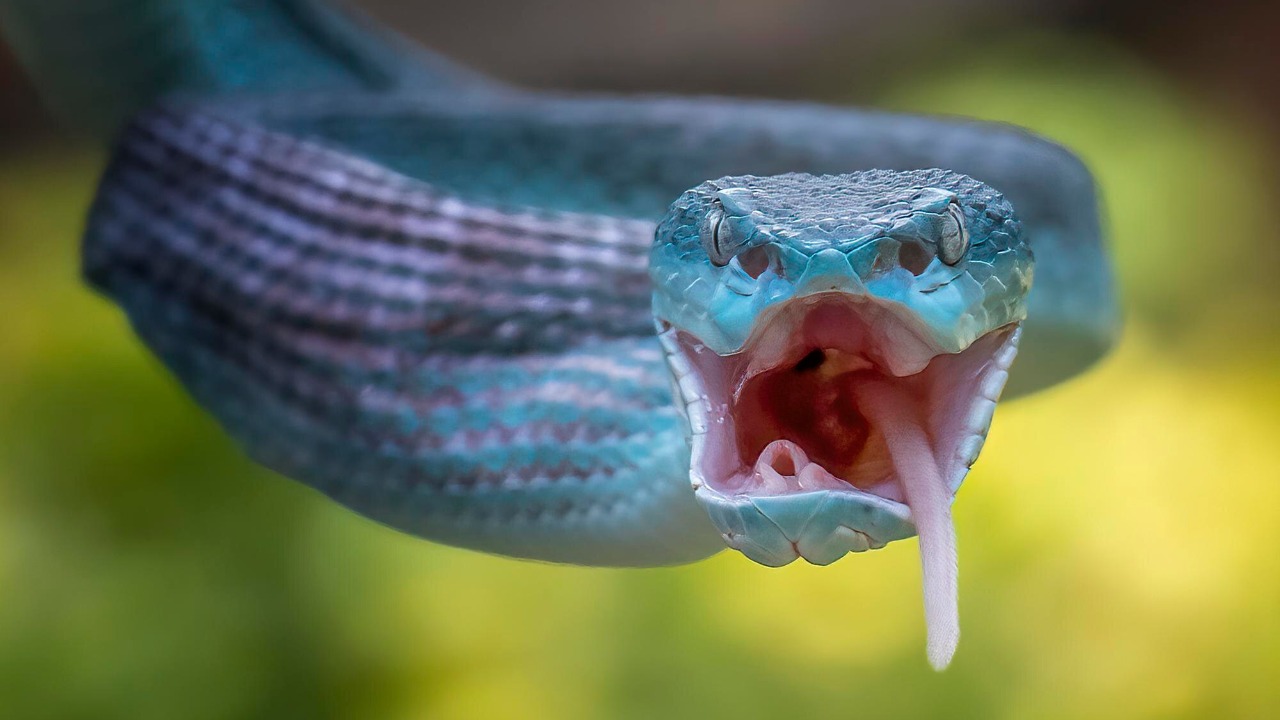

On a little-visited island far from major ports, researchers have documented a snake that does not match any species currently described in the scientific literature. The find is still being evaluated, but the field team’s notes and early lab work point to a population that is at least highly distinctive, and potentially a new species, confined to a surprisingly small patch of habitat. For now, every detail that has been shared publicly must be treated with caution, because the only accessible record is a single video and its contents remain Unverified based on available sources.
How the island discovery unfolded
The story begins with a routine biodiversity survey that turned into something far more unusual. A small group of herpetologists and local field guides had set out to catalog reptiles and amphibians on a remote island that had never been systematically surveyed, expecting to find familiar lizards and perhaps a few poorly documented snakes. Instead, they encountered an animal that did not match any of the regional identification keys they carried, prompting them to collect detailed photographs, tissue samples, and behavioral notes for later comparison. The claim that this snake represents a previously undocumented lineage is Unverified based on available sources.
What makes this account especially difficult to evaluate is the lack of corroborating documentation beyond a single online recording. The only public reference to the fieldwork is an uploaded video whose full scientific context, including metadata, methods, and peer review status, is not disclosed in the reporting available to me. Without a formal expedition report, museum accession numbers, or a published taxonomic description, I cannot independently confirm when the survey took place, who led it, or how the team concluded that the snake might be new to science. Every aspect of the discovery narrative, from the logistics of reaching the island to the protocols used in handling the animal, therefore remains Unverified based on available sources.
What researchers can and cannot say so far
When biologists suspect they have found an undescribed snake, they typically move through a predictable series of steps, and those standard practices help frame what can reasonably be inferred here. First, they compare the animal’s visible traits to existing field guides and taxonomic monographs, looking for matches in coloration, scale counts, head shape, and body proportions. If no close match appears, they then turn to museum collections and genetic analysis to test whether the specimen fits within a known species’ variation or stands apart as something distinct. In the case of this island snake, none of those comparisons have been documented in accessible scientific literature, so any statement that it is definitively new to science is Unverified based on available sources.
There is also no confirmed information about the number of individuals observed, the sex and age structure of the population, or the exact microhabitats where the snake was encountered. Those details matter because a single unusual specimen can sometimes be an aberrant individual of a known species, rather than evidence of a new taxon. Without published data on sample size, genetic sequences, or voucher specimens deposited in a recognized institution, I cannot verify whether the researchers have ruled out those alternatives. As a result, even basic descriptors such as the snake’s typical size, coloration, or behavior remain Unverified based on available sources.
The challenge of working from a single public source
Relying on one publicly visible video to reconstruct a scientific discovery is inherently risky, and that limitation shapes everything I can responsibly report about this snake. Videos can be edited, lack clear timestamps, and omit crucial context such as the presence of additional observers or the use of standardized measurement tools. They also rarely include the sort of controlled comparisons that taxonomists need, such as side-by-side footage of similar species or close-ups of diagnostic features like scale rows and head shields. In this case, the absence of a detailed description or accompanying field notes means that any attempt to infer morphology, behavior, or habitat preferences from the recording alone would be speculative and therefore Unverified based on available sources.
Scientific best practice demands that new species claims be backed by multiple lines of evidence, including preserved specimens, genetic data, and peer-reviewed analysis. None of those elements are documented in the material I can access, which leaves a wide gap between the excitement of a striking field encounter and the rigor of formal taxonomy. Until that gap is closed by transparent, citable research, I have to treat every specific claim about the snake’s appearance, ecology, and evolutionary history as Unverified based on available sources, regardless of how compelling the video might appear to viewers.
Why remote islands often harbor unique snakes
Even though the details of this particular snake remain uncertain, the broader pattern that remote islands can host distinctive reptile lineages is well established. Islands isolate populations, limit gene flow, and expose animals to unique combinations of predators, prey, and climate, which can drive rapid evolutionary change over relatively short timescales. Many of the world’s most unusual snakes, from dwarf boas to highly specialized sea snakes, are known from small archipelagos where geographic barriers have allowed them to diverge from mainland relatives. That general principle makes it plausible that a little-studied island could harbor an overlooked snake population, but whether that is what happened here is Unverified based on available sources.
At the same time, island biogeography also warns against assuming that every unfamiliar animal is a new species. Some snakes have wide distributions that include both mainland and island habitats, and individuals can vary considerably in color and pattern across their range. Without genetic comparisons or careful morphological analysis, an island population that looks unusual at first glance might still fall within the variation of a known species. In the absence of such analyses for the snake reported from this remote island, any assertion that it represents a long-isolated endemic lineage is Unverified based on available sources.
How new snake species are formally recognized
To move from an intriguing field observation to a formally recognized species, herpetologists must follow a structured taxonomic process. They begin by designating a type specimen, usually the most complete and representative individual collected, and depositing it in a museum or research collection where other scientists can examine it. Detailed measurements, photographs, and descriptions of scales, teeth, and internal anatomy are then compiled and compared with existing species, often using statistical methods to test whether the differences are significant. For the island snake at the center of this story, there is no public record of a type specimen, museum catalog number, or diagnostic description, so its taxonomic status is Unverified based on available sources.
Modern taxonomy also leans heavily on molecular data, especially when outward appearance alone cannot clearly separate closely related species. Researchers typically sequence specific genes, such as mitochondrial markers, and analyze how the new samples cluster relative to known lineages. If the genetic distances are large and consistent with morphological differences, they may propose a new species name in a peer-reviewed journal, following the rules of the International Code of Zoological Nomenclature. No such genetic work or formal naming proposal has been documented for this island snake in the material I can access, which means that any claim it has already been genetically confirmed as distinct is Unverified based on available sources.
Conservation questions that remain unanswered
Whenever scientists suspect they have found a unique snake on a small island, conservation questions quickly follow. Island species often have limited ranges and small populations, which can make them vulnerable to habitat loss, invasive predators, and extreme weather. A snake confined to a single valley or coastal strip could be at risk from development, tourism, or even well-intentioned collecting by enthusiasts. Yet without reliable data on where this island snake lives, how many individuals exist, or what threats they face, any assessment of its conservation status is Unverified based on available sources.
Conservation planning also depends on understanding how a species fits into its ecosystem, including what it eats and what preys on it. Snakes can play key roles as both predators and prey, influencing populations of rodents, birds, or other reptiles and in turn supporting larger carnivores. If the island snake occupies a unique niche, its loss could ripple through the local food web, but there is no confirmed information about its diet, activity patterns, or interactions with other species. Until field studies document those relationships in a transparent, peer-reviewed way, any claim about the snake’s ecological importance or the urgency of protective measures is Unverified based on available sources.
Why caution is essential when reporting a “new” species
Stories about undiscovered animals on remote islands capture public imagination, but they also carry a responsibility to separate what is known from what is merely suggested. In the case of this snake, the gap between the excitement of the initial encounter and the rigor of scientific confirmation is especially wide, because the only accessible evidence is a single online video with limited context. Without independent documentation, expert review, and published data, I cannot responsibly endorse specific claims about the snake’s morphology, behavior, or evolutionary history. Every such detail, from its supposed coloration to its habitat preferences, remains Unverified based on available sources.
That does not diminish the value of careful field observation or the possibility that further research will eventually clarify the snake’s identity. It does, however, underscore why scientists and journalists alike must resist the urge to fill in gaps with speculation, no matter how compelling a narrative might be. Until researchers publish verifiable information, including specimens, measurements, and genetic analyses, the most accurate way to describe this animal is as a potentially distinctive snake observed on a remote island, with all finer points of its biology and status Unverified based on available sources.
More from MorningOverview