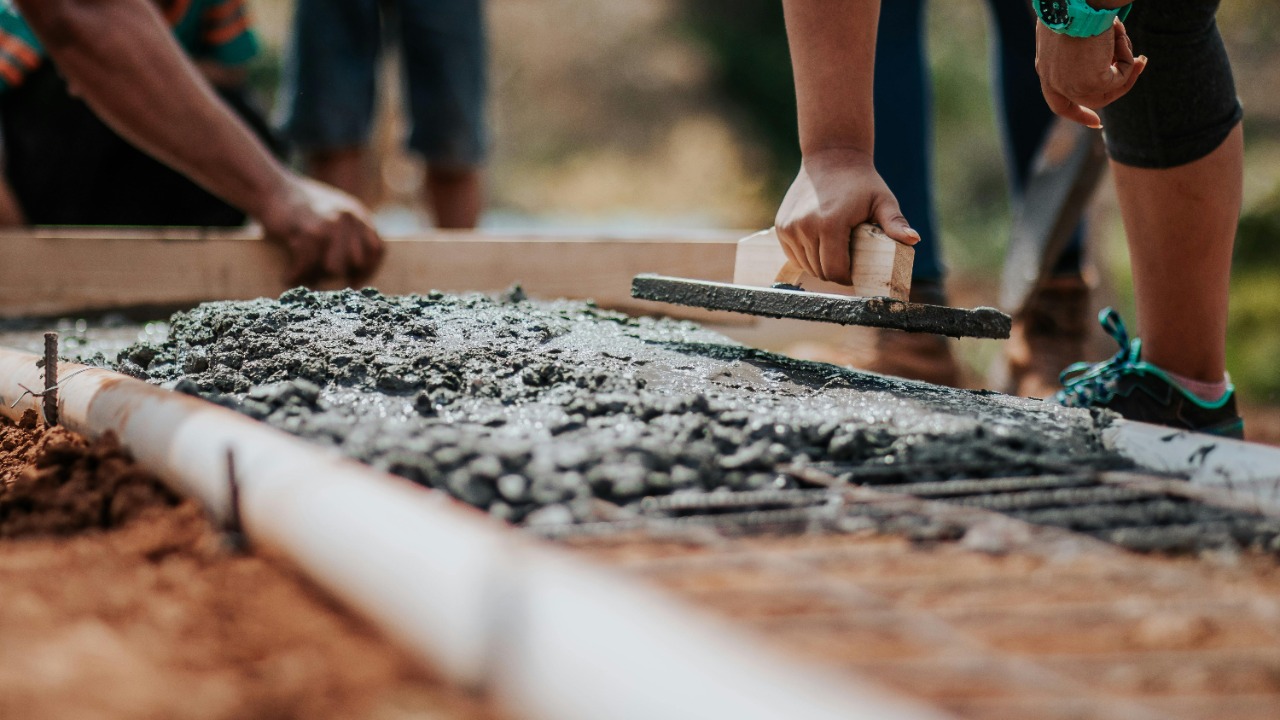

Researchers are finding that ash from textile industry wood waste can do more than avoid the landfill. When blended into cement mixes at carefully controlled levels, it can lift compressive strength by roughly 16 percent while cutting the amount of traditional clinker needed, turning a disposal headache into a performance upgrade.
That combination of stronger concrete and diverted waste is drawing attention from engineers and sustainability planners who are under pressure to shrink construction’s carbon footprint. I see it as part of a broader shift in materials science, where industrial byproducts are being reclassified as engineered inputs rather than inevitable pollution.
How textile wood ash ends up in a cement mixer
The starting point is a very specific waste stream: wood and biomass burned in boilers that power textile mills. Instead of treating the resulting ash as a nuisance to be dumped or landfilled, researchers have been grinding and sieving it to replace a portion of ordinary Portland cement in concrete mixes, typically in the range of 5 to 20 percent by weight. In one detailed study of partial replacement of cement, the authors report that mixes with an optimized ash fraction delivered a roughly 16 percent gain in compressive strength compared with a conventional control sample.
That result hinges on the chemistry of the ash and the fineness of its particles, which can act as both a pozzolanic material and a microfiller inside the cement matrix. When the ash contains reactive silica and alumina, it can combine with calcium hydroxide released during cement hydration to form additional calcium silicate hydrates, the glue that gives concrete its strength. The same study notes that beyond a certain replacement level the benefits reverse, which is why the 16 percent figure is tied to a specific proportion rather than a blanket promise that more ash always means better concrete.
From waste liability to balance-sheet asset
For textile manufacturers, the idea that boiler ash could become a sellable input rather than a disposal cost is economically significant. Mills that rely on wood or biomass for process heat often generate steady volumes of ash that must be transported and managed under tightening environmental rules. If that material can be certified and standardized for use in cement, it shifts from a line item under waste management to a modest revenue stream, while also reducing the cement producer’s raw material bill. Conference papers on industrial byproducts have framed this as a classic example of turning a negative externality into a shared resource, a theme that runs through recent sustainability proceedings that examine how manufacturing waste can feed other value chains.
The financial logic extends beyond the factory gate. Municipalities that host clusters of textile mills and cement plants can reduce truck miles for both waste and raw materials if ash moves directly from one industry to the other. That kind of local symbiosis is a core principle in industrial ecology, where planners map material flows to minimize unused outputs. In practice, it means a town that once paid to monitor ash landfills could instead support a small testing and processing facility that grades the ash for construction use, capturing jobs and tax revenue that would otherwise leak away with every waste shipment.
The climate case for ash-blended cement
The climate argument for substituting ash into cement is straightforward: every kilogram of clinker avoided sidesteps the process emissions that come from calcining limestone and the fuel burned in kilns. Cement is one of the most carbon intensive materials in the modern economy, and even modest percentage reductions in clinker content can translate into large absolute savings when multiplied across millions of tonnes of production. Historical analyses of industrial energy use, including detailed surveys of biomass combustion and ash generation in sectors like agriculture and textiles, show how much untapped potential sits in these byproduct streams, as documented in archival work on biomass residues and their chemical composition.
Using ash in cement also reduces the environmental footprint of waste disposal itself. Landfilled ash can leach minerals into soil and groundwater if not carefully contained, and open dumping remains a risk in regions with weaker enforcement. By binding ash into a hardened concrete matrix, engineers effectively immobilize many of those constituents for the life of the structure. That does not eliminate the need for leachate testing or long term monitoring, but it reframes ash as a candidate for circular use rather than a permanent burden on local ecosystems.
What the 16 percent strength gain really means on site
A headline figure like “16 percent stronger” only matters if it translates into practical advantages for builders and infrastructure owners. In structural terms, higher compressive strength at a given cement content can allow designers to reduce cross sectional dimensions for some elements, or to maintain existing dimensions while improving safety margins and durability. In cost terms, a mix that reaches target strength with less clinker can offset the processing expense of ash, especially in markets where cement prices are volatile. Engineering study materials that walk through mix design and quality control, such as university notes on operations and production management, increasingly use these blended cements as case studies in how process tweaks can unlock both performance and efficiency.
On the ground, contractors will care less about the chemistry and more about workability, setting time, and how the concrete behaves under real curing conditions. The research on textile wood ash suggests that when the ash is finely ground and properly proportioned, slump and setting characteristics can be kept within familiar ranges, avoiding the need for major changes in placement practices. However, the margin for error is smaller than with conventional mixes, which is why the studies emphasize strict control over ash fineness, moisture content, and contamination. For project managers, that means any switch to ash blended cement must be accompanied by updated specifications and on site testing protocols rather than treated as a simple one to one swap.
Quality control, standards, and the risk of cutting corners
The promise of turning waste into value depends on rigorous quality control, and that is where the story becomes more complicated. Unlike standardized supplementary cementitious materials such as fly ash from large power plants, textile boiler ash can vary widely depending on fuel mix, combustion temperature, and pollution control equipment. Without consistent testing, two batches labeled “textile ash” might behave very differently in a cement kiln or concrete mixer. Exam guides that cover environmental engineering and industrial waste, including compilations of multiple choice questions on solid waste management, repeatedly stress that variability is the central challenge when reusing industrial byproducts in construction.
Standards bodies and professional associations will need to decide how to classify and test textile ash if it is to move beyond pilot projects. That could mean new material codes, reference mix designs, and certification schemes for mills that want to supply ash to cement producers. It also raises questions about liability if a structure built with ash blended cement underperforms. Engineers are trained to be conservative when dealing with novel materials, and they will look for peer reviewed data, long term durability studies, and clear guidance from regulators before specifying such mixes in critical infrastructure. Until that framework is in place, ash blended cement is likely to remain a niche solution, used where project owners are willing to accept some additional testing and oversight in exchange for sustainability gains.
Lessons from other waste-to-value experiments
Textile ash is not the first industrial byproduct to be reimagined as a construction input, and it will not be the last. The history of materials science is full of examples where waste streams, from blast furnace slag to rice husk ash, have been refined into valuable additives once their properties were properly understood. Academic journals that focus on interdisciplinary innovation, such as a fall issue that examined student led research into sustainable materials, highlight how quickly these ideas can move from lab benches to pilot projects when there is institutional support. The pattern is familiar: early skepticism, followed by small scale demonstrations, then gradual codification into standards once performance data accumulates.
There are also cautionary tales where enthusiasm for waste reuse ran ahead of the evidence. Case studies in environmental engineering programs, including detailed theses on industrial symbiosis and urban material flows, document instances where poorly characterized byproducts led to durability problems or unexpected emissions. Those experiences underline the need for robust monitoring and feedback loops when scaling up any new material. For textile ash, that likely means starting with non structural applications such as paving blocks or low rise buildings, then moving into bridges and high rise cores only after years of performance data confirm that the early strength gains are matched by long term resilience.
Policy, education, and the path to mainstream adoption
Whether textile ash cement remains a niche innovation or becomes a mainstream tool in the decarbonization toolkit will depend heavily on policy and education. Governments that are serious about circular economy goals can create incentives for industries to share byproducts, fund testing labs, and update building codes to recognize new material classes. Policy conference booklets that track the evolution of environmental regulation, including sessions on industrial energy transitions, show how targeted subsidies and standards have previously accelerated the adoption of blended cements and low clinker formulations in Europe and parts of Asia.
Education is the other lever. When engineering and business students are exposed to real world examples of waste to value projects, they are more likely to champion similar ideas in their careers. Teaching materials on research methods and sustainability, such as an April issue of an academic newsletter that walks through case based learning, emphasize the importance of connecting classroom theory to industrial practice. Professional conferences that bring together cement chemists, textile mill operators, and regulators, like those documented in a multi day environmental history program, can play a similar role by breaking down silos and aligning expectations. If those conversations keep circling back to the hard data on strength gains, emissions cuts, and cost, textile ash has a credible shot at moving from experimental curiosity to standard line item in the concrete mix design toolkit.
More from MorningOverview