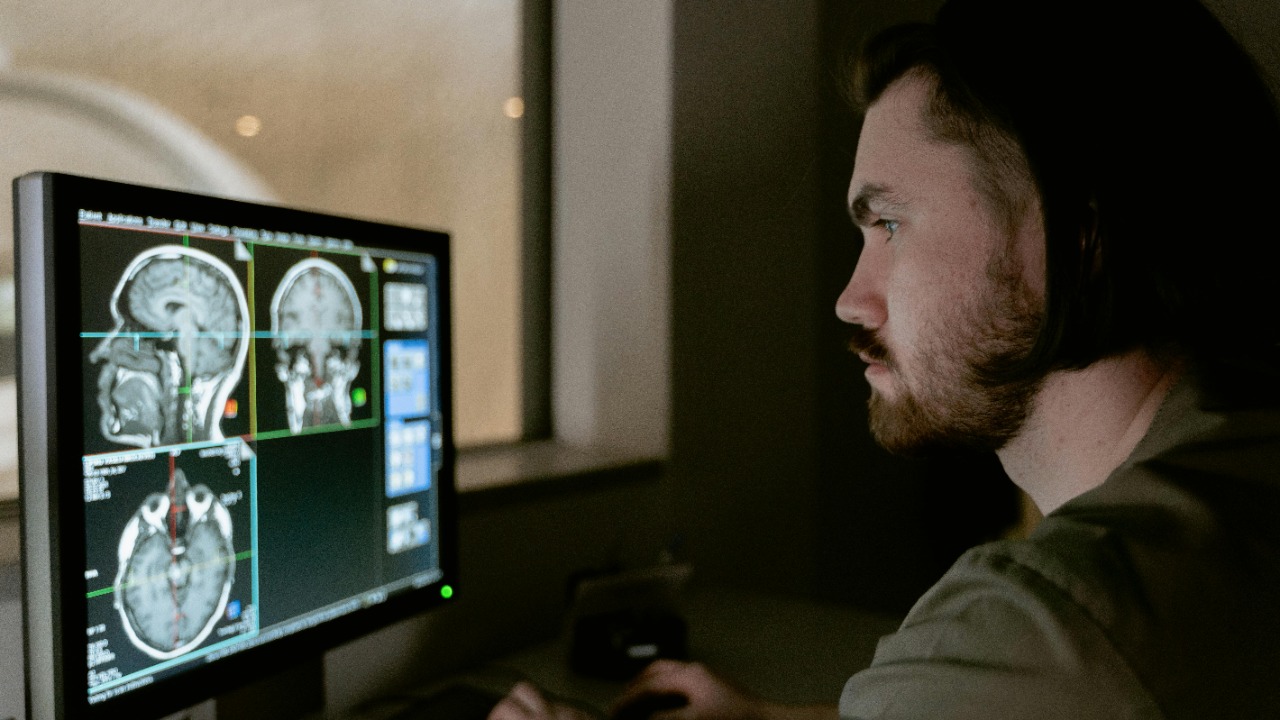

The human brain is constantly flooded with sights, sounds and sensations, yet only a fraction of those experiences become lasting memories. Behind that quiet sorting process is a set of biological rules that decide which moments are worth keeping and which can safely fade. I want to unpack how that triage works, from the chemistry of synapses to the way meaning, emotion and reward shape what survives in our mental archive.
The brain’s memory gatekeepers
When I think about how the brain filters experience, I start with the idea that memory is not a single thing stored in a single place. Instead, different regions act as gatekeepers, routing information into short-term buffers, long-term storage or the mental trash bin. Sensory areas capture raw input, the hippocampus binds it into an episode, and networks in the prefrontal cortex help decide whether that episode is important enough to reinforce or safe enough to let go.
Recent work tracing how the human brain separates and retrieves memories shows that this routing is highly organized rather than random. Researchers have mapped how distinct circuits in the medial temporal lobe and cortex coordinate to keep related experiences apart so they do not blur, while still allowing flexible recall when needed, a pattern that helps explain why some events feel crisp and others quickly lose their edges as they are stored and later accessed in these specialized networks.
From fleeting experience to lasting trace
For an experience to move from a passing impression to a durable memory, the underlying synapses have to change. I see this as a competition at the cellular level: only some connections get strengthened enough to persist. The brain uses patterns of electrical activity and chemical signals to decide which synapses deserve more resources, effectively tagging certain experiences for long-term storage while allowing others to decay.
Studies of how neurons allocate energy and molecular machinery show that this competition is not evenly distributed. When a particular pattern of activity is judged to be especially relevant, the surrounding circuitry funnels extra support to those synapses, boosting their ability to fire together again in the future. Researchers tracking this process have described how the brain selectively assigns more metabolic and structural resources to specific memory traces, giving those favored connections a better chance of survival within the crowded landscape of competing synapses.
Emotion, reward and the brain’s priority list
Not all experiences are treated equally, and emotion is one of the strongest levers the brain uses to rank them. When an event triggers strong feelings, stress hormones and neuromodulators like dopamine and norepinephrine surge, amplifying the plasticity of the circuits that are active at that moment. I see this as the brain’s way of flagging emotionally charged episodes as high priority, making them more likely to be consolidated into long-term memory.
Reward adds another layer to that priority list. Experiments in humans have shown that when people expect or receive a reward, the brain’s learning systems become more efficient at locking in the associated information. Activity in regions that track value and motivation, such as the striatum and parts of the prefrontal cortex, interacts with memory circuits so that experiences linked to positive outcomes are preferentially stored. One line of research has demonstrated that, when encoding new events, the brain systematically favors those that are most rewarding, effectively giving them a stronger claim on future recall through these value-sensitive pathways.
Attention, prediction and the decision to learn
Even before emotion and reward come into play, attention acts as an early filter on what the brain can remember. I think of attention as a spotlight that boosts the signal of selected information while dimming the rest. When that spotlight lands on something unexpected or informative, the brain’s learning machinery ramps up, treating the moment as an opportunity to update its internal model of the world.
Research on how the brain decides to learn has highlighted the role of prediction errors, the gap between what we expect and what actually happens. When that gap is large, neuromodulatory systems respond, and networks in the frontal and parietal lobes shift into a state that favors encoding. In practical terms, this means that surprising or informative events, especially those that help refine future predictions, are more likely to be stored, a pattern that has been traced in human volunteers as their brains respond to unexpected outcomes.
Why the brain forgets on purpose
Forgetting often feels like a failure, but from a biological perspective it is a feature that keeps the system efficient. I see deliberate loss of detail as a way for the brain to avoid overload, pruning away information that is no longer useful so that important patterns stand out. This pruning can happen through the weakening of synapses that are rarely used, the removal of entire synaptic connections, or the overwriting of old traces by new learning that shares similar features.
Neuroscientists studying memory dynamics have described how the brain balances stability and flexibility by allowing some traces to fade while others are reinforced. Processes like synaptic downscaling during sleep, competition between overlapping memories and active suppression of unwanted thoughts all contribute to this selective forgetting. Popular explanations of these mechanisms often emphasize that the brain is constantly deciding what to remember and what to let go, a framing that reflects the underlying biology described in accessible discussions of how neural circuits shed low-value information.
How memory is organized in the brain
Behind these decisions lies a complex architecture that separates different kinds of memory while still allowing them to interact. I think of episodic memories, like a specific road trip in a 2015 Subaru Outback, as relying heavily on the hippocampus and nearby structures, while semantic knowledge, such as the fact that an Outback is a station wagon-style crossover, is more distributed across the cortex. Procedural skills, like smoothly shifting a manual transmission, depend on yet another set of circuits in the basal ganglia and cerebellum.
Detailed mapping of these systems has shown that the hippocampus is especially important for binding together the who, what, where and when of an event, a process sometimes called pattern separation and completion. Clinical and imaging studies have helped clarify how damage to specific regions disrupts particular memory functions, and how remaining tissue can sometimes compensate. Reviews of human memory organization describe how these networks support encoding, consolidation and retrieval, outlining the roles of medial temporal lobe structures, prefrontal areas and sensory cortices in a coordinated system that stores and reconstructs experiences across multiple brain regions.
What surgery and injury reveal about memory
Some of the clearest evidence for how the brain chooses what to keep comes from people who have undergone surgery or suffered injury. When surgeons remove or disconnect parts of the brain to treat severe epilepsy or tumors, they sometimes see very specific changes in memory. I read these cases as natural experiments that show which circuits are essential for forming new memories, which are needed for retrieving old ones and which can be bypassed as the brain reorganizes.
Reports from pediatric neurosurgery, for example, describe children who have had large portions of one hemisphere removed to control intractable seizures, yet later develop surprisingly strong cognitive and memory abilities. Their outcomes suggest that, especially in younger brains, remaining tissue can take over many functions, reshaping the networks that support learning and recall. Accounts of these operations detail how surgeons plan around critical language and memory areas, and how follow-up testing tracks the recovery of skills as the brain adapts after such extensive hemisphere surgeries.
Everyday intuition versus lab results
Outside the lab, people have their own folk theories about how memory works, and I often see a gap between those intuitions and what experiments show. Many of us assume that repetition alone guarantees retention, or that we store experiences like a video file that can be replayed on demand. In reality, memory is reconstructive and deeply influenced by context, emotion and what we pay attention to at the moment of encoding and retrieval.
Online discussions where people ask for simple explanations of memory decisions capture this tension between intuition and science. In one widely shared conversation, users trade analogies about the brain acting like a hard drive or a cluttered desk, while others point to research on synaptic plasticity and consolidation to correct those metaphors. That back-and-forth reflects a broader public effort to reconcile everyday experience with the more nuanced picture emerging from studies of how neural circuits select and discard information.
How scientists watch memories form
To move beyond metaphor, researchers have built tools that let them watch memory formation in real time. Functional MRI, intracranial recordings and advanced microscopy all offer different windows into how neurons change as we learn. I see these methods as complementary: imaging shows which regions light up during encoding and retrieval, while direct recordings and cellular imaging reveal how individual cells and synapses adjust their activity and structure.
Public-facing explainers and lectures often showcase these techniques by walking viewers through experiments where volunteers learn word lists, navigate virtual environments or watch emotional clips while their brains are monitored. In some demonstrations, scientists illustrate how patterns of activity recorded during learning can later be used to predict which items a person will remember, highlighting the link between neural signatures and future recall. One widely viewed presentation breaks down these methods for a general audience, using clear visuals to show how researchers track the shifting patterns that mark a memory being encoded and retrieved.
Why some memories feel sticky
When I look at which memories linger for years, a common thread is that they are meaningful, emotionally charged or tied to strong expectations and rewards. The first time you drove a 2012 Honda Civic alone on a highway, for instance, probably carried a mix of fear, excitement and a sense of independence, all of which would have engaged the neuromodulatory systems that strengthen encoding. By contrast, the commute you took last Tuesday in the same car, with no surprises and little emotional weight, is far more likely to blur into the background.
Scientific accounts of memory prioritization emphasize that this stickiness is not random. Experiences that help us navigate the social world, avoid danger or secure resources are more likely to be reinforced, both through emotional arousal and through the engagement of reward circuits. Articles aimed at curious readers often highlight how the brain uses these cues to decide which episodes to keep, explaining in plain language how synaptic changes, consolidation during sleep and ongoing rehearsal all contribute to the persistence of certain high-impact memories.
What this means for how I remember
All of this research has practical implications for how I approach my own learning and recall. If the brain is constantly ranking experiences by attention, emotion and relevance, then I can tilt the odds in favor of remembering by deliberately engaging those levers. That might mean turning a dry fact into a vivid story, connecting a new concept to a personal goal or studying in a way that introduces desirable difficulty so that prediction errors stay high enough to trigger deeper encoding.
Writers who translate neuroscience for general audiences often stress that memory is malleable and that small changes in how we interact with information can have outsized effects. They describe strategies like spacing out practice, mixing related topics, testing ourselves instead of rereading and using rich, multisensory cues, all grounded in the same biological principles that govern which synapses are strengthened and which are allowed to fade. By aligning daily habits with what is known about how the brain filters experience, I can work with the natural tendency to store what matters and quietly drop what does not, a theme that runs through many accessible explanations of how neural systems prioritize learning.
More from MorningOverview