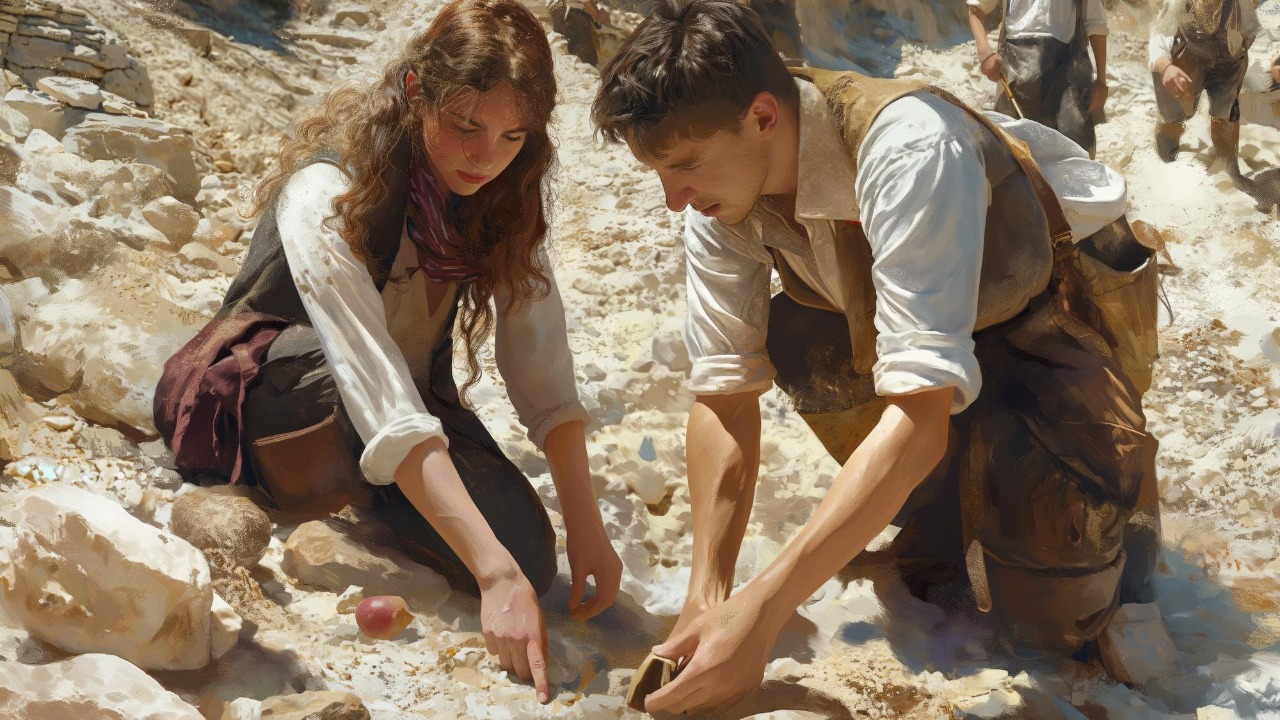

Russian archaeologists say they have pinpointed a long-lost medieval burial ground, turning a patch of ordinary landscape into a rare window on the region’s early urban and religious history. The newly documented necropolis, tied to a fortified settlement that once controlled key trade routes, is already reshaping how specialists map power, faith, and daily life in the medieval Russian lands.
As I trace the excavation’s early results, what stands out is how quickly a handful of graves, soil samples, and artifact fragments can challenge long-held assumptions about who lived here, how they died, and why this cemetery vanished from memory for centuries.
Reconstructing the path to a “lost” medieval cemetery
The rediscovery of the necropolis did not begin with a dramatic trench in the ground but with a slow re-reading of maps, chronicles, and earlier digs that had never quite fit together. Researchers first noticed that written references to a medieval settlement in this area did not match the known archaeological footprint, hinting that a major component of the site, including its burial grounds, had to be missing. By cross-checking those texts with historical topographic surveys and satellite imagery, they narrowed the search to a zone where erosion, agriculture, and later construction had obscured older features, a pattern that has complicated work at other medieval sites across Russia and Eastern Europe.
Once the team overlaid archival plans with modern geospatial data, they saw subtle anomalies in soil color and vegetation that often signal buried structures or graves. Ground-penetrating radar and magnetometry then confirmed clusters of subsurface disturbances consistent with organized burials rather than random pits or recent utility work, a method similar to surveys used at other medieval necropolises in the region, including previously mapped cemeteries. Only after this noninvasive phase did archaeologists open targeted test trenches, revealing the first intact graves and confirming that the “lost” cemetery was not a legend but a substantial necropolis tied to a fortified settlement documented in medieval sources.
Locating the necropolis within the medieval landscape
Placing the burial ground within its wider landscape is crucial for understanding why it developed where it did and how it functioned. The necropolis lies just beyond the defensive perimeter of a medieval stronghold, on slightly elevated ground overlooking a river corridor that once carried merchants, pilgrims, and military contingents. That positioning fits a broader pattern in medieval Rus, where cemeteries were often sited outside fortifications yet close enough to be integrated into daily life, a layout documented at other fortified centers such as comparable strongholds. The river access would have made the site visible to travelers, reinforcing the settlement’s status and perhaps signaling its religious affiliations through crosses, chapels, or memorial markers that have not yet survived above ground.
The surrounding terrain also helps explain why the necropolis slipped from view. Over centuries, river meanders shifted, floodplains expanded, and agricultural fields crept closer to the former stronghold, gradually erasing surface traces of graves and any associated church structures. Later road building and small-scale quarrying further disturbed the area, scattering bones and artifacts that earlier observers misattributed to isolated burials rather than a coherent cemetery. Only by correlating these landscape changes with stratigraphic data from the new trenches, and comparing them with environmental reconstructions from other medieval sites along the same river system, such as riverine settlements, could archaeologists confidently reinsert the necropolis into the medieval map.
What the graves reveal about medieval burial customs
The first season’s excavations already show that the necropolis preserves a layered record of changing burial customs over several generations. Most graves follow a consistent orientation, with bodies laid supine and aligned along an east–west axis, a pattern associated with Christian practice in medieval Rus and seen at other cemeteries like documented Christian burial grounds. Many burials lack rich grave goods, suggesting a community where religious norms discouraged ostentatious display in death, yet subtle details, such as the presence of small crosses, belt fittings, or fragments of textile, hint at personal status and identity.
At the same time, archaeologists have identified a minority of graves that deviate from this template, including burials with atypical orientations or unusual body positions. In some cases, stones placed over limbs or at the head may reflect attempts to prevent the dead from returning, echoing apotropaic practices recorded in other medieval cemeteries across Eastern Europe, such as so-called “deviant” burials. These contrasts suggest that the community navigated a mix of Christian doctrine and older beliefs, with burial rites adapting to local fears and social tensions. By mapping these variations across the necropolis, researchers can begin to see how religious and cultural change played out not in royal courts but in ordinary graves.
Artifacts that anchor the necropolis in time
Dating the cemetery depends on more than stylistic impressions, and the artifacts emerging from the graves provide hard chronological anchors. Metal fittings from belts and clothing, along with fragments of jewelry, match types known from securely dated contexts in other medieval Russian sites, including catalogued jewelry assemblages. Several cross pendants and icon fragments correspond to forms popular between the late twelfth and early fourteenth centuries, narrowing the main phase of use for the necropolis and aligning it with a period of political consolidation and intensifying Christianization in the region.
Beyond personal adornments, everyday items such as knives, buckles, and ceramic sherds help refine this timeline. Pottery fragments recovered from grave fills and nearby occupation layers share fabric and decoration with wares from contemporaneous towns along major trade routes, including sites documented in regional ceramic typologies. In some cases, imported goods, like glass beads or nonlocal metal alloys, point to connections with distant markets, suggesting that the community buried here was not isolated but plugged into broader economic networks. Radiocarbon samples from organic remains, once processed, are expected to confirm and fine-tune these artifact-based dates, though those results remain unverified based on available sources.
Clues to health, diet, and conflict in the skeletons
The human remains themselves are turning the necropolis into a kind of biological archive, revealing how people in this settlement lived, worked, and died. Preliminary osteological analysis indicates a population that experienced significant physical stress, with spinal degeneration, healed fractures, and joint wear consistent with heavy labor, patterns also observed at other medieval rural and small urban sites such as comparative skeletal studies. Dental evidence, including caries and enamel defects, points to a diet that mixed cereals with occasional animal protein, punctuated by episodes of childhood malnutrition or illness.
More dramatic are the traces of violence and medical intervention. Several skeletons show perimortem trauma from sharp weapons, including cut marks on ribs and skulls that match injuries documented in conflict-related burials at other medieval battle-linked cemeteries like known battlefield graves. In a few cases, healed cranial injuries suggest that individuals survived earlier attacks, possibly thanks to rudimentary surgical care. The distribution of such wounds across age and sex categories may help clarify whether the settlement faced periodic raids, internal strife, or broader military campaigns, though the precise historical events remain unverified based on available sources. As isotopic and DNA analyses progress, the necropolis could also shed light on kinship patterns and mobility, echoing insights from genetic studies at other medieval sites referenced in recent bioarchaeological work.
Religious identity and the spread of Christianity
The layout and contents of the cemetery offer a rare glimpse into how Christianity took root in this corner of medieval Rus. The predominance of east–west oriented burials without lavish grave goods aligns with Christian norms, while the presence of cross pendants and icon fragments reinforces the impression of a community that had embraced the new faith in public ritual. Similar configurations at other necropolises, such as those catalogued in studies of Christianization, show how burial practice became a key marker of religious identity, even when churches or written records are sparse.
Yet the necropolis also preserves hints of older beliefs and local adaptations. The occasional “deviant” burial, the use of stones or unusual grave constructions, and the selective inclusion of personal items suggest that families negotiated between official doctrine and inherited customs. This blend mirrors patterns seen in other transitional cemeteries across the region, where archaeologists have documented overlapping Christian and pre-Christian symbols, as in mixed-ritual burial grounds. By tracing how these elements cluster in particular sectors of the necropolis or among specific demographic groups, I can begin to see how religious change unfolded unevenly, with some households adopting new norms more quickly than others.
Trade routes, power, and the settlement behind the graves
Every cemetery is anchored to a living community, and the scale of this necropolis points to a settlement of real regional importance. The fortified site associated with the burial ground occupied a strategic position along a river corridor that linked interior agricultural zones to larger trading hubs, a pattern echoed in other medieval strongholds mapped in studies of riverine fortresses. The presence of imported artifacts in the graves, from nonlocal metalwork to glass beads, indicates that residents had access to goods moving along these routes, likely through a mix of tolls, market exchanges, and service to regional elites.
The cemetery’s internal organization may also reflect social hierarchies tied to this economic role. Clusters of graves with higher-status items or more elaborate construction, such as wooden coffins or stone linings, suggest family plots associated with local leaders, merchants, or clergy, similar to patterns documented at other medieval urban necropolises like those analyzed in urban cemetery studies. In contrast, simpler burials at the periphery may represent poorer residents, transient workers, or individuals with ambiguous social standing. By correlating these patterns with the spatial layout of the settlement’s fortifications and residential zones, archaeologists can reconstruct how power and wealth were distributed, and how those inequalities persisted into death.
Why the necropolis vanished from memory
The fact that such a substantial cemetery could disappear from local memory underscores how fragile the archaeological record can be. Over centuries, shifts in political boundaries, religious institutions, and settlement patterns gradually severed the community’s connection to this burial ground. When the fortified site declined or was abandoned, its church structures likely fell into ruin, and later populations repurposed the land for fields, pastures, or small quarries, a sequence mirrored at other “lost” medieval sites documented in studies of abandoned settlements. Without continuous liturgical use or monumental stone markers, the necropolis blended back into the landscape.
Modern development compounded this erasure. Road construction, utility trenches, and informal dumping disturbed parts of the cemetery, scattering bones and artifacts that early antiquarians misinterpreted as isolated finds. Only with the advent of systematic archaeological survey methods, including remote sensing and GIS-based landscape analysis, could researchers detect the underlying pattern that pointed to a coherent necropolis, as has happened at other rediscovered burial grounds like those highlighted in recent rediscovery case studies. The story of this site is therefore not just about medieval history but also about how modern societies choose to see, or overlook, the traces of their past.
What comes next for research and preservation
The identification of the necropolis is only the beginning of a long process of excavation, analysis, and conservation. Archaeologists now face the challenge of balancing research goals with the ethical and logistical demands of working in an active landscape, where construction pressures and land-use changes continue. Drawing on protocols developed at other sensitive medieval cemeteries, such as those outlined in conservation guidelines, the team is likely to prioritize targeted excavation of threatened areas, detailed recording of grave architecture, and careful reburial or curation of human remains in consultation with local authorities and religious institutions.
At the same time, the necropolis offers a powerful opportunity for public engagement and education. If managed thoughtfully, the site could support interpretive trails, museum exhibits, or digital reconstructions that connect residents and visitors to the medieval community beneath their feet, following models tested at other excavated cemeteries like those presented in public archaeology projects. As new analytical results emerge, from isotopic data to refined artifact chronologies, I expect the necropolis to become a reference point for understanding how ordinary people in medieval Russia navigated faith, work, conflict, and memory, even when their names have long since been lost.
More from MorningOverview