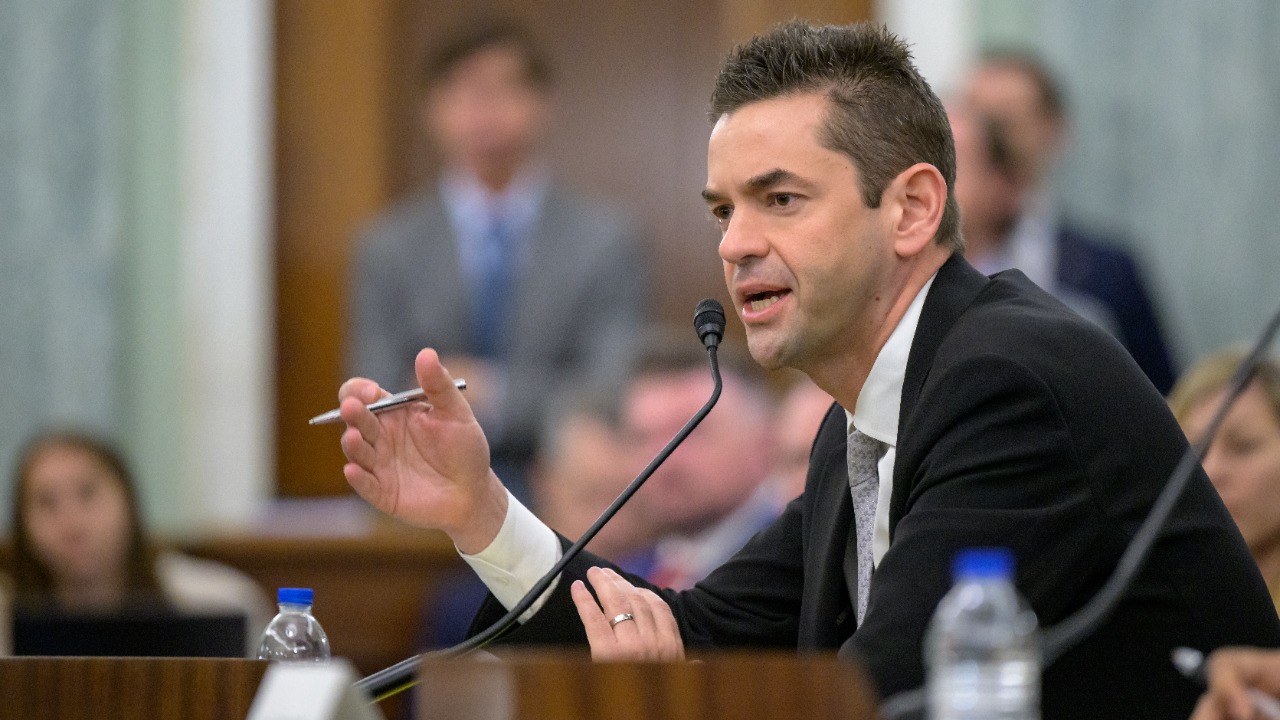

The Senate’s decision to schedule a December 3 hearing on Jared Isaacman’s nomination to lead NASA turns a long-simmering space policy debate into a very public test of priorities. The outcome will help determine whether the agency’s next chapter is steered by a billionaire entrepreneur closely tied to commercial spaceflight or by a more traditional government insider. With the clock ticking toward that hearing, the political, institutional, and cultural stakes around Isaacman’s prospective NASA role are coming into sharp focus.
I see this confirmation fight as a referendum on how far the United States is willing to lean into private capital and rapid-fire experimentation in its civil space program. Senators are not only weighing one nominee, they are effectively deciding how much control to hand to a figure whose career has been built on moving faster than government usually allows. That tension is what will make the December session one of the most consequential NASA hearings in years.
The December 3 hearing and what is at stake
The Senate Commerce Committee’s move to lock in a December 3 confirmation hearing signals that lawmakers are ready to confront months of uncertainty around NASA’s leadership. According to detailed scheduling notices, the panel plans to examine President Donald Trump’s choice of Jared Isaacman to serve as NASA administrator, a role that would put him in charge of the agency’s multibillion-dollar portfolio of human spaceflight, science missions, and technology programs, with the hearing date itself now firmly set for early December as reported in multiple committee updates. By putting the session on the calendar, senators have ensured that Isaacman’s record and vision will be scrutinized in public rather than debated only in backroom negotiations.
The stakes extend well beyond one personnel decision, because the NASA administrator shapes everything from Artemis lunar landing timelines to how aggressively the agency leans on commercial partners for crewed missions and cargo. Reporting on the committee’s plans underscores that this is a re-nomination fight, not a first look, which means lawmakers will revisit earlier concerns about Isaacman’s management style, his financial interests in space companies, and his alignment with Trump’s broader agenda for civil space, all of which are expected to surface when the Commerce Committee convenes its confirmation hearing. In practical terms, the December 3 session will either clear a path for Isaacman to take the helm early next year or deepen the leadership vacuum that has left NASA operating under acting officials.
How Isaacman’s re-nomination reached this point
Isaacman’s path back to the Senate docket reflects both persistence from the White House and unresolved doubts in Congress. After his initial nomination stalled amid questions about conflicts of interest and the balance between public and private roles in space, Trump chose to send his name back to the Senate, effectively daring critics to block a high-profile entrepreneur with a track record of funding and flying private orbital missions. Coverage of the re-nomination notes that the administration framed Isaacman as uniquely positioned to accelerate Artemis and deepen partnerships with companies like SpaceX, a case that will be central to the December hearing and that has been highlighted in recent committee briefings. The decision to re-submit his name rather than pivot to a less controversial candidate shows how committed Trump is to this particular vision of NASA’s future.
From the Senate’s perspective, scheduling a new hearing rather than letting the nomination languish again suggests that key lawmakers want a definitive answer on Isaacman, whether that ends in confirmation or rejection. Reports on the committee’s calendar emphasize that the December 3 session will revisit earlier testimony and written responses, giving senators a chance to probe how Isaacman would handle issues like contractor oversight, workforce morale, and scientific independence if he were to become NASA chief, themes that have been flagged in advance of the upcoming hearing. By forcing the question now, the Senate is acknowledging that NASA cannot drift indefinitely without a confirmed leader while the United States is trying to return astronauts to the Moon and compete with China in deep space exploration.
The Senate’s political calculus and Ted Cruz’s role
Behind the formal notice of a hearing lies a complex political calculation that will shape how the questioning unfolds. Senator Ted Cruz, a senior Republican voice on space issues, has emerged as a pivotal figure in this process, both as a defender of commercial space partnerships and as a lawmaker who has not hesitated to grill nominees he views as insufficiently committed to U.S. leadership. Recent reporting indicates that Cruz has been closely involved in discussions about how to structure the December 3 session, including which lines of inquiry to prioritize and how to balance concerns about conflicts of interest with the desire to keep NASA on an ambitious trajectory, a role that has been detailed in coverage of his influence over the Isaacman hearing. His stance will matter not only for Republican votes but also for how much bipartisan cover moderate Democrats feel they have to either support or oppose the nominee.
From what I can see in the available reporting, the political dynamics are less about party-line space policy differences and more about institutional comfort with a billionaire entrepreneur taking over a storied federal agency. Some Republicans are enthusiastic about Isaacman’s track record funding private missions and pushing technological risk, while others worry about handing NASA’s reins to someone so deeply embedded in the commercial ecosystem he would be regulating. Democrats, for their part, appear divided between those who welcome fresh energy and those who fear that a commercially oriented administrator could sideline climate science or Earth observation priorities. The December 3 hearing will crystallize these tensions as senators on both sides of the aisle use their time to signal whether they see Isaacman as a visionary reformer or a potential source of conflicts, a debate that has been previewed in accounts of the committee’s internal deliberations.
Isaacman’s commercial space pedigree and NASA’s future
Isaacman’s candidacy is inseparable from his identity as a billionaire entrepreneur who has already flown in orbit and bankrolled high-profile missions. His leadership of private space ventures and his role in organizing crewed flights have made him a symbol of the new commercial era, where companies rather than governments increasingly set the pace of innovation. That background is precisely what Trump and Isaacman’s supporters argue makes him the right person to run NASA at a time when the agency is relying heavily on commercial providers for crew transport, cargo, and even lunar landers, a case that has been laid out in coverage of his re-nomination as NASA chief. If confirmed, he would bring to the administrator’s office a mindset shaped by rapid iteration, private capital, and close collaboration with firms like SpaceX.
That same pedigree, however, raises hard questions about how Isaacman would navigate the boundary between public mission and private profit. NASA’s administrator must oversee contracts, set safety standards, and decide which companies get access to lucrative programs, all while maintaining public trust that decisions are being made in the national interest rather than to benefit any particular firm. Senators are likely to press Isaacman on how he would handle recusals, transparency, and the preservation of NASA’s scientific integrity, especially in areas like Earth science that do not generate immediate commercial returns. The December 3 hearing will be the first time he has to answer those questions under oath since his re-nomination, and the outcome will shape whether NASA leans even more heavily into commercial partnerships or pulls back to reassert a more traditional government-led model, a tension that has been highlighted in analyses of the agency’s future direction under his potential leadership.
What the hearing means for Artemis and human spaceflight
For NASA’s human spaceflight program, the identity of the next administrator is not an abstract question, it is a direct factor in whether Artemis schedules hold and how the agency manages risk. Isaacman has been a vocal proponent of pushing the envelope on crewed missions, including private flights that test new vehicles and operational concepts, and his supporters argue that this experience would help him drive Artemis toward sustained lunar operations rather than one-off flag-planting. The December 3 hearing will give senators a chance to probe how he would balance speed with safety, especially in light of the complex choreography required to integrate commercial landers, Orion spacecraft, and the Gateway outpost into a coherent architecture, issues that have been flagged in advance coverage of the upcoming confirmation session. If Isaacman can convince skeptics that he will not cut corners, he could secure the political backing needed to keep Artemis on an aggressive timeline.
At the same time, the hearing will surface concerns about how a commercially minded administrator might prioritize crewed exploration relative to other NASA missions. Some lawmakers worry that an intense focus on human spaceflight could come at the expense of robotic science, planetary probes, or Earth observation satellites that lack the same political glamour but deliver critical data. Others fear that a NASA led by a private space magnate could tilt too heavily toward partnerships with a narrow set of companies, potentially crowding out smaller firms or international collaborations. These questions are likely to feature prominently in the December 3 questioning, as senators seek assurances that Artemis will be pursued as part of a balanced portfolio rather than as a singular obsession, a balance that has been discussed in previews of the committee’s planned lines of inquiry.
Public scrutiny, online reaction, and the optics of a billionaire NASA chief
Beyond the formalities of the Senate chamber, Isaacman’s nomination is unfolding in a media environment where every exchange can be clipped, shared, and dissected in real time. Space-focused outlets and social media communities have already begun treating the December 3 hearing as appointment viewing, with livestreams and commentary planned to track how Isaacman handles questions about conflicts of interest, climate science, and his vision for NASA’s workforce. One widely circulated video preview has framed the session as a pivotal moment for the agency’s identity, setting expectations that the hearing will be as much about symbolism as substance, a framing that is evident in online discussions of the upcoming confirmation livestream. In that environment, Isaacman will be speaking not only to senators but also to a broader public that is increasingly engaged with space policy.
Social platforms and enthusiast communities are already reflecting a split between those who see Isaacman as a champion of ambitious exploration and those who worry about concentrating too much power in the hands of a single wealthy individual. Posts from major space news pages have highlighted the December 3 date and framed the hearing as a test of whether a billionaire entrepreneur can credibly lead a public agency, drawing thousands of comments that range from enthusiastic support to deep skepticism, a reaction captured in announcements about the scheduled Senate session. On Reddit and other forums, users are organizing watch threads and compiling questions they hope senators will ask, treating the hearing as a kind of civic event for the space community, an attitude reflected in discussions of the Isaacman confirmation watch party. That level of public scrutiny will raise the pressure on both Isaacman and the senators questioning him.
Why this confirmation fight matters for NASA’s identity
In the end, the December 3 hearing is about more than whether one nominee secures enough votes, it is about what kind of institution NASA will be in the coming decade. A confirmed Isaacman would signal a decisive embrace of a model in which the agency leans heavily on private capital, entrepreneurial risk-taking, and close alignment with commercial providers, potentially accelerating programs like Artemis while reshaping internal culture. A failed nomination, by contrast, would be a rebuke to that approach and could push the White House to select a more conventional administrator with a background in government or academia, a choice that would likely slow some initiatives but reassure those who worry about conflicts of interest. The fact that the Senate Commerce Committee has chosen to move forward with a high-profile hearing, rather than quietly letting the nomination expire, underscores how central this decision has become to debates over NASA’s future, a significance that has been underscored in multiple previews of the scheduled confirmation.
As I weigh the reporting and the political context, it is clear that whatever happens on December 3 will reverberate far beyond Washington. NASA’s partners, from major contractors to international space agencies, are watching to see whether the United States is prepared to put a high-profile commercial figure in charge of its civil space program. Scientists and engineers inside the agency are looking for signals about how their work will be valued and protected under new leadership. And a growing public audience, energized by private missions and livestreamed launches, is about to see how the sausage of space policy is made in a Senate hearing room. The Isaacman confirmation fight has become a proxy for a larger argument about who should own the future of American spaceflight, and the December 3 hearing will be the moment when that argument finally plays out in full view, a culmination that has been anticipated in detailed coverage of the committee’s decision to proceed.
More from MorningOverview