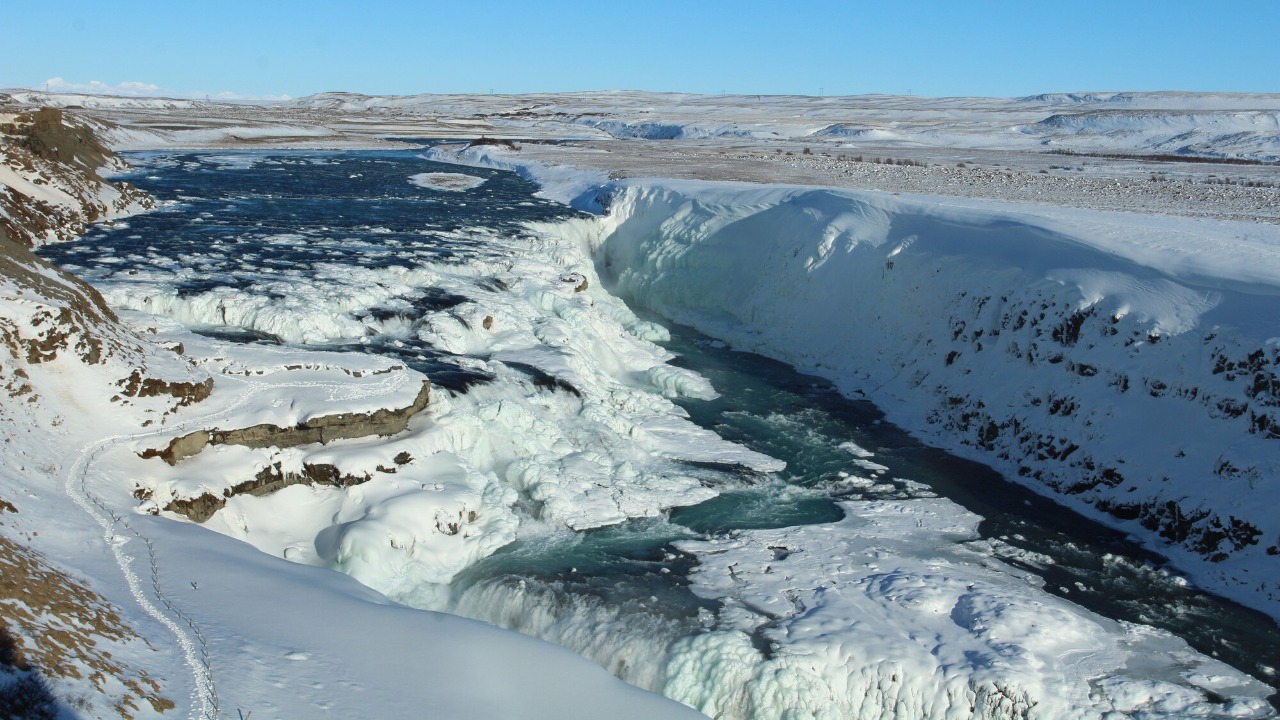

As glaciers and ice sheets retreat, they are exposing objects, organisms, and landscapes that have been locked away for centuries or even millennia. Those revelations are reshaping how I understand both the pace of climate change and the depth of Earth’s memory, forcing science to race against the thaw to document what is emerging before it disappears again, this time for good.
From ancient weapons and mummified remains to long-frozen viruses and buried methane, the melt is turning high mountains and polar regions into active archives. The discoveries are dazzling, but they also carry clear warnings about rising temperatures, shifting ecosystems, and the risks that come with disturbing what the ice has preserved.
Ancient artifacts emerging from retreating ice
One of the most striking consequences of rapid melt is the steady stream of archaeological finds appearing where ice once seemed permanent. As I look at reports from high mountain passes and shrinking glaciers, a pattern emerges: objects that were dropped, lost, or deliberately placed on snow and ice are reappearing in situ, often in pristine condition, because the cold acted as a natural deep-freeze. In Norway’s Jotunheimen and Oppland regions, for example, researchers have recovered arrows, skis, and textiles from reindeer hunting grounds that date back thousands of years, all exposed as ice patches thin and fragment under sustained warming, a trend documented in detailed surveys of glacier archaeology.
These finds are not just curiosities, they are filling gaps in the historical record about how people moved, traded, and hunted across high-altitude landscapes. Wooden tools and leather garments that would normally rot away in soil have survived in ice, allowing teams to reconstruct trade routes and seasonal migration patterns with unusual precision. In the Alps, the discovery of the mummified body known as Ötzi, along with his copper axe and grass cloak, provided a rare snapshot of Copper Age life, and subsequent work on other melt-exposed sites has extended that insight to later periods, as cataloged in syntheses of glacial archaeology. The urgency is that once these objects surface, they begin to decay quickly in the open air, so archaeologists are racing to locate and conserve them before they are lost again, this time to oxygen, microbes, and sunlight rather than ice.
Human stories written in ice and permafrost
Beyond tools and weapons, melting ice is revealing human remains that carry intimate stories about past lives and deaths. I find it striking that many of the most haunting discoveries are accidental: hikers or reindeer herders stumble on bones or clothing where maps still show solid ice. In the Yukon and Alaska, thawing permafrost and retreating glaciers have exposed burials, preserved hair, and even soft tissue from Indigenous ancestors, prompting collaborations between scientists and First Nations to balance research with cultural protocols, as described in case studies of permafrost archaeology. These remains can retain DNA, stomach contents, and isotopic signatures that reveal diet, disease, and migration histories, turning each find into a densely layered data point on how people adapted to harsh climates.
At the same time, the exposure of graves and sacred sites raises ethical questions that I cannot ignore. Communities whose ancestors are emerging from the ground are asking who controls the narrative and how remains should be handled once they are no longer shielded by ice. In Siberia and northern Canada, reports of thaw-induced erosion collapsing burial grounds into rivers have pushed local governments and Indigenous organizations to develop emergency documentation and reburial plans, drawing on guidance from climate impact assessments that flag permafrost thaw as a direct threat to cultural heritage. The science benefits from the unprecedented access to ancient DNA and artifacts, but it also has to adjust to a reality where climate change is literally unearthing people who never consented to become research subjects.
Frozen pathogens and the microbiology of a warming world
As ice and permafrost soften, the most unsettling revelations are microscopic. Long-dormant microbes, including viruses and bacteria, are being released from sediments that have been frozen for tens of thousands of years. Laboratory work on Siberian permafrost has already revived so‑called “giant viruses” that infect amoebas, with one team successfully reactivating a virus from a 30,000‑year‑old sample and demonstrating that its genetic material remained intact, a result documented in controlled experiments on ancient permafrost viruses. Those specific organisms do not pose a direct threat to humans, but they prove that complex viral particles can survive deep freeze conditions and become infectious again once thawed.
Public health researchers are now weighing how to assess the risk that other, more dangerous pathogens might emerge from melting ground or ice. Studies of permafrost cores have identified DNA fragments from smallpox and other human diseases, and outbreaks of anthrax in northern Russia have been linked to thawed reindeer carcasses that had been buried in frozen soil, as summarized in reviews of permafrost microbiology. I see a clear tension here: the same techniques that let scientists catalog ancient microbial diversity also reveal vulnerabilities in modern infrastructure, from remote clinics to water systems, that would struggle to cope with unexpected infections. So far, the documented cases remain localized and manageable, but the combination of warming temperatures, expanding human activity in the Arctic, and the sheer age of some of these microbes keeps this on the list of climate-linked risks that demand close monitoring rather than complacency.
Ice cores as time capsules of climate and pollution
While surface melt exposes artifacts and organisms, deeper drilling into ice sheets is yielding a different kind of revelation: continuous records of past climate and atmospheric chemistry. I think of ice cores as vertical archives, each layer capturing snowfall, trapped air bubbles, and trace pollutants from a specific year or season. Analyses from Greenland and Antarctica have reconstructed temperature and greenhouse gas levels over hundreds of thousands of years, showing how carbon dioxide and methane concentrations track with glacial and interglacial cycles, a relationship quantified in landmark ice core studies. Those records make it clear that current greenhouse gas levels sit far outside the natural range seen in previous warm periods, underscoring how unusual the modern spike is.
More recent layers tell a different story, one about industrialization and regulation. Ice cores from mountain glaciers in the Alps and Himalayas preserve signatures of leaded gasoline, coal burning, and even nuclear weapons testing, with distinct peaks in lead and sulfate that align with mid‑20th‑century emissions and then decline after clean air laws took effect, as documented in high‑resolution pollution reconstructions. That historical arc matters because it shows that policy choices leave measurable fingerprints in the cryosphere, and that some forms of atmospheric contamination can be reversed when emissions fall. At the same time, accelerating melt is threatening the very archives that make this analysis possible, especially in smaller glaciers that are thinning so quickly that their oldest layers are being lost from the bottom up before they can be sampled.
Glacier retreat reshaping landscapes and ecosystems
As ice pulls back, it is not just revealing what was buried, it is also remaking the physical map of mountain and polar regions. I see this most clearly in satellite imagery that tracks the formation of new proglacial lakes where tongues of ice once extended, and in field reports of unstable slopes and sudden floods. When a glacier thins, it can leave behind steep, oversteepened valley walls and unconsolidated debris that are prone to landslides, especially once permafrost that had been binding rock together begins to thaw. Studies of recent disasters in the Himalayas and Andes link catastrophic outburst floods and rock avalanches to this combination of glacier retreat and warming ground, a pattern synthesized in assessments of high mountain hazards.
The ecological shifts are just as dramatic. Newly ice‑free terrain is quickly colonized by microbes, mosses, and hardy plants, followed by insects and larger animals, creating what biologists describe as primary succession on deglaciated ground. Long‑term monitoring in places like Glacier Bay in Alaska and forelands in the European Alps has documented how plant communities assemble over decades, with early nitrogen‑fixing species paving the way for shrubs and trees, as detailed in research on postglacial ecosystems. Yet the pace of modern retreat means that some cold‑adapted species are losing habitat faster than new communities can stabilize, especially where glaciers feed rivers that support salmon, irrigation, and hydropower. The net effect is a patchwork of emerging opportunities and acute stresses, with local livelihoods tied to how quickly people can adapt to the new hydrological and ecological regimes.
Permafrost thaw and the carbon feedback problem
Under the Arctic’s thawing ground lies another kind of ancient storehouse: vast quantities of organic carbon that have been frozen for millennia. As permafrost warms and begins to degrade, microbes wake up and start decomposing that material, releasing carbon dioxide and methane into the atmosphere. Climate modelers have spent years trying to quantify how much extra warming this feedback could add, and recent syntheses estimate that permafrost regions contain about 1,460 to 1,600 gigatons of organic carbon, roughly twice the amount currently in the atmosphere, according to detailed permafrost carbon inventories. Not all of that will be emitted, but even a fraction entering the air over this century would complicate efforts to meet temperature targets, because it represents a source of greenhouse gases that is difficult to control once the thaw is under way.
Field measurements from Alaska, Siberia, and northern Canada already show sections of ground subsiding into thermokarst pits and lakes as ice‑rich permafrost collapses, with those water bodies acting as hotspots for methane emissions. Aircraft and satellite campaigns have detected plumes of methane over some of these regions, and year‑round monitoring at flux towers indicates that previously stable tundra is shifting from a net carbon sink to a net source in certain seasons, a transition documented in regional greenhouse gas budgets. I read these findings as a warning that the carbon cycle is becoming more dynamic in high latitudes, with feedbacks that are not fully captured in older climate projections. That uncertainty does not mean the feedback will be catastrophic by default, but it does argue for more aggressive mitigation of human emissions to leave less room for natural amplifiers to push temperatures higher.
Science racing the melt and the ethics of what comes next
Across all of these domains, I keep coming back to the sense that researchers are in a race against time. Archaeologists are organizing systematic surveys of known ice patches, glaciologists are prioritizing cores from the most vulnerable small glaciers, and microbiologists are cataloging permafrost microbes before thaw scrambles their context. International initiatives like the Ice Memory project aim to collect and store ice cores from threatened glaciers in long‑term archives in Antarctica, preserving their climate records for future generations of scientists, an effort described in planning documents for global ice archives. Similar urgency is visible in Arctic observatories that are expanding networks of sensors to track permafrost temperatures, ground movement, and greenhouse gas fluxes in near real time.
Yet the more the ice reveals, the more ethical and political questions surface alongside the scientific ones. Decisions about how to handle newly exposed human remains, whether to disturb ancient pathogens, and how to weigh local community priorities against global research agendas are no longer hypothetical. Indigenous groups in the North are asserting co‑management over archaeological finds and environmental monitoring, pushing for research frameworks that treat them as partners rather than subjects, a shift reflected in guidelines for collaborative Arctic science. For me, the emerging picture is that melting ice is not just a backdrop to climate change, it is an active participant, releasing stories, hazards, and data at a pace that challenges institutions built for a more stable world. How we respond will determine whether those ancient secrets deepen our understanding and resilience, or simply mark what was lost as the planet warmed.
More from MorningOverview