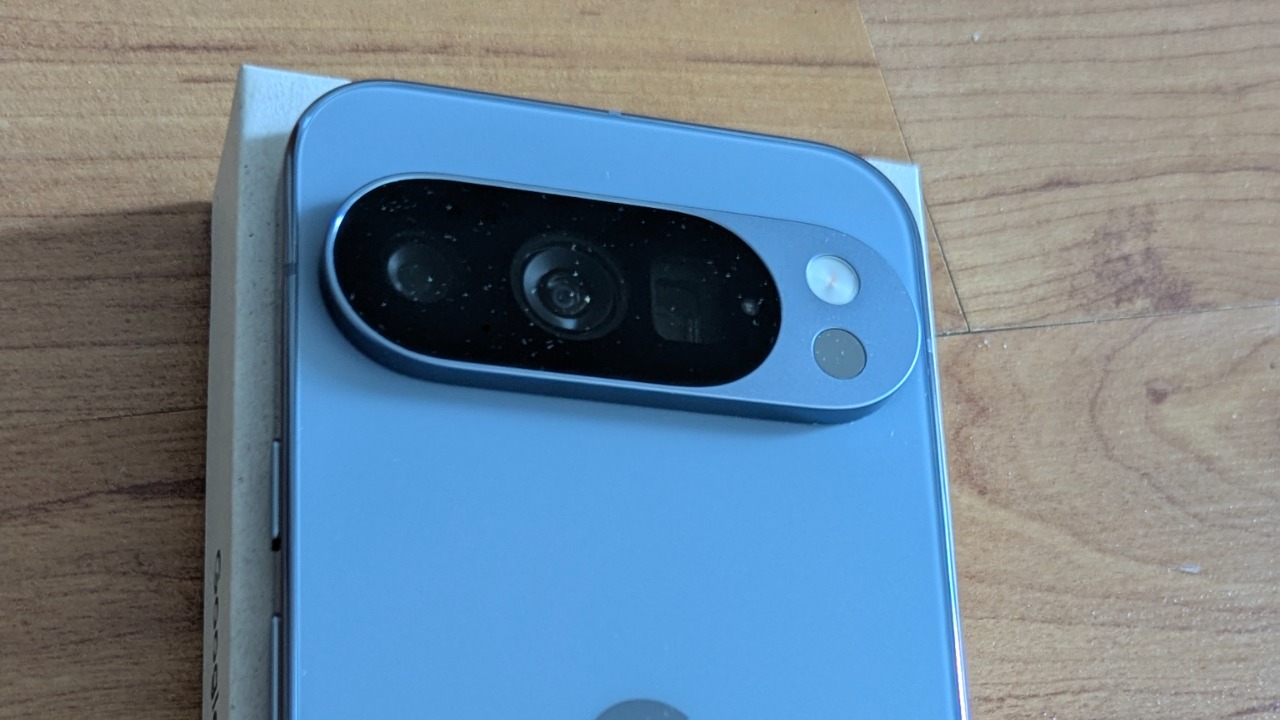

Android and iOS users have spent more than a decade juggling clunky workarounds just to move a few photos between phones. Now Google is finally cutting through that friction, letting Android Quick Share talk directly to AirDrop, with the Pixel 10 family getting the first crack at truly seamless cross-platform sharing. The result is a rare moment of détente in the mobile platform wars, and it starts with Google’s own flagship hardware.
Instead of emailing yourself a video or hunting down a chat app that both sides use, Pixel 10 owners can now beam files straight to nearby iPhones and Macs, while Apple users can send content back as if they were sharing with another Apple device. It is a small change in interface terms, but it quietly rewires one of the most entrenched divides in modern consumer tech.
Pixel 10 gets the first taste of cross-platform sharing
The most immediate impact of this shift is simple: if you own a Pixel 10, you can now send files directly to Apple hardware that supports AirDrop. Reporting on Nov 19, 2025 describes how Android Quick Share on Pixel 10 devices can initiate transfers to iPhones through the familiar system share sheet, so a 4K clip from a Pixel 10 Pro can land on a friend’s iPhone 16 as easily as it would on another Android phone, with the feature framed as a new Android update that lets Pixel 10 users send files to iPhones through the standard system-wide Share menu in Android Quick Share.
On the Apple side, iPhone owners do not have to learn a new interface, they simply see an incoming item that looks like any other AirDrop request once they have enabled the relevant setting. Coverage dated Nov 19, 2025 notes that with that toggle turned on, a file coming from an Android user appears identical to an AirDrop file from an iPhone user, and that this Quick Share interoperability is available now for compatible devices, as detailed in guidance for iPhone users.
How Quick Share and AirDrop actually talk to each other
Under the hood, this is not a simple Bluetooth handshake, it is a carefully engineered bridge between two proprietary ecosystems. Google describes the work as part of its efforts to make Android Quick Share support for AirDrop “Secure by Design,” explaining that the interoperability support was built with the same rigor as its existing sharing stack and that the company treated the new link as a first-class security feature rather than a bolt-on convenience, a stance laid out in its Secure by Design discussion of Quick Share.
That security posture matters because the new bridge effectively extends the trusted perimeter of AirDrop to include nearby Android devices, starting with Pixel 10. Reporting on Nov 19, 2025 explains that Android Quick Share on Pixel 10 can AirDrop to iPhones through a Secure Sharing Channel, with the Android maker emphasizing protections against man-in-the-middle attacks and other common vulnerabilities in the way devices discover each other and negotiate encrypted sessions, a level of detail highlighted in coverage of the Secure Sharing Channel.
The Pixel-first rollout and what comes next for Android
Google is not flipping this on for every Android phone at once, and that staggered approach is deliberate. Reports dated Nov 19, 2025 state that as of November 20, Google Pixel 10 devices can send files to Apple users through Quick Share, with the company describing this as a limited rollout that will expand to more Android devices down the line, a timeline spelled out in coverage that notes, “As of November 20, Google Pixel 10 devices can send files to Apple users” and that this is part of a limited rollout.
Another report on Nov 19, 2025 reinforces that framing, pointing out that as of November 20, Google Pixel 10 devices can send files to Apple users and that once the Android device reaches out via Quick Share, the iPhone user sees a familiar AirDrop-style prompt, with the piece explicitly noting that “As of November 20, Google Pixel 10 devices can send files to Apple users” and that this is expected to reach more Android phones and iPhones down the line, a progression described in coverage under the line As of November.
The one extra step Pixel owners need to make it work
Despite the promise of native-feeling sharing, there is still a small hoop for early adopters to jump through. Reporting on Nov 19, 2025 notes that before you try sending files from your Pixel to your iPhone, you will need to install a companion app to make the feature work, with the guidance framed bluntly as “But before you try sending files from your Pixel to your iPhone, you will need to install a companion app,” and then try again once it is set up, a caveat spelled out in instructions that emphasize the phrase But before you try sending.
That extra step is a reminder that this is still an interoperability layer, not a single unified standard, and it explains why Google is starting with its own hardware. Coverage of the broader strategy on Nov 19, 2025 describes how Google has effectively gone behind Apple’s back to make Pixel 10 work with one of the best iPhone features, arguing that Google has achieved the seemingly impossible by letting Pixel phones share files with every Apple device that has AirDrop, a feat summarized in analysis that notes Google goes behind Apple’s back.
What the experience looks like on both sides of the transfer
From a user’s perspective, the new behavior is designed to feel as close to native as possible on both platforms. Coverage dated Nov 19, 2025 explains that Android’s Quick Share now works with iPhone’s AirDrop starting with the Pixel 10 lineup, and that when you initiate a transfer from a Pixel, you see nearby Apple devices appear by their device name on your screen, a detail captured in reports that describe how Android Quick Share surfaces those targets.
On the receiving end, Apple users interact with the feature through the same AirDrop interface they already know. Reporting on Nov 19, 2025 notes that with the relevant setting enabled, a file coming from an Android user looks identical to an AirDrop file from an iPhone user, so an iPhone owner sharing a batch of vacation photos to a Pixel 10 sees the same style of confirmation sheet and thumbnail preview, a parity that is emphasized in guidance for Android interoperability on iPhone.
Security, testing, and why Apple is tolerating this bridge
For Apple, allowing any outside system to plug into AirDrop’s flow is a significant concession, which is why the security story is doing so much heavy lifting. Google’s own security team describes how, as part of its efforts to make Quick Share support for AirDrop secure, it built the interoperability support with the same Secure by Design principles that govern its core Android features, and that this includes rigorous threat modeling and hardening of the discovery and pairing process, a philosophy spelled out in its Secure approach to Quick Share.
Independent scrutiny has also been part of the rollout. Reporting on Nov 19, 2025 notes that Google Pixel 10 now lets users share files directly with Apple devices and that this capability, described under the line “Google Pixel 10 Now Lets Users Share Files Directly With Apple Devices,” has been tested independently by cybersecurity firm NetSPI, with the piece timestamped at November 20, 2025, 04:37 pm EST and framed as Written analysis of the security posture.
Why this matters for the broader Android and Apple rivalry
Beyond the technical novelty, this move chips away at one of Apple’s most effective lock-in tools. Reports on Nov 19, 2025 describe how Android Quick Share now works with Apple’s AirDrop and frame it as a breaking development, noting that Android’s Quick Share now works with Apple’s AirDrop and that Pixel 10 owners can now send files to iPhones seamlessly, with the coverage explicitly calling out that “Android’s Quick Share now works with Apple’s AirDrop” and that the feature has been tested by independent security experts, a shift captured in analysis of Breaking interoperability.
Other coverage on Nov 19, 2025 leans into the cultural angle, pointing out that Android’s Quick Share Now Works With Apple’s AirDrop and joking that there is an Apple cross-polination joke in there somewhere, while also stressing that as of November 20, Google Pixel 10 devices can send files to Apple users and that this is expected to reach more Android phones and iPhones down the line, with the piece explicitly using the phrasing “Android’s Quick Share Now Works With Apple” and “There” to underline the oddity of the two rivals playing nicely, a tone captured in commentary that notes Android Quick Share Now Works With Apple.
The everyday scenarios this finally fixes
For all the platform politics, the real test is whether this makes life easier in the moments when people actually need to move data. Think about a family gathering where one person is on a Pixel 10 and everyone else is on iPhones, or a classroom where a teacher with a MacBook needs to collect videos from students using a mix of Android and Apple devices. Reporting on Nov 19, 2025 explains that Android Quick Share on Pixel 10 can AirDrop to iPhones and that a new Android update lets Pixel 10 users send files to iPhones through the system-wide Share menu, which means those everyday transfers can now happen without resorting to messaging apps or cloud links, a convenience highlighted in coverage of Android and iPhone sharing.
There is also a hardware angle, since many people discover these features when they buy a new phone or accessory and start experimenting. Product listings for Pixel 10 and related accessories already highlight cross-platform sharing as a selling point, with shopping results that surface the device under generic product queries and similar product searches that emphasize how the new phones fit into mixed-device households.
From novelty to expectation
Right now, this interoperability still feels like a novelty, something tech enthusiasts will show off by flinging a test photo between a Pixel 10 and an iPhone just because they can. Reporting on Nov 19, 2025 captures that sense of newness by describing how Android Quick Share now works with AirDrop on iPhone, starting on Pixel 10, and by emphasizing that the Secure Sharing Channel is designed to protect those transfers from attacks and other common vulnerabilities, a framing that underscores how unusual it is to see Android Quick Share and Pixel hardware cooperating so closely with Apple’s ecosystem in a Pixel-first rollout.
Over time, though, the expectation will shift, and people will simply assume that nearby devices can talk to each other regardless of logo. Coverage on Nov 19, 2025 that labels the development as Breaking notes that Android’s Quick Share now works with Apple’s AirDrop and that Pixel 10 owners can now send files to iPhones seamlessly, with the piece explicitly using the names Nov, Breaking, Android, Quick Share, and Apple to underline how significant it is for the two ecosystems to meet in the middle, a sign that what starts as a Pixel 10 perk could eventually become table stakes for every modern phone, as suggested in analysis of Android and Apple convergence.
More from MorningOverview