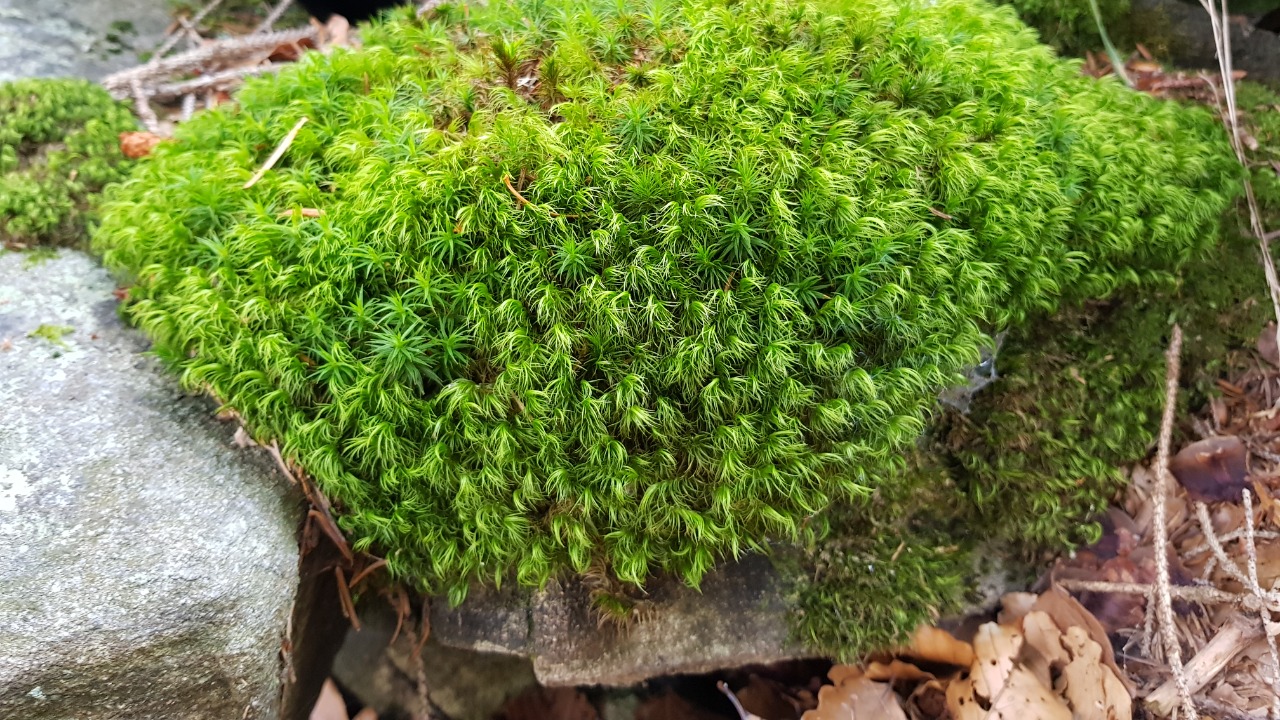

Moss spores have just joined the short list of life forms proven to withstand the raw vacuum of space for months at a time, surviving unshielded on the exterior of the International Space Station and then resuming growth back on Earth. The experiment, which exposed a hardy carpet of green to radiation, temperature swings and near-total dehydration for roughly nine months, is now reshaping how I think about the limits of terrestrial biology. It also adds a surprisingly humble protagonist to the search for ways life might travel between worlds and take root on places far harsher than our own planet.
How a patch of moss ended up bolted to the ISS
The new study began with a simple but audacious idea: if microscopic organisms and bacterial spores can endure space, could a more complex plant structure do the same when strapped directly to the outside of a spacecraft? Researchers selected moss, a lineage that evolved early in plant history and is known for tolerating dehydration and cold, and mounted spores and tiny plant fragments on hardware fixed to the hull of the International Space Station. According to reporting on the project, the samples were left in full exposure to vacuum, ultraviolet radiation and extreme temperature shifts for about nine months, with no protective dome or atmosphere to soften the blow, before being returned to laboratories on Earth for analysis of survival and regrowth in controlled conditions, a sequence described in detail in coverage of the outside space station experiment.
Once the moss samples came back down, scientists rehydrated them and monitored whether the spores could germinate and whether damaged tissues could repair themselves and resume photosynthesis. Reports on the mission note that the team tracked not only visible greening and new shoots but also microscopic changes in cell structure and DNA, comparing space-exposed moss with control samples that had stayed safely on Earth. The fact that any of the space-battered spores managed to sprout again, after months in conditions that mimic the surface of airless worlds, is what has turned this from a quirky side project into a headline result in astrobiology and space biology circles, as highlighted in accounts of how scientists put moss on the outside of the International Space Station.
What survived nine months in vacuum actually looked like
When I look at the descriptions of the returned samples, what stands out is not a triumphant green mat but a picture of partial survival and patchy resilience. Reports on the study explain that many of the exposed moss fragments were bleached or visibly damaged, with only certain regions showing signs of life once they were rehydrated and given light. Yet within those surviving pockets, spores germinated, new filaments emerged and photosynthetic activity resumed, indicating that at least some cells had preserved their internal machinery through the entire orbital ordeal, a pattern detailed in coverage of how moss spores survive outside the International Space Station.
Microscopic analysis, as described in technical summaries of the work, suggests that the spores were the champions of this trial, outperforming more mature tissues in their ability to endure radiation and desiccation. The reporting notes that while many cells showed DNA damage and structural stress, a measurable fraction remained viable and capable of division, which is what allowed the moss to regrow in laboratory dishes after its return. That balance of widespread injury and localized survival is crucial, because it shows that the result is not a fluke of a single lucky cell but a broader capacity within the species to ride out extreme environments, a conclusion echoed in accounts of how moss spores survive months on the International Space Station.
Why moss is such a tough little astronaut
The success of this experiment is not entirely accidental, because moss brings an evolutionary toolkit that makes it a natural candidate for space exposure tests. As a nonvascular plant that often grows on rocks, tree bark and other exposed surfaces, moss is used to cycles of drying out and rehydrating, and many species can enter a dormant state when water is scarce, then restart metabolism when moisture returns. Reporting on the ISS study points out that this built-in tolerance to desiccation, along with compact tissues and protective pigments, likely helped the spores and some vegetative cells endure the vacuum and radiation they faced in orbit, a set of traits that helps explain why moss survived space for nine months.
At the cellular level, moss appears to rely on mechanisms that stabilize membranes and proteins when water is stripped away, as well as repair systems that can patch up DNA once conditions improve. Accounts of the research emphasize that after the samples were brought back to Earth and rehydrated, the surviving cells did not simply resume where they left off but activated stress responses and repair pathways that gradually restored function. That ability to absorb damage, then methodically fix it, is what sets moss apart from most higher plants, which would be fatally compromised by even a fraction of the radiation and temperature swings recorded on the station’s exterior, a contrast underscored in analyses of how tough moss spores weather space’s harsh conditions.
What this means for life between planets
For astrobiologists, the most provocative part of this result is what it suggests about the possibility of life moving between worlds without the shelter of a spacecraft. The idea that rocks blasted off one planet could carry hardy organisms or spores to another, known as lithopanspermia, has long been debated, and experiments with bacteria and lichens have already shown that some microbes can survive in space for extended periods. The moss findings add a more complex plant form to that list, strengthening the argument that fragments of terrestrial ecosystems might endure at least part of an interplanetary journey if shielded inside cracks of rock or ice, a scenario that gains new plausibility in light of the way moss survived in space for nine months attached to the outside of the ISS.
I also see implications for how we think about habitability on airless or thin-atmosphere bodies in our own solar system. If moss spores can tolerate months of direct exposure, then environments with partial shielding, such as shaded craters, subsurface ice pockets or porous regolith, might be even more forgiving to similar life forms. Reporting on the study notes that the ISS environment is a rough analog for the surface of the Moon or Mars in terms of radiation and vacuum, which means the experiment offers a small but concrete data point for models of how terrestrial biology might fare on those worlds, a connection drawn explicitly in coverage of how moss can survive harsh conditions in space.
From survival test to blueprint for space gardens
Beyond the big-picture questions about life in the universe, the moss experiment has very practical implications for future human missions. Long-duration crews on the Moon or Mars will need reliable, low-maintenance systems for air revitalization, humidity control and perhaps even psychological comfort, and plants are natural candidates for all three. Moss, with its ability to cling to surfaces, tolerate neglect and operate as a living sponge for water and nutrients, could become a component of bioengineered walls, filters or green panels inside habitats, especially if we know it can survive accidental exposure to vacuum or radiation spikes similar to those encountered on the station, a possibility raised in reports that detail how moss survives 9 months outside the ISS and keeps growing once back on Earth.
There is also a more experimental frontier, where researchers imagine using hardy plants as part of in situ resource utilization on other worlds. If moss can colonize regolith simulants or real lunar and Martian soils under partial protection, it might help stabilize dust, retain moisture and even contribute to early stages of soil formation for more demanding crops. The ISS exposure trial does not prove that scenario, but it provides a crucial stress test of the organism’s limits, giving mission planners and biologists a better sense of which species might be worth including in future payloads and which will likely fail. That is why the study has attracted attention not only in academic journals but also in broader science communities, where discussions of how moss survived in space for nine months are already feeding into speculative designs for off-world greenhouses and bioregenerative life support.
Why a small green patch matters for big space questions
What I find most striking about this story is how it compresses several of the biggest questions in space science into a single, modest experiment. By proving that a simple plant can endure months of unfiltered space conditions and then resume growth, the researchers have given us a tangible example of resilience that bridges planetary science, biology and human exploration. It is a reminder that the boundary between habitable and hostile is not as sharp as it looks from orbit, and that life’s capacity to adapt often outpaces our expectations, especially when we test organisms that evolved in marginal, fluctuating environments on Earth.
At the same time, the moss experiment is a cautionary tale about planetary protection and contamination. If spores and plant fragments can survive on the outside of a spacecraft, then missions to potentially habitable worlds must take even greater care to avoid seeding those environments with terrestrial life that could confuse future searches for native organisms. The same toughness that makes moss an appealing candidate for space-based biotechnologies also makes it a potential hitchhiker, and as we plan more ambitious journeys across the solar system, I believe we will need to balance our enthusiasm for using hardy species with strict protocols that keep our scientific targets as pristine as possible.
More from MorningOverview