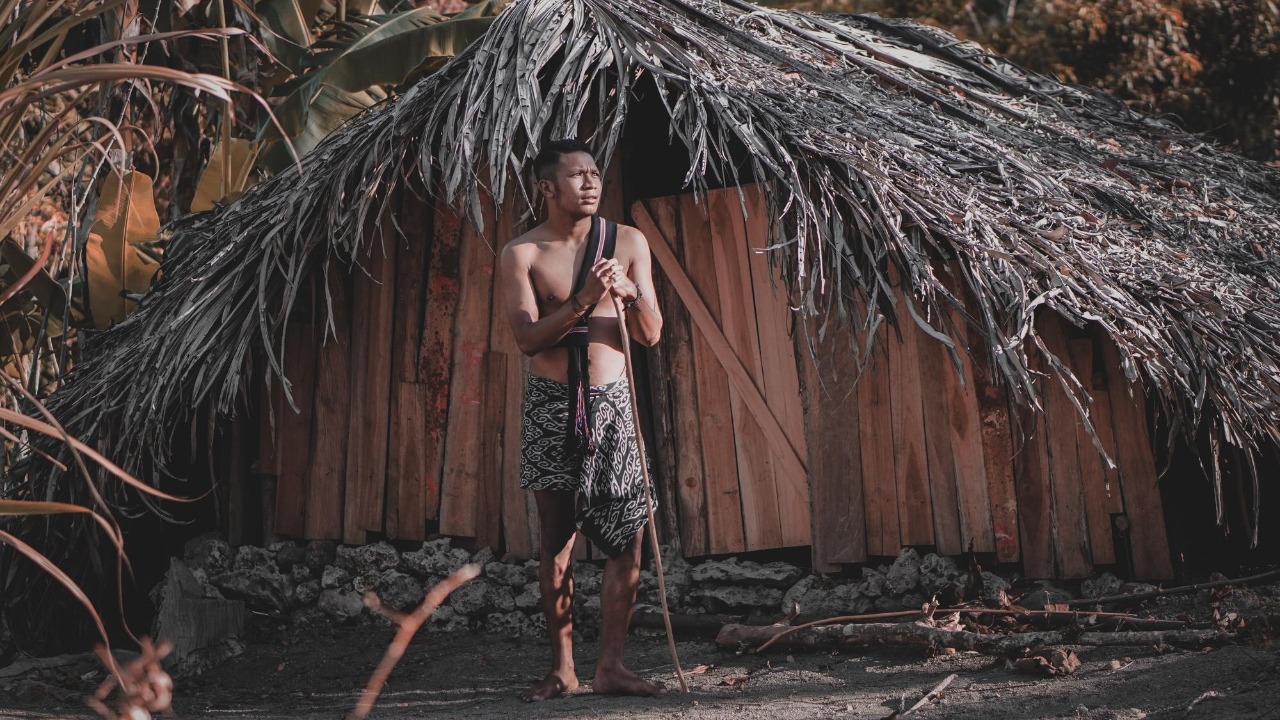

I went looking for a community that still lives much as humans did 10,000 years ago, and quickly realized that the story is as much about my own assumptions as it is about any remote tribe. The idea of people frozen in time is powerful, but when I dug into the reporting and research, what I found instead was a living, changing culture that mirrors our prehistoric past while still navigating the pressures of the present.
To understand a tribe that still hunts, gathers, and forages with stone-age tools, I first had to understand what “10,000 years ago” actually means in human history, and then confront how easily modern outsiders romanticize or distort that picture. As I followed video reports, historical timelines, and cross-cultural studies, the story shifted from a simple survival tale into a deeper question: what do we really mean when we say a people are “living like our ancestors”?
What “10,000 Years Ago” Really Looked Like
When I picture life 10,000 years ago, I instinctively imagine caves, crude spears, and endless struggle, but the archaeological record shows a more complex turning point. Around that time, humans in different regions were moving from purely hunter-gatherer bands toward early farming, experimenting with domesticated plants and animals while still relying heavily on wild game and foraged foods. That period sits at the hinge between the Paleolithic and the Neolithic, a moment when stone tools, seasonal migrations, and small kin-based groups still defined daily life even as settled villages began to appear in some places, a transition mapped out in detailed prehistoric timelines.
What matters for a tribe said to live “like humans did 10,000 years ago” is not an exact date stamp but a bundle of practices: hunting with simple weapons, gathering wild plants, living in small, mobile groups, and organizing society around kinship rather than formal states or markets. Those traits echo what archaeologists see in late Stone Age communities, even though the specifics varied widely across continents. When I compare that framework to modern footage of remote hunter-gatherers, I’m not looking for a perfect time capsule; I’m looking for continuities in subsistence, technology, and social scale that genuinely resemble those late prehistoric lifeways.
The Modern Tribe That Still Hunts and Gathers
In recent years, video crews have reached a handful of remote communities whose daily routines look strikingly similar to those late Stone Age patterns: men tracking game with bows or spears, women gathering tubers and fruits, and children learning by watching rather than in formal schools. One widely shared report follows a tribe whose members still rely on wild meat and forest plants, using handmade weapons and simple shelters, a way of life presented as a rare window into our deep past in a short news video.
When I watch that footage, what stands out is not just the lack of electricity or paved roads, but the rhythm of the day: coordinated group hunts, communal food sharing, and a constant awareness of weather, animal tracks, and seasonal cycles. The tribe’s survival depends on intimate ecological knowledge rather than on wages or markets, and that dependence shapes everything from how elders are respected to how conflicts are resolved. Other documentary teams have captured similar scenes of hunters moving silently through dense forest, reading broken branches and faint prints as fluently as most of us read text on a screen, as seen in immersive field footage that follows their tracking and foraging routes.
Tools, Fire, and the Technology of Survival
To understand how close this tribe’s technology is to that of our ancestors, I pay attention to the tools in their hands. Stone-tipped arrows, wooden spears, and digging sticks are not just props; they are the core of a technological system that prioritizes portability, repairability, and intimate knowledge of local materials. In several recordings, hunters are shown shaping points, binding them with plant fibers, and testing balance by feel, a process that mirrors experimental reconstructions of late Stone Age weapon-making documented in educational demonstrations of primitive tools.
Fire is the other crucial technology that links this tribe to humans 10,000 years ago. Cooking meat, hardening wooden spear tips, and using controlled burns to manage vegetation all appear in modern footage of remote hunter-gatherers, echoing what archaeologists infer from ancient hearths and charcoal layers. In one sequence, I watched as a small group carefully nursed embers from one campsite to the next rather than starting from scratch, a practice that aligns with how many prehistoric groups treated fire as a precious, shared resource, a behavior also highlighted in broader explainers on early human technology.
Food, Sharing, and the Social Glue
What really makes this tribe feel like a living echo of the Stone Age is not just what they eat, but how they share it. In small-scale societies, anthropologists consistently find that meat from a successful hunt is distributed widely, often beyond the hunter’s immediate family, creating a web of mutual obligation that cushions everyone against bad days. In the video reports I reviewed, hunters return with game and the entire camp gathers as portions are allocated, with elders and children clearly prioritized, a pattern that matches ethnographic descriptions of hunter-gatherer food sharing and the social bonds it reinforces, themes that also appear in broader discussions of foraging societies.
Foraging itself is equally revealing. Women and children are often shown collecting roots, berries, and honey, moving along well-known paths and stopping at specific trees or patches that have been visited for generations. That division of labor, with men focusing more on hunting and women on plant foods, is not universal but is common enough in the anthropological record to be considered a typical pattern for many hunter-gatherers. The mix of high-risk, high-reward hunts and more reliable plant gathering creates a balanced diet and a social system where cooperation is not optional but essential, a dynamic that echoes the subsistence strategies outlined in historical studies of premodern warfare and logistics that note how food systems shape group cohesion.
Rituals, Storytelling, and the Memory of the Land
When I listen closely to the tribe’s evening scenes, I hear more than casual conversation; I hear an oral archive. Around the fire, elders recount hunts, migrations, and encounters with neighboring groups, embedding practical knowledge in stories that children absorb long before they can hunt on their own. That reliance on spoken narrative rather than written records is a hallmark of societies without formal schooling, and it resonates with critiques of how modern cultures often undervalue oral knowledge in favor of standardized writing, a tension explored in depth in analyses of assumptions about literacy.
Rituals also tie the tribe to a deep past. Footage shows body painting, dance, and song used to mark transitions such as successful hunts, coming-of-age moments, or seasonal changes. These practices are not decorative extras; they are how the group encodes identity, territory, and moral rules without written law. Anthropologists studying prehistoric art and burial sites often infer similar roles for cave paintings, carved figurines, and ceremonial objects, suggesting that symbolic behavior has long been central to human survival, not just an aesthetic flourish. Watching a modern tribe use song to coordinate group movement or to teach children about dangerous animals brings those ancient inferences into vivid, contemporary focus.
Contact, Conflict, and the Pressure of the Outside World
No matter how remote a tribe may seem on camera, it does not exist in a vacuum, and the moment outsiders arrive with lenses and questions, the relationship changes. Historical records show that contact between technologically unequal societies has often been marked by misunderstanding, exploitation, and sometimes violence, patterns that recur from early colonial encounters to more recent frontier conflicts. Comparative studies of cross-cultural contact describe how differences in language, time perception, and authority can quickly escalate into tension when one side assumes its own norms are universal, a dynamic unpacked in detail in research on cultural collisions.
For a tribe living much as humans did 10,000 years ago, the threats today are less about rival bands and more about land loss, resource extraction, and the spread of disease. Even well-intentioned visitors can introduce pathogens or disrupt hunting grounds simply by being there. Historical case studies of indigenous communities repeatedly show that once roads, logging, or mining arrive, game disappears, rivers change, and traditional routes become inaccessible, forcing rapid and often traumatic adaptation. When I watch modern footage of a hunter pausing as a distant engine noise cuts through the forest, I see that collision between worlds in real time, a collision that mirrors the structural pressures described in critical analyses of global capitalism and indigenous land.
Why Our Fascination Says as Much About Us as About Them
As I followed these stories, I kept asking myself why the phrase “living the way humans did 10,000 years ago” is so magnetic. Part of the appeal is nostalgia: the fantasy that life was simpler when survival depended on skill and courage rather than on passwords and paperwork. Another part is anxiety: in an era of climate change and digital overload, a tribe that still reads the forest like a book seems to hold a kind of wisdom we fear we have lost. Yet that fascination can easily slide into romanticization, flattening real people into symbols of purity or authenticity instead of recognizing them as contemporary humans making hard choices under pressure.
When I step back, what I see is not a frozen relic of the Stone Age but a living community that happens to rely on hunting, gathering, and oral tradition in ways that echo our distant ancestors. Their tools, rituals, and social bonds illuminate how humans survived for most of our species’ history, but their challenges—land rights, health risks, and cultural misunderstanding—are entirely modern. To treat them as a museum exhibit would be to miss the point. They are not “behind” us on some evolutionary ladder; they are alongside us in the present, reminding me that the range of ways to be human is far wider than the narrow slice I inhabit.
More from MorningOverview