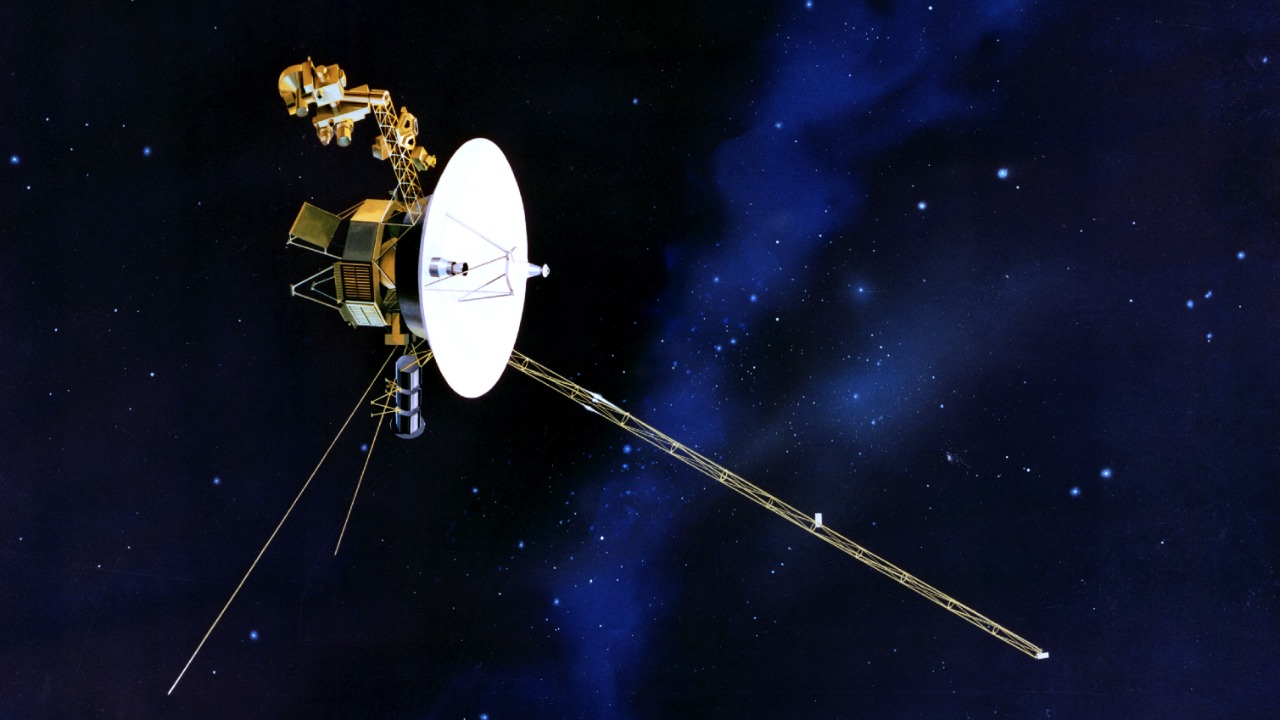

Voyager 1’s long silence and sudden return to form have been dramatic enough without any help from science-fiction headlines. After months of garbled data, the veteran probe is once again sending readable information home, but the real story is a fragile, aging spacecraft and a ground team racing to keep it talking—not a mysterious “quantum core” or a non-human signal. In what follows, I unpack what actually happened, what engineers think went wrong, and why the confirmed facts do not support claims of an alien structure or exotic new hardware.
What Really Happened During Voyager 1’s Five-Month “Silence”
When people say Voyager 1 went silent, what they usually mean is that the spacecraft stopped making sense, not that it stopped transmitting. The probe continued to send a steady radio carrier toward Earth, but the stream of ones and zeros riding on that signal turned into gibberish, leaving engineers with no usable health data or science readings. From my perspective, that distinction matters: a dead spacecraft is one thing, a confused one is another, and the latter can sometimes be coaxed back.
NASA described how, since November 2023, the radio link from Voyager 1 remained intact while the information encoded on it became unintelligible, a problem traced to the systems that package and relay telemetry to Earth. In an update posted in Mar, the agency explained that the spacecraft had been sending a steady radio signal to Earth but that the data itself was corrupted, pointing to an issue in the chain that includes the flight data system and the telemetry modulation unit. That progress report on the underlying fault came in a detailed engineering note about how NASA engineers make progress toward understanding Voyager 1’s issue, and it makes clear that the “silence” was really a loss of intelligible telemetry, not a supernatural blackout.
Inside the Glitch: A Failing Chip, Not a “Quantum Core”
Once the team confirmed that Voyager 1 was still broadcasting, the next step was to figure out why the data stream looked like nonsense. The culprit, according to the engineers, was not a mysterious new module but a very old one: part of the memory inside the flight data system, or FDS. The FDS is the digital brain that formats measurements and status information before handing them off to the radio hardware, and if its memory is damaged, the spacecraft can talk but not say anything meaningful.
Earlier this year, the engineering team said they suspected that a single chip responsible for storing part of the affected portion of the FDS memory was no longer working correctly. That failure meant some of the instructions and data structures the system relied on had effectively vanished, causing the outgoing telemetry to be scrambled. The explanation was shared in a technical discussion of how the team diagnosed why Voyager 1 was sending a stream of unusable data and why they believed the problem was confined to one component of the FDS, rather than to some unknown influence from outside our solar system, as noted in a community summary of why Voyager 1 is sending a stream of corrupted information. Nothing in that account mentions, let alone confirms, any “quantum core” or non-human structure.
How Engineers Coaxed Voyager 1 Back to Speaking Clearly
With a likely diagnosis in hand, the challenge became how to work around a broken memory chip on a spacecraft launched in the 1970s, far beyond any hope of repair. Engineers had to reprogram Voyager 1 from Earth, carefully reshuffling code and data so that the FDS could operate without relying on the damaged region. That meant crafting new command sequences, sending them across billions of kilometers, and then waiting many hours for the round-trip light-time to see whether the fix had taken.
By Apr 21, 2024, those efforts paid off: Voyager 1 was sending data back to Earth for the first time in 5 months in a form that engineers could interpret. The restored telemetry reflected its current health status and confirmed that the spacecraft was still functioning despite the memory damage. A detailed account of that moment describes how Voyager 1 is sending data back to Earth for the first time in 5 months and how the team’s inventive workaround allowed the probe to resume normal communications, as reported in a feature on how Voyager 1 regains communications with NASA after an inventive fix. The narrative there is one of patient troubleshooting and software ingenuity, not of a hidden, exotic subsystem suddenly “waking up.”
Months of Gibberish and the Long Road Back to Normal Operations
From the outside, it can be tempting to compress the story into a neat arc: Voyager 1 went quiet, then it came back. In reality, the period of gibberish stretched over months, and the recovery unfolded in careful stages. Engineers first focused on restoring basic engineering telemetry—temperatures, voltages, and other housekeeping data—before attempting to bring science instruments fully back online. That stepwise approach is standard when dealing with a spacecraft that far from home, where every command is high stakes.
Coverage of the episode emphasized that, after months of gibberish, Voyager 1 is communicating well again, underscoring how much effort went into coaxing the 46-year-old spacecraft back into a stable configuration. The report noted that NASA scientists spent months working through the FDS issue and that the agency announced the successful restoration of communications on Apr 21, 2024, highlighting both the age of the hardware and the persistence of the team. Those details appear in an in-depth look at how After Months of Gibberish, Voyager 1 Is Communicating Well Again, which explicitly describes the spacecraft as 46-year-old and frames the episode as a triumph of long-distance engineering rather than a brush with something non-human.
What NASA Actually Says About the Signal’s Structure
The phrase “cryptic signal” conjures images of encoded messages or alien beacons, but the structure of Voyager 1’s transmissions is well understood and has been for decades. When the FDS memory problem struck, the pattern of bits changed in ways that made the data unreadable, yet the underlying radio carrier and modulation scheme remained exactly what engineers expected. From my reading of the official updates, the “mystery” was about why the onboard computer was misbehaving, not about any unknown structure in the signal itself.
NASA’s own description of the anomaly explains that, since November 2023, Voyager 1’s radio signal continued to arrive at Earth as usual, but the data being sent by the telemetry modulation unit could not be decoded into meaningful values. That wording makes clear that the issue lay in the content produced by the spacecraft’s systems, not in some new or non-human pattern imposed on the transmission. The agency’s technical note on how since November 2023, NASA’s Voyager 1 has been sending a steady radio signal to Earth but with unusable data is explicit about the cause: a fault in the FDS and telemetry chain. There is no mention of a “quantum core,” no reference to a non-human structure, and no hint that the signal’s architecture had changed in any exotic way.
Separating Speculation from the Confirmed Record
Claims that a “NASA Quantum Core” flagged a non-human structure in Voyager 1’s signal do not appear in any of the official or technical reporting I can verify. The sources that document the anomaly and recovery focus on the FDS memory failure, the suspected single-chip malfunction, and the software workarounds that restored telemetry. When I compare those accounts, they are consistent on the key points: the radio link never vanished, the data became unreadable due to an onboard fault, and engineers eventually reconfigured the system to bypass the damaged memory.
In fact, the most detailed narratives emphasize how conventional the underlying problem was, given the age and distance of the spacecraft. The engineering update about progress toward understanding Voyager 1’s issue, the explanation of the suspected FDS chip failure, the report that Voyager 1 is sending data back to Earth for the first time in 5 months, and the account of how the 46-year-old probe is communicating well again all reinforce a grounded picture of the episode. Across these sources, there is no corroborated reference to any “quantum core,” no evidence of a non-human structure in the signal, and no suggestion that the anomaly was caused by anything other than aging hardware and the harsh environment of interstellar space. Based on the available sources, any claim beyond that—especially about exotic technology or alien signatures—remains unverified.
More from MorningOverview