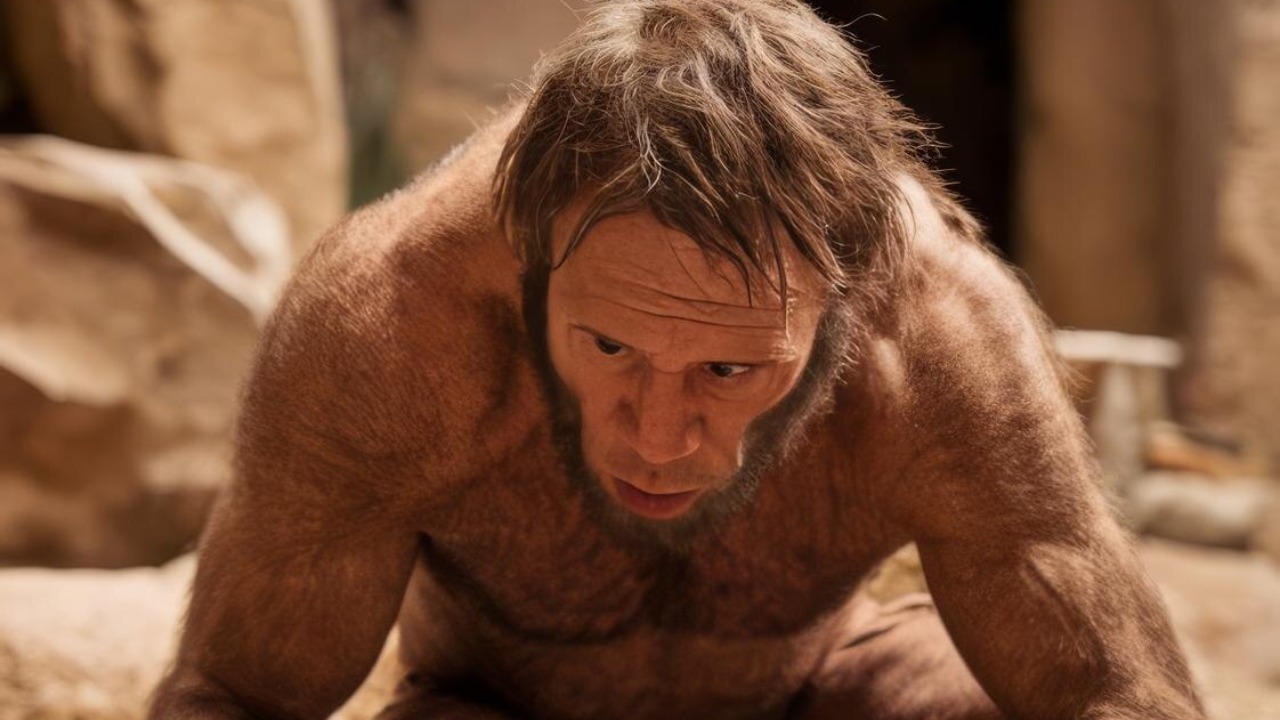

I have spent years covering discoveries that nudge our origin story around the edges, but the sequencing of DNA from one of the very last Neanderthals does something different: it rewrites the center of the plot. By pulling a complete genetic profile from a single, isolated individual at the end of the Neanderthal timeline, researchers have opened a direct window into how our closest cousins lived, interbred, and ultimately disappeared. What emerges is a portrait of a population genetically boxed in for tens of thousands of years, yet still entangled with our own species in ways that challenge the old “us versus them” narrative.
As I followed the details of this work, I realized it is not just another ancient-DNA milestone; it is a rare chance to watch evolution corner a lineage in real time. The genome of this Neanderthal—nicknamed “Thorin” in several reports—captures a species in its final act, revealing deep inbreeding, long-term isolation, and a surprisingly complex relationship with early Homo sapiens that still echoes in our bodies today.
How scientists found “one of the last Neanderthals”
To understand why this genome matters so much, I first needed to pin down who this Neanderthal actually was. The individual known as Thorin comes from a late-surviving Neanderthal group whose remains were preserved well enough for researchers to extract high-quality DNA, something that has only been possible for a handful of Neanderthals worldwide. Reporting on the project describes Thorin as part of a population that persisted until close to the final disappearance of Neanderthals in Europe, making this genome one of the last clear genetic snapshots of the species before it vanished. Coverage of the excavation and lab work emphasizes how carefully the team handled the remains to avoid contamination, underscoring that the resulting sequence truly reflects a Neanderthal, not modern human DNA introduced by mistake, as detailed in analyses of the last Neanderthal genome.
What struck me is how much had to go right for this to happen at all. Ancient DNA breaks down quickly, and most Neanderthal bones are too degraded to yield a full genome. In Thorin’s case, the combination of a protected burial environment and advances in sequencing technology allowed scientists to reconstruct a nearly complete genetic blueprint. Several accounts describe how the team used ultra-clean labs and targeted enrichment techniques to pull out Neanderthal fragments from a background of microbial DNA, turning a few surviving molecules into a readable genome. That technical feat is why researchers can now talk about Thorin not just as a fossil, but as a fully characterized individual whose genetic story can be compared directly with both earlier Neanderthals and modern humans, a point underscored in detailed breakdowns of the Thorin sequencing project.
What Thorin’s genome reveals about inbreeding and isolation
Once I dug into the genetic findings, the most jarring detail was how inbred Thorin’s population appears to have been. Researchers found long stretches of identical DNA on both copies of many chromosomes, a hallmark of parents who are closely related. In modern genetics, such extended runs of homozygosity usually point to repeated mating among close kin over multiple generations, not just a one-off cousin pairing. In Thorin’s case, the pattern suggests that his community was so small and cut off that people had little choice but to partner within a tight circle of relatives, a conclusion that multiple reports highlight when describing the evidence for inbreeding.
The isolation goes far beyond a single family tree. Genetic comparisons show that Thorin’s lineage had been separated from other Neanderthal groups for roughly 50,000 years, meaning his ancestors were effectively marooned long before the species’ final disappearance. That timescale is staggering: it is longer than the entire span of recorded human history. Over that period, gene flow from other Neanderthals appears to have dwindled to almost nothing, leaving Thorin’s group to drift genetically on its own. Researchers interpret this as a sign that Neanderthals were not a single, unified population at the end, but a patchwork of small, isolated groups, some of which were already on a demographic knife-edge. Accounts that walk through the population modeling emphasize this roughly 50,000-year isolation window as one of the most consequential findings.
Rethinking why Neanderthals disappeared
For years, I have seen the same debate resurface: did Neanderthals vanish because Homo sapiens outcompeted them, or because they were already in trouble? Thorin’s genome pushes that conversation in a new direction. The extreme inbreeding and long-term isolation suggest that at least some Neanderthal groups were already genetically fragile before modern humans arrived in force. In small populations, harmful mutations can accumulate and fertility can drop, making it harder to recover from disease, climate swings, or resource shortages. When I overlay that genetic vulnerability onto the archaeological record of shifting environments and expanding Homo sapiens, the picture looks less like a sudden replacement and more like a slow unravelling of scattered, struggling communities, a perspective echoed in discussions of how this genome reshapes extinction theories.
That does not mean modern humans played no role. On the contrary, the timing still lines up with the spread of Homo sapiens into Neanderthal territories, and the genetic evidence shows that the two groups interbred. But Thorin’s DNA makes it harder to argue that Neanderthals were a robust, thriving species abruptly wiped out by a superior competitor. Instead, it supports a scenario where small, isolated Neanderthal pockets faced mounting internal pressures—genetic, social, and ecological—that left them vulnerable to any new stressor, including the arrival of our species. Several analyses frame this as a shift from a simple “replacement” model to a more nuanced story of demographic decline, with Thorin’s genome serving as a case study in how genetic isolation and contact with Homo sapiens likely interacted.
How this changes our understanding of human origins
As I followed the implications, I kept coming back to a basic question: what does this mean for us? One of the clearest messages from Thorin’s genome is that the boundary between Neanderthals and Homo sapiens was porous. Modern people outside Africa still carry Neanderthal DNA, and the new sequencing work reinforces that this genetic legacy comes from multiple episodes of interbreeding rather than a single brief encounter. That means our species did not simply replace Neanderthals; we absorbed parts of them. The discovery that one of the last Neanderthals belonged to a long-isolated, inbred group adds a twist: some of the Neanderthal DNA in our genomes may come from populations that were already genetically distinct and stressed, a nuance highlighted in coverage that argues this work alters our origin story.
This matters because Neanderthal genes are not just historical curiosities; they influence traits in living people today. Previous studies have linked Neanderthal variants to immune responses, skin and hair characteristics, and even risk factors for conditions like type 2 diabetes and depression. Thorin’s genome adds context to those findings by showing what a late, isolated Neanderthal population actually looked like genetically. If some of the variants we carry trace back to groups like his, then our own biology is partly shaped by the evolutionary pressures that acted on small, fragmented Neanderthal communities. Commentators who focus on the broader human story have argued that this makes our species’ emergence less like a clean break and more like a braided river of lineages, with Thorin’s DNA helping to map one of those intertwined branches.
The science behind sequencing such ancient DNA
From a technical standpoint, I find the methods almost as fascinating as the results. Sequencing a Neanderthal genome at this level of detail requires pushing laboratory protocols to their limits. Researchers had to work with tiny fragments of DNA that had been chemically damaged over tens of thousands of years, using enzymes and computational tools to distinguish genuine ancient sequences from modern contaminants. They then aligned those fragments to reference genomes to reconstruct Thorin’s chromosomes, a process that demands both high coverage and careful error checking. Explanations aimed at a general audience describe how these teams now routinely extract DNA from dense bones like the petrous part of the temporal bone, which preserves genetic material better than most skeletal elements, a key step in building the high-quality Neanderthal sequence.
What has changed in recent years is not just the chemistry but the scale of data analysis. To detect inbreeding and long-term isolation, scientists compare Thorin’s genome to those of other Neanderthals and modern humans, looking for patterns in how often certain variants appear and how they are arranged along the chromosomes. That requires large reference datasets and sophisticated statistical models. Some explainers liken the process to reconstructing a shredded book by comparing its scraps to intact copies in a library, and then using the differences to infer how the shredded version was edited over time. In the case of Thorin, this approach allowed researchers to estimate the duration of his population’s isolation and to quantify the extent of inbreeding, insights that are laid out in technical summaries of the genetic reconstruction.
Why the “last Neanderthal” captivates the public imagination
As soon as I saw the phrase “last Neanderthal” in headlines and social posts, I understood why this story spread so quickly: it feels like a character-driven drama, not just a data point. People want to imagine Thorin as an individual—someone who hunted, loved, and worried within a shrinking world. That emotional hook has fueled a wave of commentary, from long-form essays to short explainer videos, all trying to translate the technical findings into a narrative about identity and loss. One widely shared video walks viewers through the discovery with animations and interviews, using Thorin’s genome as a springboard to talk about what makes us human and how much of that we share with our extinct cousins, a framing that comes through clearly in the visual breakdown of the discovery.
Social media has amplified this sense of connection. In archaeology-focused groups and forums, I have seen people debate whether Thorin should be thought of as “one of us,” given the genetic overlap and evidence of interbreeding. Some posts emphasize the tragedy of a lineage dwindling in isolation, while others focus on the continuity—arguing that as long as Neanderthal DNA persists in modern humans, the species is not entirely gone. A discussion thread in a large ancient-civilizations community, for example, uses Thorin’s story to spark conversations about migration, climate change, and the fragility of small cultures, reflecting how the genome has become a touchpoint for broader questions about extinction and survival.
What comes next for Neanderthal and human evolution research
Looking ahead, I see Thorin’s genome less as a final chapter and more as a template for what comes next. If scientists can recover this level of detail from one of the last Neanderthals, they can apply the same methods to other late-surviving groups across Eurasia. That could reveal whether Thorin’s extreme isolation was typical or an outlier, and whether different Neanderthal pockets experienced similar demographic pressures. Researchers are already talking about targeting additional sites where preservation conditions are favorable, hoping to build a time series of genomes that tracks Neanderthal populations from their peak to their decline. Commentators who follow the field closely have framed this as the start of a new phase in which ancient DNA can map not just species relationships but the fine-grained dynamics of population collapse and survival.
For our own species, the implications are just as significant. As more Neanderthal genomes come online, geneticists will be able to trace specific segments of DNA in modern populations back to particular Neanderthal groups, potentially linking traits in living people to the environments and challenges those ancient communities faced. That could refine our understanding of how interbreeding shaped immunity, metabolism, and even behavior. At the same time, the story of Thorin’s inbred, isolated group serves as a cautionary tale about the risks small populations face when cut off from genetic diversity—a lesson that resonates with conservation biology today. Analysts who focus on the broader human narrative argue that this discovery forces us to see our origins not as a straight line of progress, but as a tangled history of encounters, dead ends, and unlikely survivals, a theme that runs through essays exploring how Thorin’s DNA reframes human evolution.
How experts and enthusiasts are reframing Neanderthals today
As I’ve watched the reaction from scientists, one pattern stands out: the language around Neanderthals is changing. Researchers increasingly describe them not as brutish foils to Homo sapiens, but as a sister lineage with its own complex history, technology, and culture. Thorin’s genome reinforces that shift by showing a population grappling with genetic challenges that any small human community might face under similar conditions. In interviews and commentaries, experts emphasize that inbreeding and isolation are not moral failings but demographic realities, and that understanding them in Neanderthals can help us interpret similar patterns in other ancient and modern groups. Some long-form analyses explicitly argue that this discovery should finally bury the stereotype of Neanderthals as evolutionary losers, pointing instead to the sophistication required to survive for hundreds of thousands of years before their late-stage decline.
Outside academia, enthusiasts are using Thorin’s story to push for a more nuanced public image of Neanderthals. Blog posts, podcasts, and discussion threads highlight archaeological evidence of symbolic behavior, tool innovation, and care for the injured, weaving those findings together with the new genetic data. One widely circulated commentary, for instance, pairs the inbreeding evidence with discussions of how small, remote human communities today maintain social cohesion and cultural richness despite limited numbers, arguing that Thorin’s group likely did the same. Another analysis aimed at investors and general readers uses the discovery as a metaphor for how isolated systems—whether species, markets, or technologies—can become fragile over time, drawing on the Neanderthal case to illustrate the importance of connectivity and diversity, as seen in essays that connect the genetic findings to broader themes.
More from MorningOverview