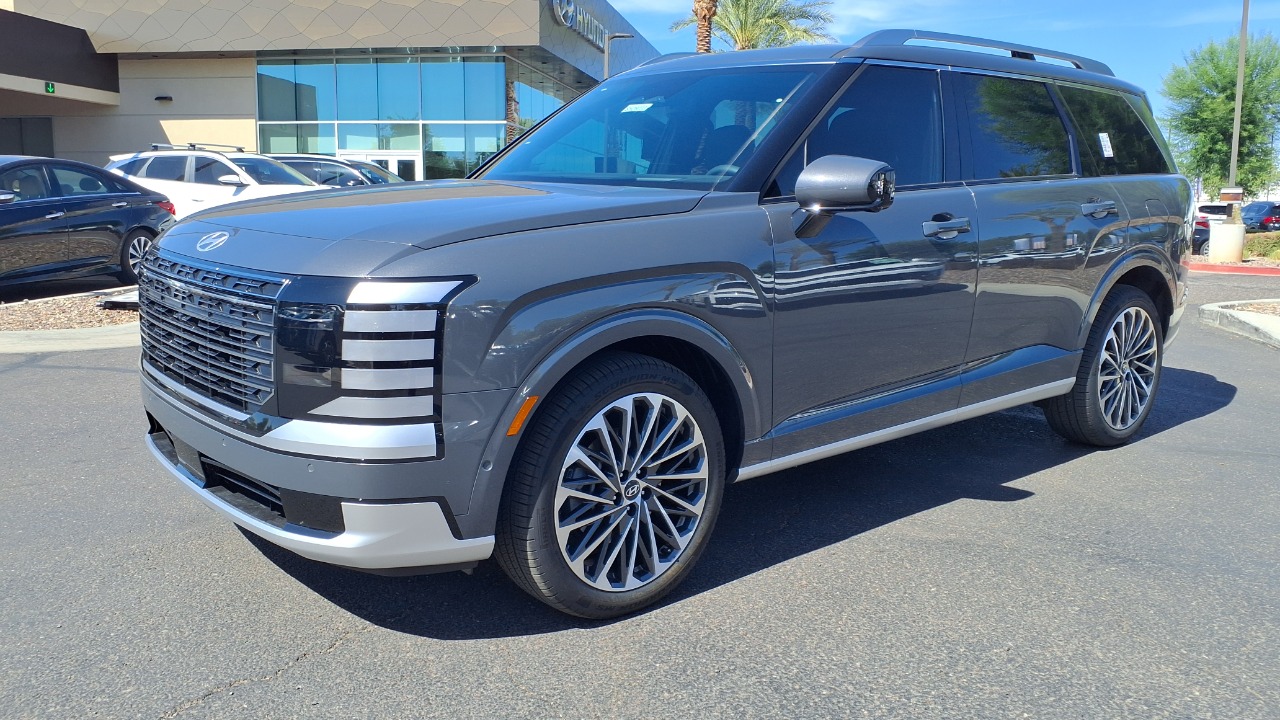

I don’t usually describe a three-row SUV as “too cheap,” but the new Hyundai Palisade forces me to. The amount of space, tech, and refinement Hyundai has packed into this family hauler feels out of step with what they’re charging, especially when I compare it with rivals that cost thousands more for less equipment. The more I dig into the specs, trims, and real-world impressions, the more it looks like Hyundai is underpricing this thing to an almost uncomfortable degree.
Why the Palisade’s Price Feels Out of Sync With Its Features
When I look at the Palisade’s equipment list, it reads like something that should sit firmly in luxury-brand territory, not mainstream family SUV pricing. Even in lower trims, you’re getting three rows of adult-usable seating, a wide digital cockpit, and a long list of driver-assistance tech that many competitors still reserve for higher trims. The official model page lays out a cabin with available quilted leather, dual 12.3‑inch displays, and features like a power-folding third row that I’m used to seeing on vehicles with much higher MSRPs, which makes the Palisade’s positioning feel almost aggressive in how much it offers for the money compared with what’s typical in this segment.
What really drives home the “too cheap” feeling for me is how the Palisade stacks up against similarly sized three-row SUVs once I factor in standard equipment. Looking at the detailed breakdown of trims, powertrain, and features on the official Palisade overview, it’s clear Hyundai is bundling items like advanced safety systems, large infotainment screens, and comfort features that competitors often treat as pricey add-ons. When I compare that to what I see on rival spec sheets, the Palisade’s value equation looks skewed in the buyer’s favor to a degree that’s unusual in today’s SUV market.
Interior Quality That Belongs in a Higher Price Bracket
Sitting inside the Palisade, I get the impression of a vehicle that was benchmarked against luxury crossovers rather than mainstream family haulers. The design is clean and upscale, with a wide, horizontal dash layout, high-quality materials in the touch points, and thoughtful storage solutions that make daily use easier. Reviewers who have spent time in the cabin consistently point out how the Palisade’s interior finish and quietness rival more expensive models, and when I watch in-depth cabin walkthroughs, the attention to detail in the stitching, switchgear, and ambient lighting looks like something that should command a higher sticker price than it does.
That impression is reinforced when I see how owners and testers talk about living with the Palisade over time. In one detailed video review, the host walks through the three-row layout, highlighting the generous second-row legroom, the usable third row, and the way the materials have held up under family use, all while emphasizing that this is still a mainstream-brand SUV rather than a premium badge. The way that reviewer describes the cabin’s comfort and finish in the interior-focused review makes it clear that Hyundai is delivering an environment that feels more expensive than the price suggests, which only deepens the sense that the Palisade is underpriced for what you get inside.
Space, Comfort, and Everyday Practicality
From a practical standpoint, the Palisade is the kind of SUV I can see a family using for everything from school runs to cross-country road trips without feeling cramped or short on storage. The three-row layout offers real adult-friendly space in the second row and a third row that’s genuinely usable for more than just kids, which isn’t something I can say about every midsize SUV. Detailed spec breakdowns show generous passenger volume and cargo capacity, and when I look at how the seats fold and slide, it’s clear Hyundai prioritized ease of access and flexible configurations, making the Palisade feel like a rolling family room rather than just a big vehicle.
Independent evaluations back up that impression with hard numbers and real-world testing. One comprehensive buyer’s guide walks through the Palisade’s interior dimensions, cargo figures, and seating comfort, noting how the third row can accommodate adults and how the cargo area remains useful even with all seats in place. That guide’s assessment of the Palisade’s space and usability, laid out in its detailed spec and features breakdown, underscores why I see this SUV as punching above its price: it delivers the kind of room and practicality that some competitors only match at higher trim levels and higher prices.
Tech and Safety That Would Be Options Elsewhere
On the tech front, the Palisade feels like a vehicle that’s been future-proofed in ways that many rivals still treat as optional. The wide digital instrument cluster, large central touchscreen, and seamless smartphone integration create a cockpit that feels modern and intuitive, not like an afterthought. When I factor in the suite of driver-assistance features—such as adaptive cruise control, lane-keeping assistance, and blind-spot monitoring—the Palisade’s standard and available tech package looks like something that should push it into a higher price tier than where Hyundai has actually placed it.
Video reviewers who spend time with the infotainment system and safety tech often highlight how much equipment comes baked in without forcing buyers into the top trim. In one tech-heavy review, the host walks through the digital displays, the responsive infotainment interface, and the array of safety systems that come standard or are widely available across the lineup, emphasizing how user-friendly and comprehensive the setup is. Watching that technology-focused overview, I’m struck by how much capability Hyundai includes at a price point where some competitors still offer smaller screens and fewer safety aids, which again makes the Palisade feel almost suspiciously affordable.
Driving Experience and Refinement for the Money
Out on the road, the Palisade doesn’t drive like a budget-conscious family hauler, and that’s another reason I keep coming back to the idea that it’s priced too low. The V6 powertrain delivers smooth, confident acceleration, and the suspension tuning strikes a comfortable balance between ride comfort and body control that makes long drives less tiring. Noise isolation is also better than I’d expect at this price, with the cabin staying impressively quiet at highway speeds, which contributes to a more premium feel behind the wheel than the window sticker might lead you to expect.
Long-form test drives and road tests reinforce that impression by focusing on how composed and refined the Palisade feels in everyday use. One detailed driving review spends time on highway cruising, city maneuvering, and even some light towing, noting how the powertrain and chassis work together to deliver a relaxed, confident experience that rivals more expensive SUVs. The way that reviewer describes the Palisade’s ride quality, steering, and overall refinement in the extended road test makes it clear that Hyundai has engineered a driving experience that could easily justify a higher price tag, which only adds to the sense that buyers are getting more than they’re paying for.
How the Palisade Stacks Up Against Rivals
When I compare the Palisade directly with other three-row SUVs, the value gap becomes even more obvious. Many competitors require stepping up several trims to get the same level of equipment that the Palisade offers earlier in its lineup, and even then, the interior quality and space don’t always match what Hyundai delivers. Looking at comparative tests and segment overviews, the Palisade consistently shows up as a top recommendation, not just because it’s affordable, but because it combines comfort, tech, and practicality in a way that makes some rivals feel both more expensive and less complete.
That competitive edge shows up clearly in detailed comparison pieces that rank the Palisade against other midsize three-row SUVs. One such evaluation highlights how the Palisade’s feature content, ride quality, and interior finish stack up favorably against established players, while also noting that its pricing undercuts several key rivals. In that segment comparison, the Palisade’s combination of equipment and cost positions it as a benchmark for value, which reinforces my sense that Hyundai could have charged more and still remained competitive—but instead chose to lean hard into affordability.
The 2026 Palisade: More Features Without a Price Shock
What really surprises me is how Hyundai is evolving the Palisade without using updates as an excuse to push it out of reach. The latest model year brings design tweaks, new tech, and refinements that keep it fresh in a crowded segment, yet the overall value story remains intact. Official product information for the 2026 Palisade outlines enhancements to styling, interior features, and available technology that make the SUV feel even more upscale, which, in most lineups, would be the moment when pricing jumps significantly.
Instead, the way the 2026 model is positioned suggests Hyundai is intent on maintaining the Palisade’s reputation as a value leader even as it adds more content. The detailed rundown of the 2026 Palisade’s updates, including its revised design elements, expanded tech offerings, and continued focus on family-friendly features, shows how Hyundai is layering in improvements while keeping the core formula intact. Reading through that official 2026 model overview, I’m left with the impression that the Palisade is becoming more sophisticated without abandoning the aggressive pricing that made it stand out in the first place, which only amplifies the sense that it remains “too cheap” for what it now offers.
Ownership Costs and Resale Value Strengthen the Case
Upfront pricing is only part of the story; what really seals the deal for me is how the Palisade looks when I factor in long-term ownership costs and resale value. Insurance, fuel, and maintenance all play into the total cost of owning a three-row SUV, and the Palisade’s combination of a proven powertrain and mainstream-brand parts helps keep those expenses in check. On top of that, the model’s growing reputation and strong demand have helped it hold its value better than some might expect from a relatively new nameplate, which means buyers aren’t just saving money at purchase—they’re also better positioned when it’s time to sell or trade in.
Detailed ownership guides and value analyses highlight how the Palisade’s pricing, feature content, and expected depreciation stack up over several years. One comprehensive breakdown of pricing, incentives, and projected resale values points out that the Palisade offers a strong balance of upfront affordability and long-term value retention, making it an appealing choice for budget-conscious families who still want a well-equipped SUV. In that ownership and value analysis, the Palisade’s combination of competitive pricing and solid resale performance reinforces my view that it’s underpriced not just at the dealership, but across the entire ownership cycle.
Real-World Dealer Perspective and Buyer Experience
Looking beyond the spec sheets, I also pay attention to how dealers present the Palisade and what they emphasize to shoppers walking onto the lot. Sales teams tend to highlight the SUV’s blend of comfort, tech, and safety, but what stands out to me is how often they frame it as a way to get near-luxury features without paying luxury prices. When a dealer can confidently pitch a three-row SUV as offering upscale amenities at a mainstream cost, it tells me the manufacturer has left some pricing headroom on the table, and that’s exactly the impression I get from how the Palisade is marketed on the ground.
One detailed dealer guide aimed at prospective buyers lays out what shoppers should know before committing to a new 2026 Palisade, emphasizing its feature set, family-friendly design, and the way it compares with other options in the showroom. That guide’s focus on the Palisade’s generous equipment and competitive pricing, presented as a key selling point for families near Pomona, underscores how the model is being positioned as a high-value choice in real-world transactions. Reading through that dealer-focused buying guide, I’m struck by how much emphasis is placed on getting “more SUV for the money,” which aligns perfectly with my sense that the Palisade is priced lower than its features and refinement would normally justify.
Why I Think Hyundai Is Playing the Long Game
When I step back and look at the full picture—interior quality, space, tech, driving refinement, and ownership costs—the Palisade’s pricing starts to look like a deliberate long-term strategy rather than a simple bargain. Hyundai appears to be using this SUV to pull buyers into the brand by offering a near-luxury experience at a mainstream price, betting that positive word of mouth and strong owner satisfaction will pay off over time. That approach makes sense when I consider how crowded the three-row SUV segment has become and how hard it is to stand out without either cutting corners or cutting prices.
Independent reviewers who take a broader view of the Palisade’s role in the market often come to similar conclusions, noting how its combination of features and price makes it a standout choice for families who might otherwise look at more expensive brands. One in-depth video review frames the Palisade as a smart buy precisely because it delivers so much for the money, highlighting its comfort, tech, and practicality as reasons it feels like a step up from its price class. Watching that big-picture review, I’m left with the same impression: Hyundai is intentionally overdelivering with the Palisade, and the result is an SUV that feels, in the best possible way, way too cheap for what you actually get.
How to Decide if the Palisade’s Value Is Right for You
Ultimately, whether the Palisade’s “too cheap” positioning works for you comes down to how you prioritize features, space, and brand image. If you’re the kind of buyer who cares more about a premium badge than the actual equipment list, you might still gravitate toward a luxury-branded SUV even if it offers less for more money. But if you’re focused on maximizing what you get for every dollar—especially in terms of family comfort, safety tech, and everyday usability—the Palisade’s combination of pricing and content is hard to ignore, and it’s the kind of vehicle that can make you question why you’d pay more elsewhere for a similar experience.
To make that decision, I find it helpful to line up the Palisade’s trims and features against your must-have list and then compare that with what competitors offer at the same price. Official configuration tools and detailed trim breakdowns let you see exactly what you’re getting at each step, from base models to fully loaded versions, and they make it easier to spot where the Palisade is giving you more for less. Using the walkthrough-style reviews alongside the official feature listings and independent spec comparisons, I keep coming back to the same conclusion: for what it offers, the new Hyundai Palisade isn’t just competitively priced—it’s almost shockingly affordable.
More from MorningOverview