

In a remarkable development, NASA has confirmed the detection of a mysterious object entering our solar system, classifying it as a visitor from interstellar space. This revelation, made in 2025, marks another significant milestone in the study of our cosmic neighborhood.
The detection of this interstellar object is not just a testament to the technological prowess of NASA, but also to the collaborative efforts of the global scientific community. Observatories and research institutions around the world contributed to the tracking and analysis of the object, demonstrating the importance of international cooperation in the field of astronomy. This global effort underscores the universal curiosity and quest for knowledge that transcends national boundaries (source).
Confirmation of the Interstellar Visitor
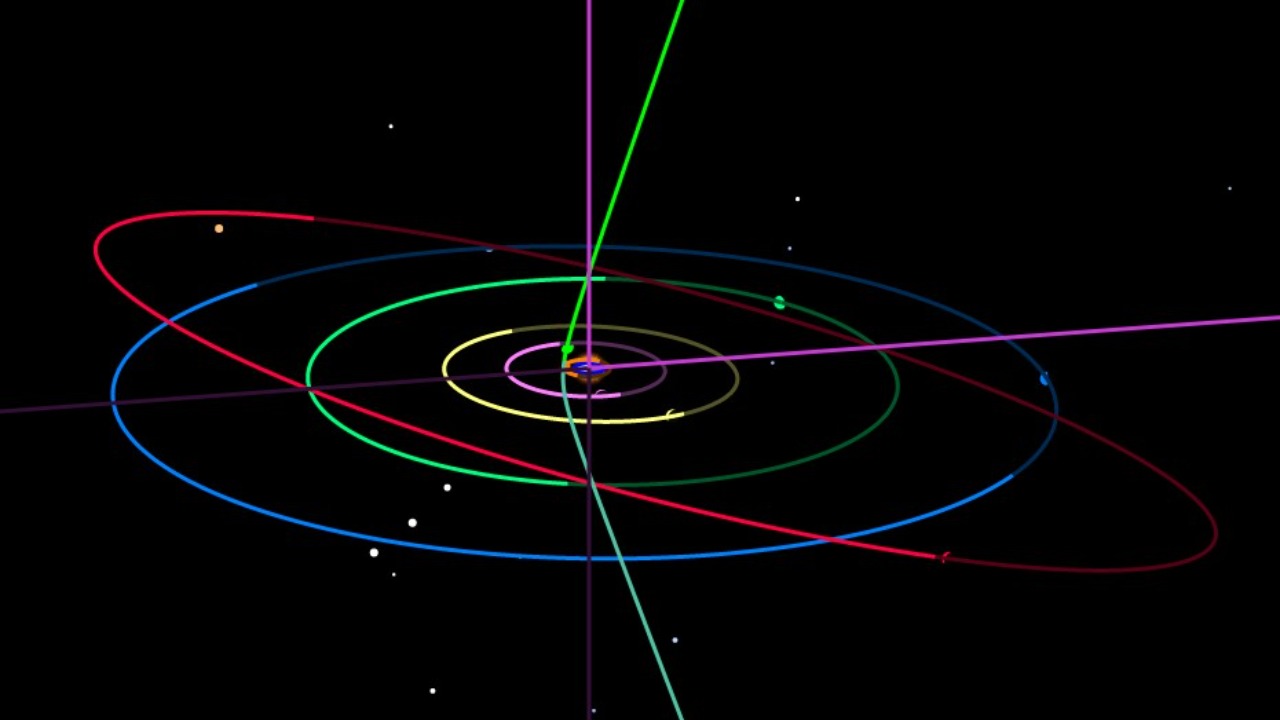
NASA’s confirmation of the interstellar nature of the mysterious object was a significant achievement in the field of astronomy. The agency utilized advanced technology and rigorous scientific processes to identify and track the object, ensuring its extraterrestrial origin. The object’s trajectory and speed were key factors in determining its interstellar nature, as they differed significantly from those of objects originating within our solar system (source).
The technology used in this process is a testament to the advancements in space exploration and research. NASA employed state-of-the-art telescopes and other observational tools to monitor the object’s movement and characteristics. These instruments provided the necessary data to confirm the object’s interstellar origin and continue tracking its journey through our solar system (source).
While the object’s interstellar nature was confirmed through its trajectory and speed, the process of identification was not without its challenges. The object’s high velocity and the vast distances involved necessitated precise calculations and careful observation. The success of this endeavor is a testament to the meticulous work of the scientists involved and the robustness of the technology employed (source).
Characteristics of the Interstellar Object

The interstellar object exhibited unique features and behavior that set it apart from typical celestial bodies within our solar system. Its speed, trajectory, and physical characteristics were all factors that led to its classification as an interstellar visitor. The object’s high velocity and hyperbolic orbit, in particular, were indicative of its extraterrestrial origin (source).
In addition to its unique characteristics, the object was given a new name by NASA, further emphasizing its significance. The name, which has not been disclosed in the available sources, is likely to reflect the object’s interstellar nature and its importance in the field of astronomy. The naming of such objects is a common practice in the scientific community, serving to facilitate communication and study (source).
Further analysis of the object’s physical characteristics revealed more about its composition and origin. Preliminary findings suggest that the object may be composed of different materials than those commonly found in our solar system. This could provide valuable insights into the conditions and processes in other parts of the universe. The object’s unique features and behavior also raise intriguing questions about the diversity and complexity of celestial bodies in the cosmos (source).
The naming of the object, while not yet disclosed, is a significant event in itself. The name will likely be chosen to reflect the object’s unique characteristics and its journey from interstellar space. This name will become a part of scientific literature and will be used by researchers around the world in their studies of the object and its implications for our understanding of the universe (source).
Implications of the Discovery

The discovery of this interstellar visitor has profound implications for our understanding of the solar system and the broader universe. It provides valuable insights into the composition and behavior of celestial bodies from outside our solar system, potentially shedding light on the processes that govern the universe. This discovery also underscores the vastness of space and the potential for further discoveries of interstellar objects (source).
Looking ahead, this discovery is likely to spur further research and exploration missions. NASA and other space agencies around the world may plan missions to study the object more closely or search for other interstellar visitors. These efforts could lead to new discoveries and advancements in our understanding of the universe, marking an exciting new chapter in the field of astronomy (source).
The detection of this interstellar visitor has not only expanded our knowledge of the universe but also sparked a renewed interest in space exploration. The object’s unique characteristics and its journey from interstellar space have captured the imagination of scientists and the public alike. This discovery has the potential to inspire a new generation of astronomers and space enthusiasts, fostering a deeper appreciation for the mysteries of the cosmos (source).
The discovery also has practical implications for future space missions. The data gathered from the object could inform the design and planning of future spacecraft, potentially enabling more effective exploration of interstellar space. Moreover, the object’s detection demonstrates the feasibility of identifying and tracking interstellar objects, paving the way for more such discoveries in the future (source).