

The advent of Artificial Intelligence (AI) has brought forth a plethora of opportunities in various fields, most notably in the realm of medical diagnosis and treatment. Recent studies have indicated that AI could potentially detect Alzheimer’s disease with an impressive accuracy rate of 99%. This staggering figure heralds a promising future in the early detection and effective management of Alzheimer’s disease.
The Rising Prevalence of Alzheimer’s
The global incidence of Alzheimer’s disease is on a steady rise, posing significant challenges to healthcare systems worldwide. The World Health Organization (WHO) estimates that over 50 million people globally are living with dementia, with Alzheimer’s representing a significant majority of these cases. This figure is expected to nearly triple by 2050, highlighting the urgent need for early and accurate detection methods.
Current methods of diagnosing Alzheimer’s disease, such as cognitive testing and neuroimaging, often identify the condition at a late stage, when the disease has significantly progressed. This delay in diagnosis poses a challenge as it limits the effectiveness of early intervention strategies and potential treatments that could slow the disease’s progression.
AI in Medical Diagnostics

Artificial Intelligence is poised to revolutionize the field of medical diagnostics. With its ability to analyze vast amounts of data, AI can identify subtle patterns that might be overlooked by human clinicians. For instance, a recent UK trial demonstrated the potential of AI in detecting cancer through a blood test, signifying a huge leap in early cancer detection.
AI has also been instrumental in detecting diseases such as diabetic retinopathy, skin cancer, and heart diseases. By analyzing images and patient data, AI can help clinicians make more informed decisions, enhancing the overall quality of care and potentially saving lives.
The Role of AI in Alzheimer’s Diagnosis

Recent research has highlighted the significant potential of AI in Alzheimer’s diagnosis. A study by researchers at West Virginia University employed AI to predict and detect Alzheimer’s disease with a remarkable 99% accuracy rate. This study highlights the significant potential of AI in revolutionizing Alzheimer’s diagnosis.
The methodology used in these studies often involves AI algorithms and imaging techniques. For instance, a study published in the journal NeuroImage used AI to analyze brain scans, identifying subtle changes that could indicate the onset of Alzheimer’s disease. These techniques offer an unprecedented level of accuracy in early Alzheimer’s diagnosis.
Benefits and Limitations of AI in Detecting Alzheimer’s

One of the primary benefits of using AI for Alzheimer’s detection is the potential for earlier treatment. By identifying the disease before symptoms become apparent, clinicians can initiate treatments that may slow the disease’s progression, potentially improving the patient’s quality of life and longevity.
However, despite its potential, the use of AI in medical diagnostics does come with limitations. Accessibility is a significant concern, as not all healthcare facilities have the necessary resources or infrastructure to implement AI-based diagnostic tools. Additionally, the use of AI raises data privacy concerns, as patient data must be carefully managed to ensure confidentiality and compliance with regulations.
Future Prospects of AI in Alzheimer’s Diagnosis and Treatment
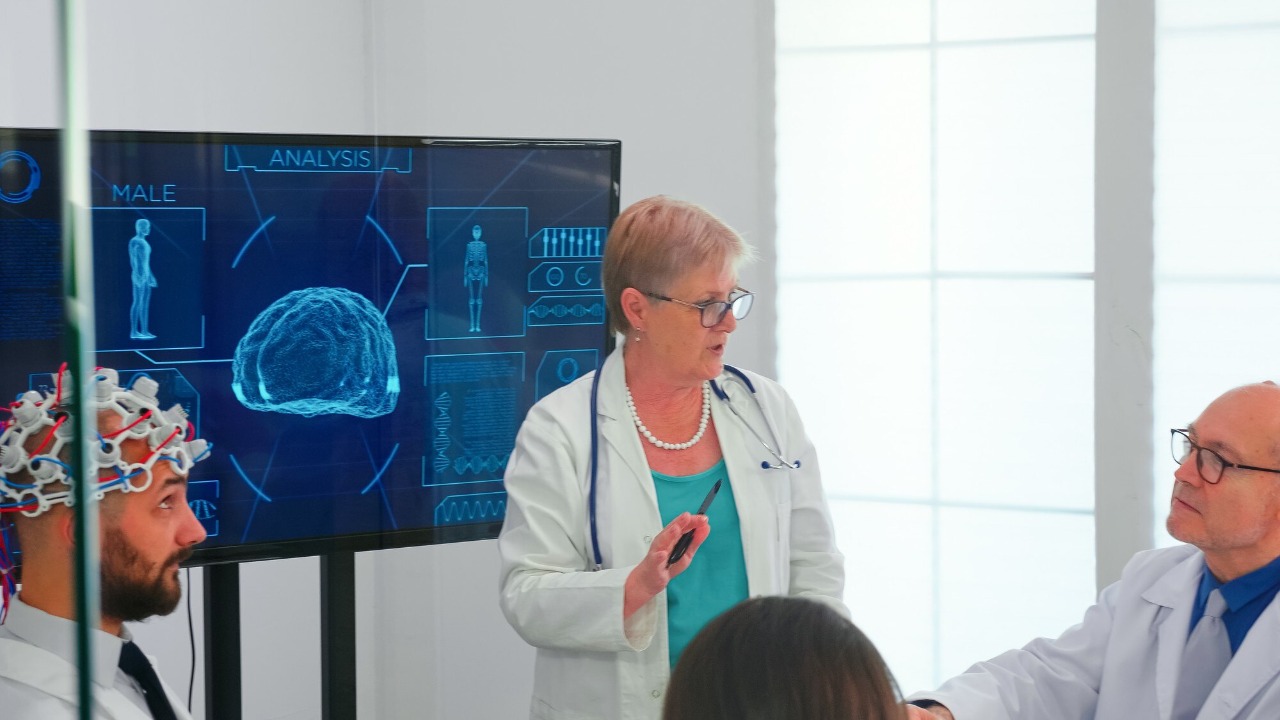
The use of AI could dramatically alter the way Alzheimer’s disease is managed in the future. With ongoing advancements in technology, AI can potentially facilitate personalized treatment plans based on individual patient data, thereby enhancing the effectiveness of Alzheimer’s management strategies.
Continuous research and developments in the field indicate a promising future. For instance, a recent study published in Diagnostics explored the use of AI and machine learning in predicting Alzheimer’s disease through biomarkers, signifying potential advancements in non-invasive diagnostic techniques. These developments could have profound implications for patients and healthcare providers alike, offering hope for more effective strategies in diagnosing and treating this debilitating disease.