

The quest for a unifying “theory of everything” has been a long-standing endeavor in the world of physics. This theoretical framework seeks to reconcile all known physical phenomena. With recent advances in technology, the question arises: could Artificial Intelligence (AI) contribute to the discovery or formulation of this theory?
Understanding the “Theory of Everything”
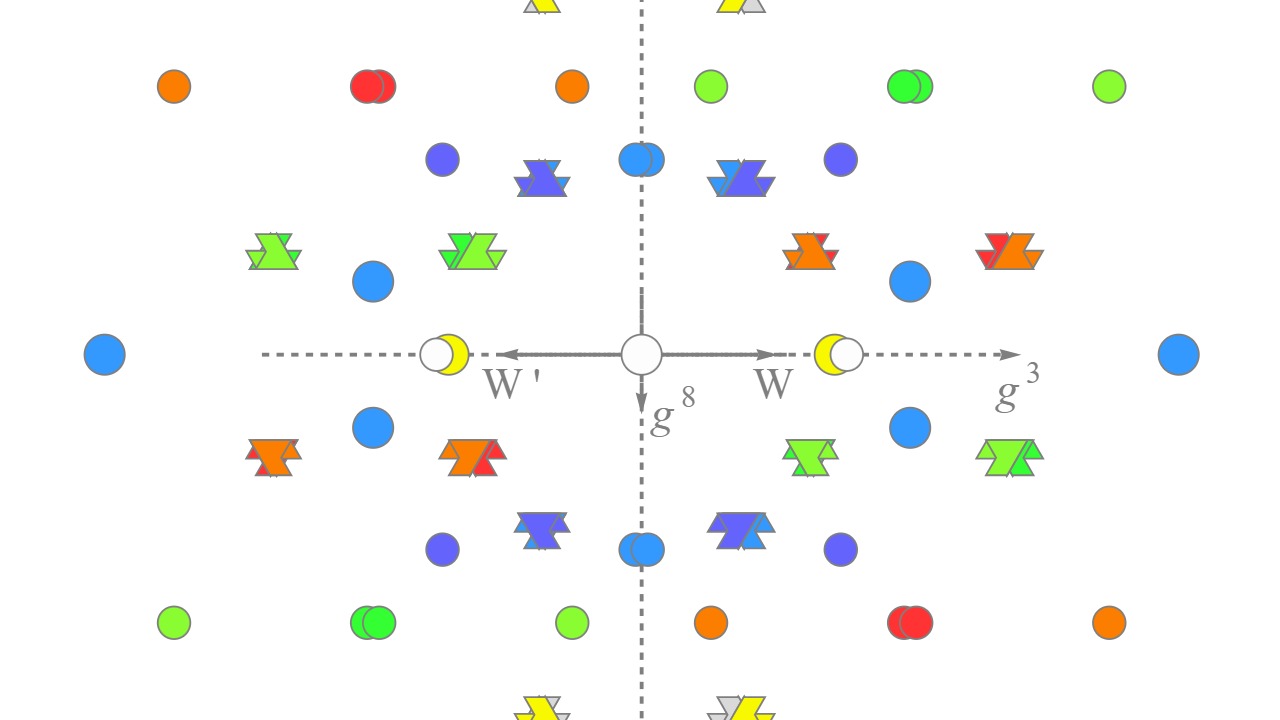
The aspiration for a “theory of everything” is to meld all physical theories into a single, cohesive framework. This would mean unifying the realms of general relativity, which governs the behavior of the cosmos at large, with quantum mechanics, which rules the tiny, subatomic world. However, these theories have fundamentally different views of the universe and have remained stubbornly incompatible.
Many brilliant minds, including Albert Einstein, have grappled with this challenge. Despite significant strides in our understanding of the universe, the complete unification of physics under a single theory remains elusive.
The Role of AI in Modern Scientific Research

Artificial Intelligence has increasingly become a valuable tool in scientific research. In fields as diverse as biology, astronomy, and chemistry, AI is used to analyze large volumes of data, predict outcomes, and even design experiments. For instance, AI algorithms have been used to identify new exoplanets based on subtle patterns in telescope data, a task that would be extremely time-consuming for human researchers.
AI has also made a significant impact in the field of physics. Machine learning algorithms have been used in the detection of gravitational waves and the classification of galaxies. However, the use of AI in research is not without its challenges. Questions about the validity of AI-generated data, transparency of the algorithms, and the potential for bias are ongoing concerns.
AI and High-Dimensional Calculations

One area where AI could potentially shine is in the handling of high-dimensional calculations. The world of theoretical physics often involves dealing with high-dimensional spaces, which can be exceedingly complex. AI’s ability to handle large volumes of data and model high-dimensional spaces could make it a valuable tool in this field.
Recent studies have shown promise in this area. For instance, research published in Phys.org highlighted the use of AI in mapping high-dimensional quantum states, a task that would be nearly impossible for humans.
AI’s Potential Contribution to the “Theory of Everything”

Given its capabilities, it’s not far-fetched to consider that AI could contribute to the formulation of the “theory of everything”. By sifting through vast amounts of data and identifying patterns that might elude human researchers, AI could potentially uncover new insights into the nature of the universe.
In fact, AI has already been used to explore the near-endless possibilities of string theory, a candidate for the theory of everything. A study published in Quanta Magazine described how machine learning was used to sift through the vast landscape of string theory solutions, a task that would be daunting for human researchers.
Challenges and Ethical Considerations

While the potential benefits of AI in scientific research are significant, there are also challenges and ethical considerations to take into account. For one, there are concerns about the validity and transparency of AI-driven research. Can we trust the results produced by a machine? How can we ensure that the AI is not introducing bias or errors into the data?
There are also ethical concerns about the use of AI in scientific research. As discussed in a paper published in PhilPapers, there are questions about the accountability of AI-driven research, as well as the potential for AI to replace human researchers.
Future Prospects

Looking ahead, it’s clear that AI will continue to play a significant role in scientific research, and potentially in the search for the “theory of everything”. As AI technology continues to advance, its ability to handle complex calculations and sift through vast amounts of data could prove invaluable.
As noted in a New York Times article, the application of AI to theoretical physics could revolutionize our understanding of the universe. Only time will tell how far AI can take us in our quest to unravel the mysteries of the universe.