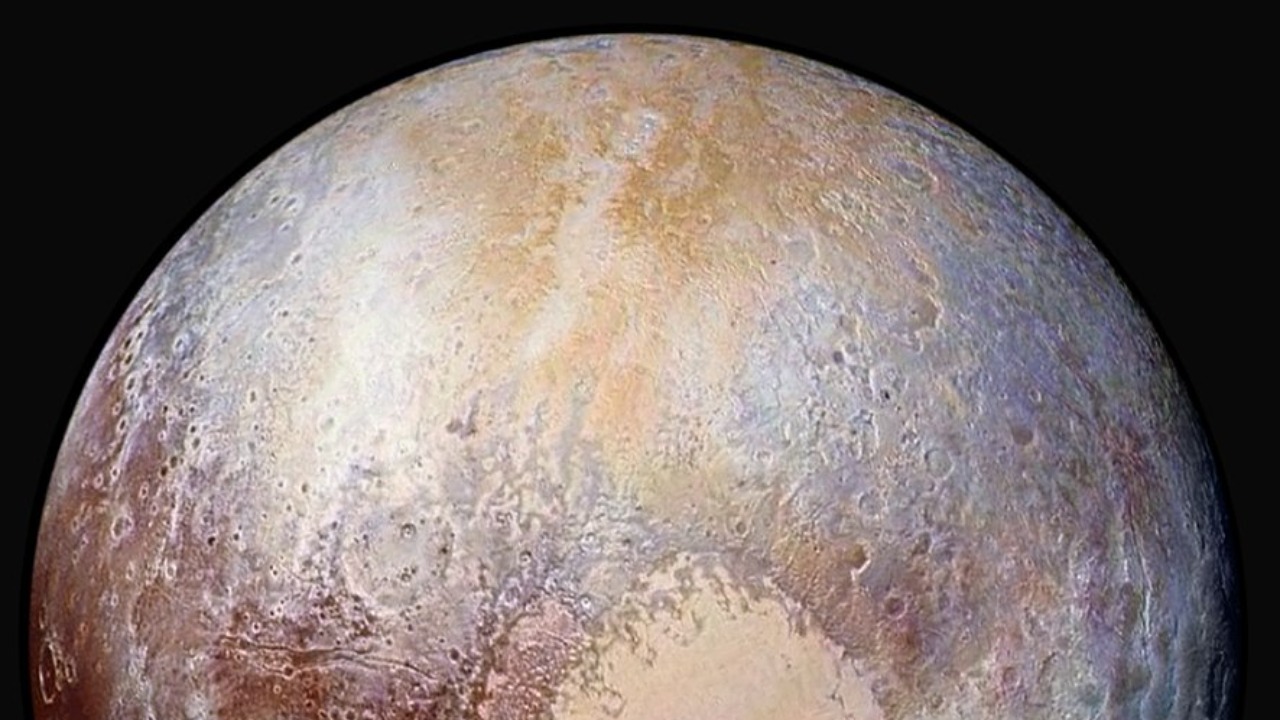

Pluto, once considered the ninth planet of our solar system, has been a topic of intrigue since its reclassification as a dwarf planet. Recent observations suggest that its atmosphere is expanding, prompting scientists to explore the causes behind this unexpected phenomenon.
Understanding Pluto’s Atmosphere

Pluto’s atmosphere is composed mainly of nitrogen, with traces of methane and carbon monoxide. Despite its thinness, this atmosphere plays a crucial role in the planet’s climate dynamics. The tenuous nature of Pluto’s atmosphere makes it a challenge for astronomers to study, yet these observations are essential for understanding the planet’s environmental changes. Unlike Earth, where atmospheric composition is relatively constant, Pluto’s atmosphere can change dramatically with slight variations in temperature and pressure.
Pluto’s atmosphere is also subject to significant seasonal variations due to its elliptical orbit and axial tilt. As Pluto travels around the Sun, its distance varies, leading to extreme seasonal changes that impact atmospheric pressure and temperature. During its long orbit, which takes 248 Earth years, Pluto experiences seasons that last more than a century. These seasonal shifts can result in substantial changes in the atmosphere, including increased pressure that contributes to its expansion.
The Role of Solar Proximity

Pluto’s elliptical orbit has a profound influence on its atmospheric conditions. When Pluto is closest to the Sun, a point known as perihelion, the increased solar energy warms the surface, causing surface ices to sublimate. This process, where solid ice transforms directly into gas, leads to an expansion of the atmosphere. As Pluto moves further from the Sun, the atmosphere can collapse back onto the surface, as evidenced by recent studies. Understanding how Pluto’s position relative to the Sun affects its atmosphere is crucial for predicting its climate behavior.
The absorption of solar energy plays a critical role in the sublimation process. Surface ices, primarily composed of nitrogen, methane, and carbon monoxide, absorb sunlight and heat up, causing the transition from solid to gaseous states. This transformation is particularly pronounced when Pluto is closer to the Sun, leading to a noticeable expansion in the atmosphere. Research indicates that these changes are not only influenced by solar proximity but also by the unique composition and reflectivity of Pluto’s surface, which can significantly impact atmospheric dynamics.
Recent Observations and Studies

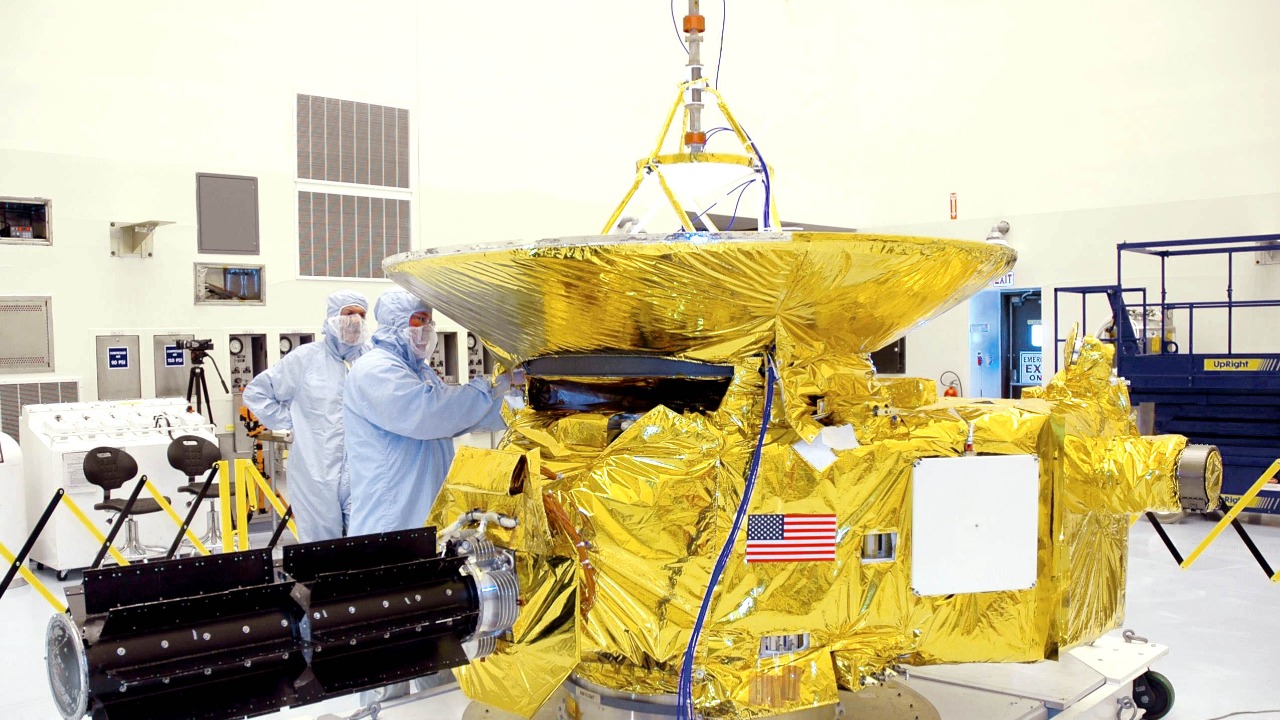
The New Horizons mission has been instrumental in advancing our understanding of Pluto’s atmosphere. Launched by NASA, the spacecraft provided unprecedented insights into the composition and behavior of this distant world. During its flyby, New Horizons captured detailed images and data, revealing the complex processes driving atmospheric expansion. The mission’s findings highlight the importance of continued exploration and the potential for future missions to uncover even more about Pluto’s unique climate.
Ground-based and space telescopes have also played a vital role in monitoring Pluto’s atmospheric changes. Technological advancements have enhanced our ability to observe these distant phenomena with greater clarity and precision. Recent observations from telescopes have confirmed atmospheric expansion, providing valuable data for scientists studying the dwarf planet. As telescope technology continues to improve, our capacity to monitor and understand Pluto’s atmosphere will only increase, offering new opportunities for discovery.
Theories Explaining Atmospheric Expansion

One intriguing hypothesis suggests that cryovolcanism might be contributing to Pluto’s atmospheric expansion. Cryovolcanism refers to volcanic activity that involves the eruption of volatile substances, such as water, ammonia, or methane, instead of molten rock. This process could release gases into the atmosphere, leading to its expansion. While evidence of cryovolcanism on Pluto is still being gathered, the possibility raises fascinating questions about the planet’s geological activity and its impact on the atmosphere.
Another theory involves surface-albedo feedback, where changes in surface reflectivity can influence thermal processes and atmospheric conditions. As Pluto’s surface reflects varying amounts of sunlight, it affects the temperature and pressure of the atmosphere. This feedback mechanism could be a driving force behind the observed expansion, as it creates a cycle of warming and cooling that impacts the atmosphere. By studying these feedback systems, scientists hope to gain a deeper understanding of the complex interactions between Pluto’s surface and atmosphere.
Implications for Future Research
Developing long-term climate models is essential for predicting Pluto’s future atmospheric behavior. These models can provide valuable insights into the processes driving atmospheric changes and help scientists anticipate future conditions. As our understanding of Pluto’s atmosphere evolves, these models will also allow researchers to draw comparisons with other celestial bodies, improving our broader understanding of planetary atmospheres across the solar system.
Interplanetary comparisons offer a unique opportunity to explore similar atmospheric processes on other planets and moons. By studying Pluto, scientists can gain insights into the dynamics of atmospheres on distant worlds, enhancing our knowledge of planetary science. These comparisons can also inform our understanding of Earth’s atmosphere and the potential impact of atmospheric changes on our planet. As we continue to explore the solar system, Pluto remains a key piece of the puzzle, offering valuable lessons for future research.