

In a groundbreaking development, scientists have achieved a milestone in teleportation technology, propelling the concept from the realms of science fiction to scientific reality. This breakthrough holds the potential to revolutionize fields ranging from telecommunications to quantum computing. Leveraging the principles of quantum mechanics, researchers have made strides in transmitting information instantaneously over vast distances.
The Science Behind Teleportation
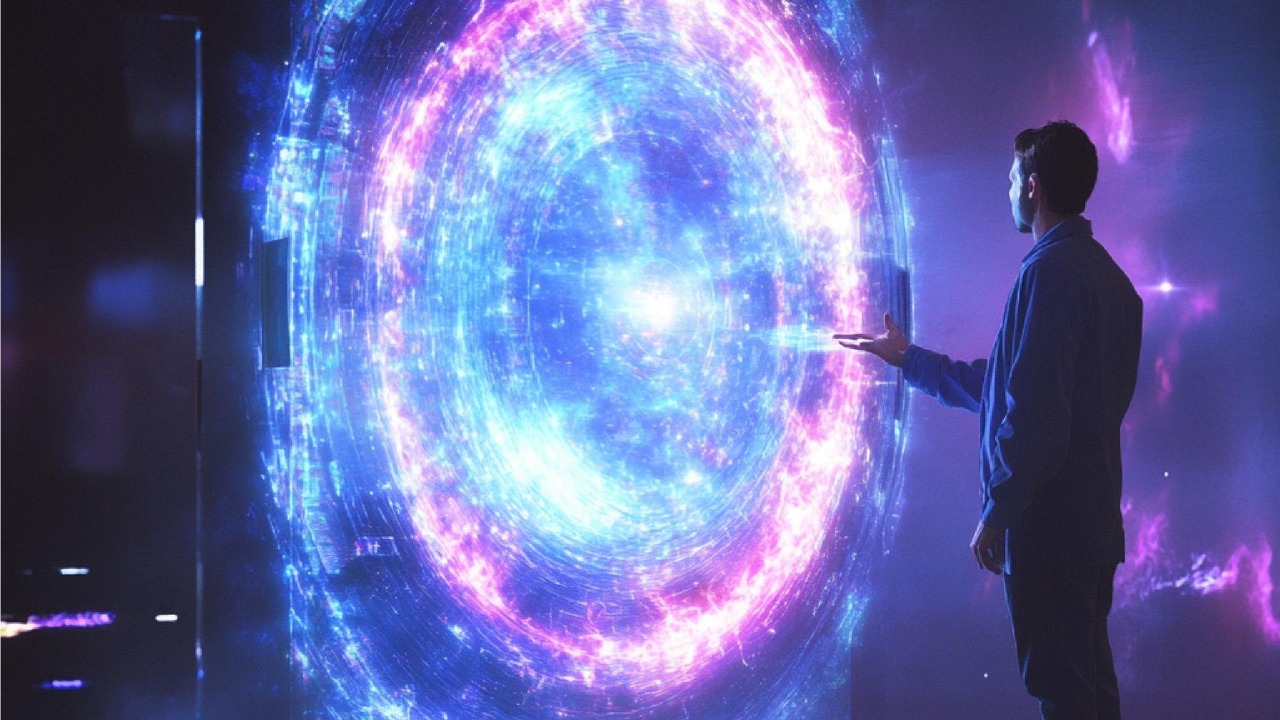
Quantum Entanglement
At the heart of teleportation lies the enigmatic phenomenon of quantum entanglement. This occurs when two or more particles become interconnected in such a way that the state of one particle instantly influences the state of the other, regardless of the distance separating them. Albert Einstein famously referred to this as “spooky action at a distance,” highlighting the mysterious nature of the process. Entanglement is crucial for teleportation, as it enables the transmission of quantum states from one location to another without physically moving the particles themselves.
Quantum States
The process of teleportation involves transferring quantum states from one particle to another. To achieve this, scientists employ a technique known as quantum state tomography, which involves measuring the quantum state of a particle and then recreating that state in another particle at a different location. This effectively “teleports” the information contained within the quantum state.
Experimental Advances
Recent experimental advances have been instrumental in bringing teleportation closer to reality. Notable experiments, such as those conducted by researchers at the University of Science and Technology of China, have demonstrated successful quantum teleportation over distances of up to 1,200 kilometers, setting new records and paving the way for practical applications. These experiments have also helped scientists refine their understanding of quantum entanglement and improve the precision of quantum state measurements.
Technological Implications

Telecommunications
The potential impact of teleportation technology on telecommunications is immense. By enabling instantaneous data transmission, teleportation could revolutionize communication networks, making them faster and more secure. Traditional methods of data transfer, which rely on physical cables or wireless signals, are limited by the speed of light and vulnerable to interception. Quantum teleportation, on the other hand, would allow for the creation of a quantum internet that is both ultra-fast and virtually unhackable, thanks to the principles of quantum cryptography.
Quantum Computing
Teleportation also holds promise for the field of quantum computing. By facilitating the transfer of quantum information between qubits, teleportation can enhance the processing power and efficiency of quantum computers. This could lead to significant advancements in areas such as drug discovery, materials science, and artificial intelligence. Furthermore, teleportation enables the implementation of quantum key distribution, a secure method of communication that is impervious to eavesdropping.
Energy Efficiency
Beyond speed and security, teleportation offers potential energy savings by eliminating the need for traditional data transfer methods. With increasing global data demands, energy consumption in data centers and communication networks is a growing concern. Teleportation could alleviate this issue by reducing the reliance on energy-intensive infrastructure, contributing to a more sustainable and environmentally friendly digital landscape.
Challenges and Limitations

Technical Hurdles
Despite its promise, teleportation technology faces significant technical hurdles. One of the primary challenges is maintaining coherence and stability in quantum states during the teleportation process. Quantum states are extremely delicate and can easily be disrupted by environmental factors, leading to errors in data transmission. Researchers are actively working on developing methods to preserve quantum coherence, such as employing error-correcting codes and using advanced cooling techniques to minimize thermal noise.
Scalability
Another major challenge is scaling teleportation technology for practical applications. Current experiments are conducted under highly controlled laboratory conditions, but real-world deployment requires overcoming numerous obstacles, including integrating teleportation systems with existing infrastructure and ensuring their reliability and robustness. Achieving scalability is crucial for making teleportation a viable technology for widespread use in industries such as telecommunications and computing.
Ethical and Security Concerns
As with any emerging technology, teleportation raises ethical and security concerns. The ability to transmit information instantaneously and securely could have profound implications for privacy and data protection. There is also the potential for misuse, such as unauthorized surveillance or data manipulation. Addressing these concerns requires careful consideration and the development of robust regulatory frameworks to ensure the responsible and ethical use of teleportation technology.
Future Prospects

Research Directions
The future of teleportation technology is promising, with numerous research directions to explore. Researchers are investigating ways to enhance the efficiency and reliability of teleportation processes, as well as exploring potential collaborations between academia, industry, and government to accelerate development. Continued investment in quantum research and infrastructure will be crucial for advancing teleportation technology and unlocking its full potential.
Industry Applications
Teleportation holds the potential to transform a wide range of industries. In logistics, for example, teleportation could enable the instantaneous transfer of goods, revolutionizing supply chains and reducing transportation costs. In healthcare, teleportation could facilitate remote surgeries and diagnostics, improving access to medical services in remote or underserved areas. These are just a few examples of how teleportation could reshape industries and enhance quality of life.
Long-term Vision
Envisioning a future where teleportation is a commonplace technology is an exciting prospect. In such a world, teleportation could redefine our understanding of distance and connectivity, breaking down geographical barriers and fostering a more interconnected global community. The societal impacts could be profound, from reducing travel time and carbon emissions to enabling new forms of social interaction and collaboration. As researchers continue to push the boundaries of what is possible, the dream of teleportation as a practical technology may one day become a reality.