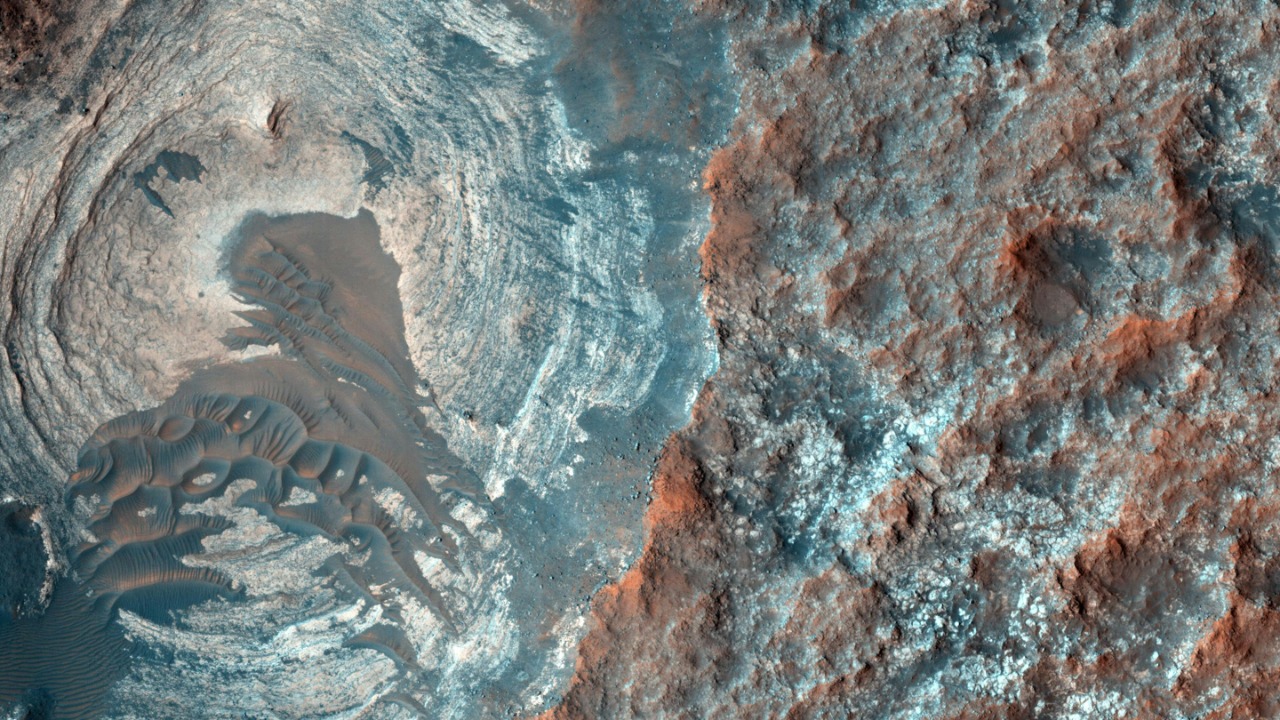

Recent advancements in space exploration have unveiled astonishing discoveries beneath the surface of Mars, revealing structures that challenge existing scientific theories. These extraordinary formations, detected through advanced gravitational mapping techniques, have opened up new possibilities for understanding the Red Planet’s geological history and potential for past life.
The Discovery of Subsurface Structures
The detection of these giant subsurface structures on Mars has been made possible through cutting-edge gravitational mapping methods. These techniques involve analyzing subtle variations in Mars’ gravitational field to infer the presence of dense materials beneath the surface. By using data from missions like NASA’s Mars Reconnaissance Orbiter, scientists can create detailed maps that reveal hidden formations, offering insights into the planet’s interior that were previously unattainable.
The initial findings of these structures have captured significant attention within the scientific community. The sheer size and complexity of these formations suggest a dynamic geological past that may include processes similar to those on Earth. The discovery is particularly intriguing because it opens up new lines of inquiry regarding Mars’ geological evolution and the potential for past water activity, which is crucial for understanding the planet’s habitability.
When comparing these subsurface structures with Earth’s geology, several differences and similarities emerge. On Earth, similar underground formations are often the result of tectonic activity or the presence of water. Mars, lacking tectonic plates, presents a unique case where these structures may have formed through volcanic activity or ancient water flow, offering a fascinating contrast to our planet’s geological processes.
Scientific Implications and Theories
The potential origins of these Martian structures are currently a topic of intense scientific debate. Some theories suggest that volcanic activity could have created these formations, with magma chambers cooling and solidifying over time. Others propose that ancient water systems might have carved these structures, hinting at a time when Mars could have supported liquid water on its surface.
These discoveries have significant implications for current theories about Mars’ geological and hydrological history. They challenge the prevailing view that Mars has been largely inactive for billions of years, suggesting instead a more complex and dynamic history. If these structures are indeed remnants of past volcanic or hydrological activity, they could reshape our understanding of Mars’ potential to have harbored life.
Moreover, the possibility of past life on Mars is a tantalizing prospect. If these underground formations were once shaped by water, they could have provided habitable environments for microbial life. This raises exciting possibilities for future missions aimed at uncovering signs of past life on Mars, providing key insights into the planet’s history and its capacity for life.
Technological Advances and Exploration Missions
Current and future Mars missions play a crucial role in the study and understanding of these subsurface structures. NASA’s Mars Reconnaissance Orbiter, with its advanced imaging and sensing technologies, continues to provide valuable data that aids in mapping and analyzing these formations. Future missions, such as the European Space Agency’s ExoMars, aim to drill below the surface, offering the potential to directly study these structures and gather samples for analysis.
International collaboration is vital in advancing the technology and knowledge necessary for these discoveries. Partnerships between space agencies, such as NASA and the ESA, enable the sharing of expertise and resources, accelerating the pace of discovery. Such collaborations are essential for overcoming the challenges posed by the harsh Martian environment and for deploying the sophisticated instruments needed to explore these subsurface formations.
Looking ahead, scientists have ambitious goals for future exploration missions. They hope to achieve a more comprehensive understanding of Mars’ geological history, particularly in relation to these newly discovered structures. By doing so, researchers aim to unravel the mysteries of Mars’ past and assess its potential for future human exploration and colonization.
Potential for Human Exploration and Colonization
The discovery of these subsurface structures has intriguing implications for human settlement on Mars. These formations could influence the selection of potential sites for human colonies, as they may offer natural protection from radiation and extreme temperatures, as well as access to water and other resources essential for sustaining human life.
Exploring these structures presents both challenges and opportunities for future Mars missions. The technical and logistical challenges of accessing and studying these formations are significant, requiring advanced robotics, drilling technology, and autonomous systems. However, the knowledge gained from exploring these structures could pave the way for sustainable human presence on Mars, providing vital information about resource availability and environmental conditions.
In the long term, these discoveries fit into the broader vision of human colonization of Mars. They offer a glimpse into the planet’s past and future potential, inspiring new possibilities for settlement and exploration. As we continue to learn more about Mars, these findings will undoubtedly play a crucial role in shaping our aspirations for human presence on the Red Planet.
Public Interest and Cultural Impact
The discovery of these extraordinary structures has captured the public’s imagination, sparking widespread media coverage and curiosity. Articles like those from Indy100 and NDTV have highlighted the significance of these findings, showcasing the role of media in disseminating scientific discoveries and engaging the public with the latest advancements in planetary science.
These discoveries also hold the potential to inspire new narratives in science fiction and popular culture. The intriguing nature of these subsurface formations provides fertile ground for imaginative storytelling, influencing the way Mars is portrayed in literature, film, and other media. Such cultural depictions can shape public perception of Mars and its potential for exploration and colonization.
Efforts to educate the public about these findings are crucial for fostering a deeper understanding of their significance. Educational initiatives and outreach programs aim to engage audiences with the science behind these discoveries, highlighting the importance of planetary exploration and its impact on our knowledge of the universe. By doing so, they help cultivate a new generation of scientists and explorers eager to unlock the mysteries of Mars and beyond.