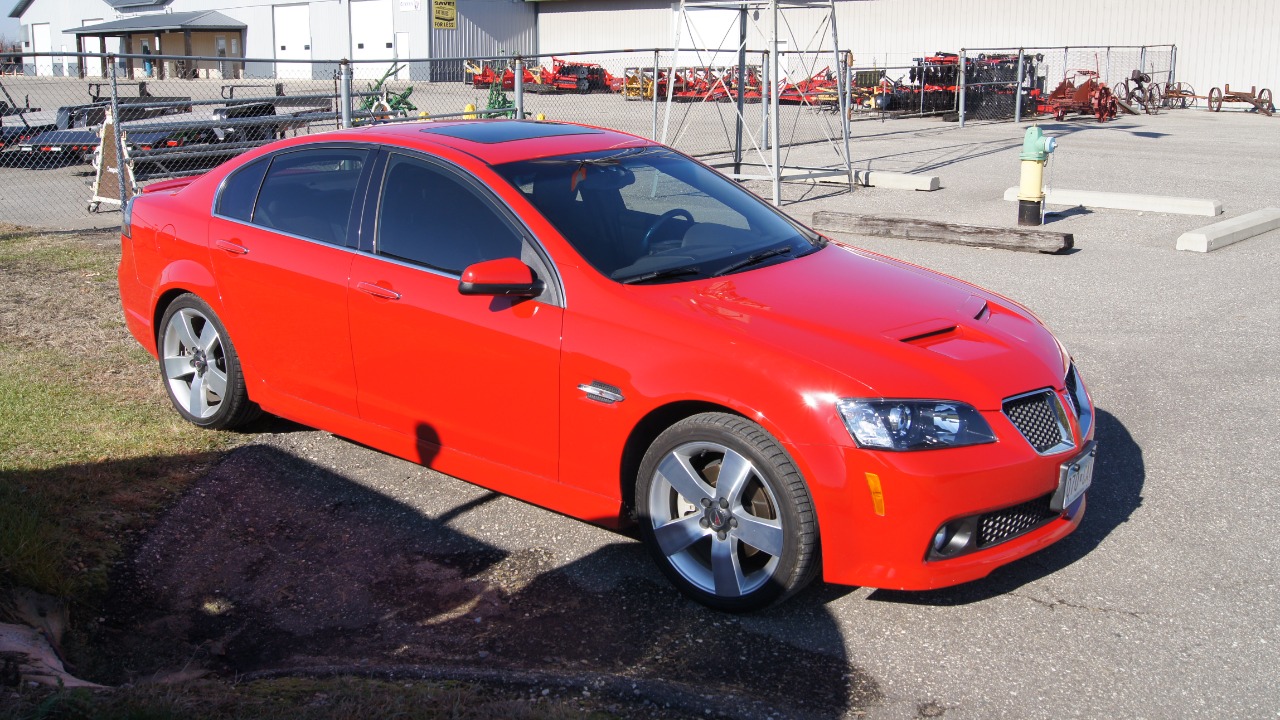

Some sedans look like they belong in a rental lot yet hide the kind of performance that quietly thrills enthusiasts. These eight sleeper sedans pair unassuming styling with serious powertrains, chassis tuning, and modification potential, turning school-run or commute duty into something far more entertaining when the road opens up.
1. 1997-2003 Chevrolet Malibu SS
The 1997-2003 Chevrolet Malibu SS is the definition of a stealth upgrade, taking a workaday family sedan and, in this outline, pairing it with a supercharged 3.5L V6 that delivers 240 hp. According to a 2002 road test, that output gave the Malibu SS an unexpected performance edge over the base car, which was usually associated with rental fleets and budget-conscious buyers. The styling barely changed, so only subtle cues separated the SS from the grocery-getter versions, which is exactly what sleeper fans want: power without the attention. With front-wheel drive and a relatively soft suspension, it was never a track weapon, but the straight-line shove and midrange punch surprised anyone who underestimated it at a stoplight.
For enthusiasts, the stakes were clear: here was an affordable, under-the-radar sedan that could be tuned further while still blending into traffic. The supercharged 3.5L V6 responded well to intake and exhaust tweaks, and the chassis could be tightened with aftermarket springs and dampers, turning a bland commuter into a credible back-road companion. In a market where performance badges often drove insurance premiums and theft risk, the Malibu SS’s anonymity was an asset. It showed that even mainstream American sedans could quietly cater to drivers who wanted more engagement than the spec sheet of the base model suggested.
2. 2004-2009 Pontiac G8 GT
The 2004-2009 Pontiac G8 GT took the sleeper idea much further, hiding a 6.0L LS2 V8 from the Corvette under a conservative four-door body. In period testing, the GT’s 361 hp output was highlighted in a first drive as proof that Pontiac was reviving the muscle sedan formula for everyday use. The styling was muscular but not outrageous, and many non-enthusiasts mistook it for a generic fleet car, right up until the LS2’s torque launched it down the road. Rear-wheel drive and a relatively long wheelbase gave it stability at speed, while the big V8’s soundtrack remained subdued enough at cruise to keep passengers comfortable.
For drivers who cared about performance, the G8 GT’s use of a Corvette-derived engine meant access to a vast tuning ecosystem. Bolt-on modifications, ECU tunes, and suspension upgrades could push the sedan into territory that embarrassed dedicated sports cars, all while retaining four usable doors and a large trunk. The car’s sleeper status also had broader implications for the American market, signaling that there was still demand for powerful, rear-drive sedans even as crossovers grew dominant. Enthusiasts saw the G8 GT as a rare chance to own a modern LS-powered sedan that did not shout about its capabilities, and that scarcity has only sharpened interest on the used market.
3. 1986-1991 BMW 535i
The 1986-1991 BMW 535i, built on the E28 platform, is a classic sleeper that predates the current horsepower wars yet still feels eager. BMW’s own heritage documentation notes that the 535i used the M30B35 inline-six, an engine rated at 208 hp and paired with rear-wheel drive in a relatively light, boxy body. That combination gave the car a balanced, communicative feel that enthusiasts continue to prize. A factory overview emphasizes the model’s role as a high-performance variant within the 5 Series range, while a later sleeper profile points out how easily owners modify the M30B35 for more power.
On the street, the E28 535i rarely attracts attention from non-enthusiasts, who see only an old sedan with chrome bumpers. That low-key image is part of its appeal, especially when combined with modern suspension refreshes, stickier tires, and engine upgrades that can push output well beyond the original 208 hp. For stakeholders in the classic-car world, the 535i illustrates how driver-focused dynamics and tunable mechanicals can keep an older sedan relevant long after its showroom days. It also shows how a car that once sat below halo models like the M5 can, with the right setup, deliver a similarly engaging experience while remaining far more affordable and discreet.
4. 2011-2017 Chrysler 300C SRT8
The 2011-2017 Chrysler 300C SRT8 wrapped a 6.4L HEMI V8 with 470 hp in a full-size luxury shell that looked more executive than track-ready. A detailed comparison test underscored how the 300C SRT8’s straight-line performance rivaled dedicated sports cars while its cabin delivered leather, tech, and sound insulation expected of a premium sedan. From the outside, only modest badging and larger wheels hinted at the power available, so many observers assumed it was just another comfort-focused 300. The reality was a rear-drive chassis, big brakes, and a powertrain that could light up the rear tires with ease.
For enthusiasts, the stakes with the 300C SRT8 involved access to serious HEMI performance without sacrificing daily usability. The car’s size and refinement made it a credible family hauler, yet the 6.4L engine responded well to exhaust, intake, and tuning upgrades, turning an already quick sedan into a genuine drag-strip threat. In a broader sense, the model demonstrated that American manufacturers could blend luxury and muscle in a way that appealed to both traditional V8 fans and buyers cross-shopping European sedans. Its sleeper character lay in that dual identity, allowing owners to commute in comfort and then surprise unsuspecting rivals when the road straightened out.
5. 1993-2002 Lexus GS 400
The 1993-2002 Lexus GS 400 quietly delivered serious performance under a conservative, businesslike exterior. A 4.0L V8 producing 300 hp sat at the heart of the package, giving the GS 400 strong acceleration that contrasted with its reputation for reliability and comfort. In a detailed handling assessment, reviewers praised the sedan for its refined yet potent dynamics, noting that the chassis and steering allowed enthusiastic driving without sacrificing the isolation Lexus buyers expected. To casual observers, the GS 400 looked like any other executive car, which made its ability to surge forward at highway speeds particularly surprising.
From an enthusiast perspective, the GS 400’s sleeper appeal lies in its blend of durability, tuning potential, and understated styling. The 4.0L V8 has proven robust, encouraging owners to explore intake, exhaust, and suspension modifications that sharpen the car’s responses while keeping the exterior largely stock. For the broader market, the GS 400 showed how a luxury brand could integrate genuine performance into a sedan without resorting to aggressive body kits or loud exhausts. That approach helped build Lexus’s credibility among drivers who wanted both comfort and speed, and it continues to influence how modern performance-luxury sedans are positioned.
6. 2007-2013 Audi S4 (B7)
The 2007-2013 Audi S4 in B7 form is presented here as hiding a supercharged 4.2L V8 that produces 340 hp, combining discreet styling with serious pace. A detailed performance analysis of the B7 platform highlights how that output, paired with Quattro all-wheel drive, delivered strong acceleration and all-weather traction in a package that looked much like a standard A4. Subtle exterior tweaks, such as slightly larger wheels and modest badging, were the main visual clues, so many onlookers never realized they were looking at a high-performance variant. Inside, the cabin remained focused on comfort and technology, reinforcing the car’s dual role as both commuter and back-road tool.
For enthusiasts, the B7 S4’s sleeper status is amplified by its tuning potential and year-round usability. The supercharged 4.2L V8 responds to software and hardware upgrades that can unlock more power, while the Quattro system helps deploy that output effectively on wet or snowy roads. This combination made the S4 attractive to drivers in regions where rear-wheel-drive performance sedans were less practical. In a broader context, the car demonstrated how European manufacturers could integrate high performance into compact executive sedans without resorting to flamboyant styling, influencing a generation of subtle yet rapid four-doors that followed.
7. 1985-1989 Mercedes-Benz 560SEL
The 1985-1989 Mercedes-Benz 560SEL represents a different kind of sleeper, one rooted in sheer size and quiet authority. Powered by the M117 V8 engine, it delivered 227 hp in a massive luxury body that prioritized comfort and presence over overt sportiness. A feature on understated powerhouses highlighted the 560SEL’s sleeper potential, noting how its long-wheelbase W126 shell concealed performance that belied its stately looks. Listings for the model show that there are examples of the 1985 to 1989 Mercedes-Benz 560SEL for sale with prices starting as low as $899, which underscores how accessible this flagship has become for enthusiasts seeking a discreet V8 sedan.
Additional context from a marketplace overview explains that The Mercedes-Benz 560SEL was a luxury sedan produced by the German automaker from 1985 to 1991 and served as the flagship model of the W126 S-Class lineup, often referred to as the Class leader in its segment. A period drive and review video shows Craig taking his 1986 560SEL out, describing it as a Very nice car for the year and noting that it is Absolutely huge for a sedan, which aligns with the car’s reputation for space and comfort on the road. For enthusiasts, the stakes involve preserving and lightly modifying a car that once symbolized executive success, using suspension and exhaust tweaks to reveal more of the M117’s character while keeping the exterior dignified and low-key.
8. 2015-2020 Kia Stinger GT
The 2015-2020 Kia Stinger GT is a modern sleeper that challenged preconceptions about its brand. Equipped with a 3.3L twin-turbo V6 making 365 hp, it delivered performance figures that surprised many buyers who associated Kia with economy cars. A detailed first drive review emphasized the Stinger GT’s sports sedan agility, noting how its chassis tuning, rear- or all-wheel-drive layout, and strong brakes allowed it to compete with established European rivals. The styling was more aggressive than some traditional sleepers, yet many still underestimated its capabilities, especially in markets where performance Kias were a new concept.
For enthusiasts, the Stinger GT’s significance lies in how it broadened the field of attainable performance sedans. The 3.3L twin-turbo V6 responds well to tuning, and the car’s practical hatchback-style trunk and usable rear seats make it a realistic daily driver. Its sleeper angle comes from the disconnect between badge perception and real-world performance, which allowed owners to enjoy serious pace without the social baggage that sometimes accompanies more traditional performance brands. On a broader level, the Stinger GT signaled that mainstream manufacturers could credibly enter the enthusiast sedan space, raising expectations for what future family-friendly four-doors might deliver in terms of power and handling.
More from MorningOverview