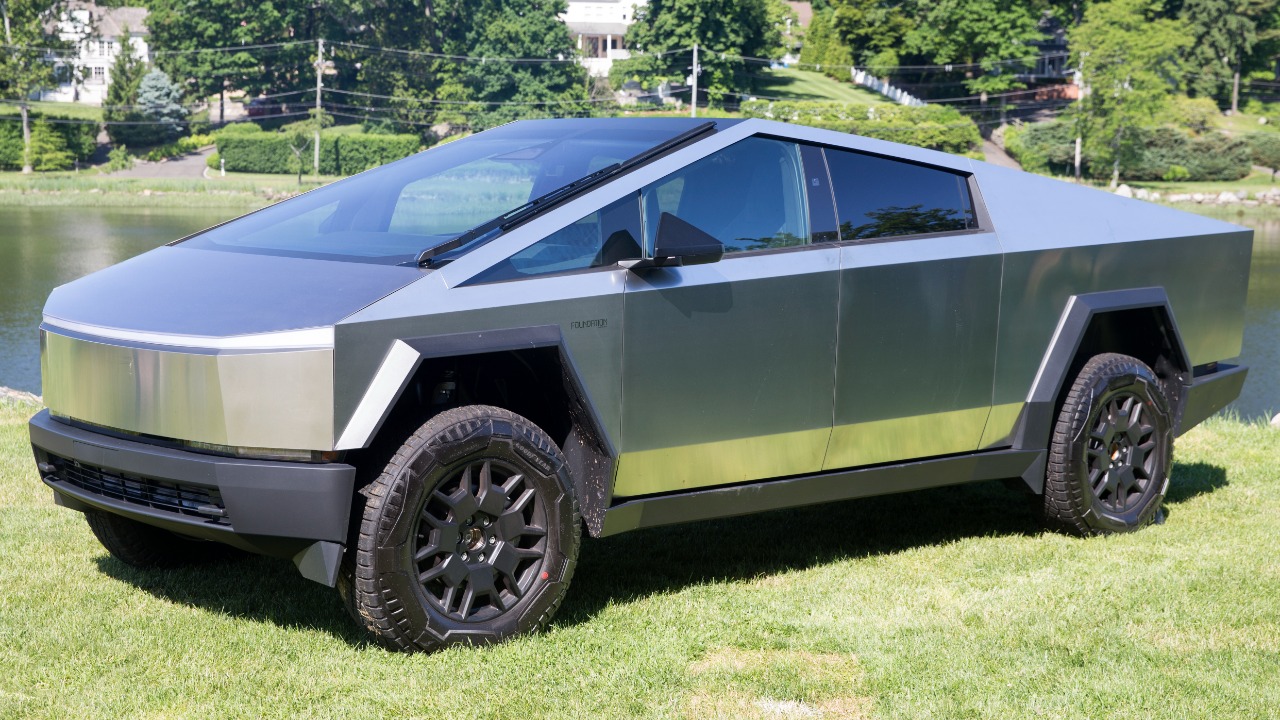

I see the Cybertruck as a bold experiment that also carries several built-in frustrations, and many of the same issues that make people regret buying other Teslas can hit even harder with this truck. From the steep purchase price to the way software updates can suddenly change how key features behave, each drawback has the potential to turn an exciting purchase into a daily headache if you are not prepared.
1. The Sky-High Price Tag
The Sky-High Price Tag is the first reason a Cybertruck can become a regret, because Tesla’s premium pricing often exceeds what buyers initially expect and can easily climb past the cost of rival trucks. Reporting on reasons you might regret buying a Tesla highlights that one of the core complaints is the high upfront cost compared with many competitors, and the Cybertruck sits at the top of that hierarchy. When a truck’s sticker price pushes into six-figure territory once you add dual- or tri-motor powertrains, larger battery packs, and premium options, the financial commitment starts to resemble a luxury home down payment rather than a typical vehicle purchase. That gap matters even more when you compare the Cybertruck with established pickups like the Ford F-150, Chevrolet Silverado, or Ram 1500, which often deliver strong towing and payload capabilities at significantly lower transaction prices.
I find that the price problem is not just about the number on the window sticker, it is also about what you get for that money and how the truck holds its value. The video breakdown titled Owning a Cybertruck: 5 Problems, Cost Breakdown, 10000 … calls out Depreciation and explicitly frames it as “Depreciation… That’s gotta be the elephant in the room that you missed. What will that truck sell for in 3-5 years?” That question is crucial for anyone stretching a budget to afford a Cybertruck that can exceed $100,000, because rapid depreciation can erase the perceived savings from lower fuel and maintenance costs. If resale values soften as more Cybertrucks hit the used market or if early-build quirks scare off secondhand buyers, owners who financed heavily may find themselves upside down on their loans. For households that counted on strong resale to justify the purchase, that combination of high entry price and uncertain long-term value can turn the Cybertruck from a dream truck into a financial liability.
2. Lengthy Charging Times
Lengthy Charging Times are another major drawback that can make Cybertruck ownership feel more restrictive than liberating, especially for drivers used to quick gas stops. In the same analysis of reasons people might regret buying a Tesla, slow and sometimes inconvenient charging is singled out as a core frustration, because even the best fast-charging sessions rarely match the five-minute refuel of a gasoline pickup. For a large, heavy truck like the Cybertruck, the battery pack is substantial, so topping it up from a low state of charge can take well over an hour on many public fast chargers and much longer on a typical home Level 2 setup. That reality turns what used to be a quick detour to the gas station into a planned event that must be woven into work schedules, family obligations, or road-trip itineraries.
From my perspective, the time cost of charging becomes even more painful when you factor in real-world conditions that are less than ideal. If a Cybertruck owner arrives at a busy charging plaza and finds several stalls occupied or out of service, the wait can stretch far beyond the advertised charging curve, and that delay compounds when the truck is towing or heavily loaded, because energy use rises and more frequent stops are required. For people who rely on their truck for job sites, long commutes, or spontaneous weekend trips, the need to plan around multi-hour charging windows can feel like a constant constraint rather than a manageable trade-off. Over months and years, that friction can erode the initial excitement of owning a futuristic electric pickup and leave drivers wondering whether a conventional truck, or even a hybrid, would have fit their lifestyle with fewer compromises.
3. Disappointing Real-World Range
Disappointing Real-World Range is closely linked to charging time but deserves its own scrutiny, because the Cybertruck’s advertised numbers can be difficult to match in everyday use. The broader reporting on Tesla regrets points out that limited driving range on a single charge complicates long-distance travel, and that issue becomes more pronounced with a large, flat-sided truck that faces significant aerodynamic drag at highway speeds. Even if official estimates promise several hundred miles, owners often see noticeably lower figures when they drive at typical freeway speeds, carry passengers and cargo, or run climate control in very hot or cold weather. For a vehicle marketed as an adventure-ready pickup, the gap between brochure range and real-world experience can feel like a broken promise.
I view this range shortfall as more than a minor annoyance, because it reshapes how owners can use the Cybertruck for the tasks trucks are supposed to handle. Towing a medium-size camper, boat, or enclosed trailer can slash effective range, sometimes cutting it nearly in half, which forces more frequent charging stops and makes long trips significantly slower and more stressful. Drivers who live in rural areas or who regularly cross regions with sparse fast-charging coverage may find themselves plotting routes around chargers instead of choosing the most direct or scenic path. That constant mental load, combined with the risk of arriving at a charger with a nearly depleted battery, can turn what should be a confident, capable workhorse into a source of range anxiety. When buyers realize that their expensive electric truck cannot comfortably complete the same routes their older gasoline pickups handled with ease, regret can set in quickly.
4. Service and Repair Headaches
Service and Repair Headaches form a fourth major reason the Cybertruck can disappoint, because its specialized construction and electronics require support that is not yet widely available. The analysis of Tesla drawbacks emphasizes that service availability and repair costs are a recurring pain point, and the Cybertruck adds extra complexity with its unique stainless-steel body panels and structural battery design. Unlike conventional pickups that can be serviced at thousands of independent shops and dealer networks, a Cybertruck often needs attention from technicians trained specifically on Tesla systems, and those technicians may be concentrated in a limited number of service centers. When something goes wrong, owners can face long waits for appointments, extended repair times, and the logistical hassle of arranging transport for a large, heavy truck that cannot easily be towed or flat-bedded by every roadside provider.
In my assessment, the financial side of these service issues can be just as troubling as the inconvenience. Stainless-steel exterior panels are not only difficult to repair after dents or collisions, they can also be expensive to replace, and insurance companies may respond by raising premiums or declaring borderline damage a total loss. Electronic components that control the Cybertruck’s steering, braking, and driver-assistance features are highly integrated, so a failure in one module can require replacement of a larger assembly rather than a simple part swap. For owners who already stretched to afford the initial purchase, surprise repair bills or long periods without the truck can undermine the value proposition they expected from an advanced electric vehicle. Over time, the perception that the Cybertruck is fragile in practice, even if it looks rugged on the outside, can leave buyers feeling trapped in a product that is costly to maintain and difficult to keep on the road.
5. Unreliable Software Features
Unreliable Software Features round out the list of Cybertruck drawbacks that can lead to buyer’s remorse, because the truck leans heavily on software for everything from infotainment to driver assistance. The same reporting that catalogs reasons to regret buying a Tesla notes that potential software glitches and an over-reliance on updates can disrupt functionality, and that pattern is especially relevant for a vehicle that is marketed as a rolling technology showcase. Over-the-air updates can change how the Cybertruck accelerates, steers, or manages battery power, and while those changes are often framed as improvements, they can also introduce new bugs or remove behaviors that owners liked. When a routine update suddenly alters the interface for climate controls, navigation, or towing settings, drivers may feel as if the truck they bought is being modified without their clear consent.
I consider this software volatility a serious issue because it affects both convenience and trust. If a glitch after an update temporarily disables key features such as adaptive cruise control, parking sensors, or smartphone integration, the Cybertruck can become harder and less safe to use until a fix arrives, and there is no guarantee about how quickly that will happen. Owners who rely on the truck for work or family transport may find themselves caught between waiting for patches and experimenting with workarounds, all while driving a vehicle whose behavior has subtly changed. Over time, that uncertainty can erode confidence in the truck’s core systems, especially when combined with the other drawbacks of price, charging, range, and service access. Instead of feeling like they own a cutting-edge machine that improves over time, Cybertruck buyers may feel like unpaid beta testers, and that realization can be a powerful source of regret.
More from Morning Overview