
Tesla Inc built the modern electric-vehicle market, but a new wave of rivals is racing to topple its dominance. From Chinese mass-market players to American luxury specialists, these five companies show how quickly the landscape is shifting, and why one of them has already pulled ahead of Tesla in a key metric that investors and policymakers watch closely.
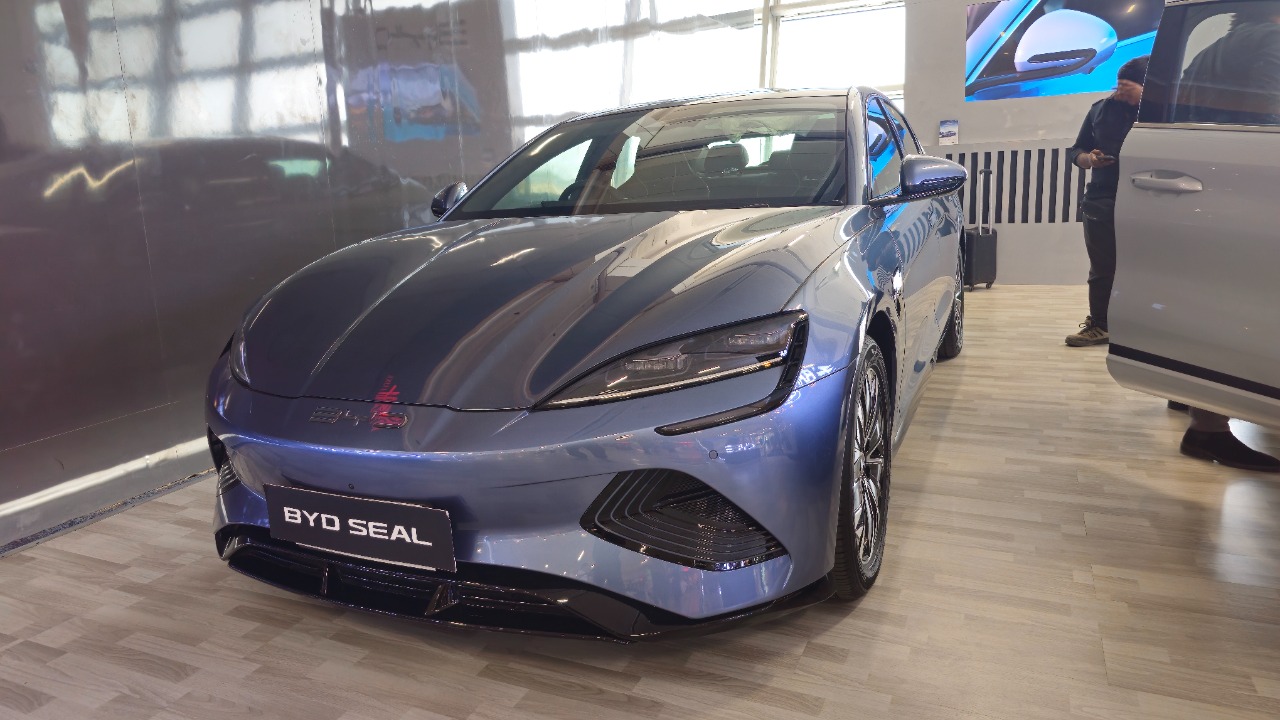
1. BYD: The Chinese giant that outsold Tesla in Q4 2023.
BYD is the first automaker to beat Tesla Inc in pure electric-vehicle sales over a full quarter, selling 514,819 battery EVs in the final three months of 2023 compared with Tesla’s 484,507, according to BYD hits and separate BYD meets reporting that describe how BYD met its 2025 sales target and is poised to overtake Tesla as the top EV maker. That quarterly result made BYD the world’s top EV seller for that period and confirmed that its strategy of pairing aggressive pricing with tight control over its supply chain can scale globally. Analysts note that BYD vertically integrates batteries and semiconductors, a structure that lets it cut costs and move faster on new models than many legacy rivals that still rely on outside suppliers.
The implications extend beyond a single quarter’s scoreboard. Commentary comparing While Tesla and While BYD, including one widely shared post that argued that While BYD already surpassed Tesla in production last year, frames the rivalry as a clash of industrial philosophies: Tesla Inc focused on software and a proprietary Supercharger network, BYD focused on manufacturing scale and component control. Another analysis of NIO, Tesla, Supercharger and BYD infrastructure on NIO owns highlights how BYD’s vertical integration could help it weather policy shifts and price wars that might squeeze less efficient competitors. For consumers, BYD’s rise means more affordable EV choices, while for Tesla Inc and other automakers it raises the bar on cost discipline and global reach.
2. Rivian: Amazon’s bet on electric trucks and SUVs.
Rivian is positioning itself as the EV brand for outdoor-focused drivers, and its trajectory shows why investors see it as one of the most credible challengers to Tesla Inc in North America. The company, often described with the phrase “If Rivian owns the outdoors, Lucid Motors owns the technology showcase” in one If Rivian analysis, began delivering its R1T electric pickup in 2021 and followed with the R1S SUV. Backed by Amazon, Rivian has an anchor commercial customer that most startups can only dream of. A detailed earnings breakdown reported that Amazon ordered 100,000 electric delivery vans and that Rivian aims to produce 150,000 vehicles in 2024, figures that would move it firmly into the first tier of global EV producers if achieved.
The Amazon arrangement has also inspired confidence in Rivian and its future ability to compete against Tesla and other established automakers, as one investor note on The Amazon put it when discussing Rivian and Tesla and their long-term prospects. Another perspective argued that the upcoming R3 compact model could be the vehicle to topple Tesla, praising how Rivian mirrors “Like Tesla” as an EV-only brand while targeting different segments than Companies that still split attention between combustion and electric platforms. For fleet operators, Rivian’s vans promise lower running costs and quieter city streets; for Tesla Inc, the company’s focus on trucks and adventure vehicles threatens to erode the brand’s early lead among affluent, tech-savvy buyers who want something more rugged than a Model Y.
3. Lucid Motors: Luxury EVs with record-breaking range.
Lucid Motors is attacking Tesla Inc from the top of the market, using technology and range as its sharpest weapons. The company launched the Lucid Air sedan in 2021 with a headline-grabbing 520-mile range on a single charge, a figure that put it ahead of any Tesla Inc model and signaled that Lucid Motors could out-engineer incumbents on efficiency. To fund that ambition, Lucid Motors secured a $1 billion investment from Saudi Arabia’s Public Investment Fund in 2022, a lifeline that underpins its factory build-out and global expansion plans, as detailed in Lucid coverage of how its Production Hits All Time High Yet Tesla and Rivian Keep Pulling Ahead.
Financial markets, however, have been less forgiving than early adopters. One recent analysis noted that While Lucid saw its stock price drop by over 60%, while Rivian’s and Tesla’s stock prices rose by 45% and 15%, respectively, raising the question, “Will 2025 be Lucid’s turning point?” in a piece titled While Lucid. That divergence underscores the stakes: Lucid Motors must prove it can scale production and control costs without sacrificing the performance that makes the Air distinctive. For luxury buyers, Lucid Motors offers an alternative to Tesla Inc that feels more like a traditional high-end sedan, while for investors the company is a test case of whether cutting-edge EV technology alone can sustain a premium brand in a market that is rapidly crowding with competitors.
4. Nio: Revolutionizing charging with battery swaps.
Nio is challenging Tesla Inc not just with cars but with a different vision of how drivers refuel. The Chinese company operates over 2,000 battery swap stations as of 2023 and delivered 160,038 vehicles in 2023, according to Nio delivered reporting that also highlights its European expansion targets. Instead of waiting at a fast charger, Nio owners can pull into a station and have a depleted pack automatically exchanged for a full one in minutes, a model that some analysts argue could be more convenient for apartment dwellers and long-distance drivers than even Tesla Inc’s Supercharger network. A separate breakdown of NIO, Tesla, Supercharger and BYD infrastructure on NIO hits emphasized that NIO owns battery swap infrastructure while Tesla owns the Supercharger network, framing the competition as a battle between two incompatible but powerful ecosystems.
Strategically, Nio’s approach could reshape how utilities, landlords and governments think about EV infrastructure. If battery swapping gains traction in Europe, where Nio is targeting new markets, it might pressure regulators to treat batteries more like shared assets than fixed parts of a car. Commentary contrasting While Tesla and NIO in a widely circulated post that also mentioned While BYD and Tesla argued that while Tesla built superchargers, NIO built battery swap stations, suggesting that Nio is betting on service convenience as its main differentiator, as seen in While Tesla. For Tesla Inc, Nio’s growth is a reminder that hardware and software leadership may not be enough if a rival can redefine the refueling experience itself.
5. Fisker: The ambitious startup facing collapse.
Fisker illustrates how brutal the race to topple Tesla Inc can be. The company began delivering its Fisker Ocean SUV in 2023, positioning it as a stylish, relatively affordable electric crossover for urban drivers. Yet quality issues quickly surfaced, and the company struggled to ramp production. According to a detailed account of its downfall, Fisker produced fewer than 10,000 units before filing for Chapter 11 bankruptcy on June 17, 2024, a collapse that wiped out many early backers and left customers uncertain about service and warranties, as described in Fisker Ocean coverage of its bankruptcy.
The contrast with Tesla Inc and other rivals is stark. While companies like Rivian and Lucid Motors have faced their own setbacks, they have secured deep-pocketed partners or sovereign wealth backing that gives them more time to fix problems. Fisker, by comparison, relied heavily on contract manufacturing and did not control critical parts of its supply chain, leaving it vulnerable when costs rose and defects appeared. For regulators and policymakers, Fisker’s failure is a warning that consumer protections and charging infrastructure must keep pace with the flood of new brands. For Tesla Inc and the surviving challengers, it is a reminder that in the EV market, bold design and marketing are not enough without robust engineering, capital and execution.
More from Morning Overview