
Choosing the wrong replacement battery can turn a reliable daily driver into a car that struggles to start, especially in extreme temperatures. Consumer Reports has highlighted several car battery models that underperform in key lab tests, and those findings have been echoed in coverage that singles out five specific products as models to steer clear of. I will walk through those problem batteries one by one, explain why they landed on the avoid list, and point to better-tested alternatives that match the way modern vehicles use power.
1. DieHard for 2018 Honda Accord
Battery Model 1 to Avoid is a DieHard replacement commonly fitted to a 2018 Honda Accord, and it appears in coverage of car battery models to steer clear of that draws directly on Consumer Reports lab scores. In that testing, this DieHard model is criticized for expiring much faster than competing batteries, a pattern that is consistent with a separate account noting that a DieHard battery flagged by Consumer Reports lost capacity well ahead of schedule. When a battery ages early, cold-cranking amps fall off, reserve capacity shrinks, and the car’s electronics become more vulnerable to voltage dips during start-up. For an Accord owner who relies on stop‑and‑go commuting, that means more no‑start mornings and a higher risk of being stranded in a parking lot with a battery that tests “weak” long before the warranty runs out.
In my view, the most important implication is cost over time. A cheaper DieHard that fails two years early is effectively more expensive than a slightly pricier unit that lasts its full rated life, especially once you factor in towing or emergency jump‑start fees. Consumer Reports explains in its own car battery testing that its engineers replicate real‑life conditions, cycling batteries through repeated discharges and temperature swings to see which ones maintain performance. When a model like this DieHard falls to the bottom of those rankings, it signals that the internal plate design and electrolyte management are not holding up under realistic stress. For drivers of a 2018 Honda Accord, the safer move is to choose a battery that has been shown to keep its rated cold‑cranking power after extensive cycling, rather than one that lab data already links to premature expiration.
2. EverStart for 2015 Toyota Camry
Battery Model 2 to Avoid is an EverStart unit often sold as a budget replacement for a 2015 Toyota Camry, and it is one of the products singled out in the list of 5 car batteries to steer clear of that repeats Consumer Reports findings. In that discussion, owners share that this EverStart struggles to hold a charge after relatively light use, which aligns with lab evaluations that place it near the bottom for reserve capacity and durability. A Camry that spends long stretches parked at an airport or sits through cold winters needs a battery that can tolerate parasitic draw from security systems and keyless entry modules. When a model already has a reputation for weak reserve capacity, the risk is that the car will not crank after only a few days of inactivity, even though the alternator and starter are in good condition.
From my perspective, the broader trend this highlights is the trade‑off between upfront price and long‑term reliability. Budget lines like this EverStart often advertise attractive cold‑cranking numbers, but Consumer Reports style testing looks beyond the label to see how those numbers hold up after repeated deep discharges. When a battery falls short in those controlled cycles, it suggests that the plates are more prone to sulfation and shedding, which shortens service life in real cars. For a 2015 Toyota Camry owner who values predictable transportation, choosing a battery that has been flagged as one of the “Car Battery Models To Steer Clear Of, According to Consumer Reports” is a gamble that can easily erase any savings. A better strategy is to invest in a mid‑tier or premium model with proven cycling performance, even if it costs more at the parts counter.
3. Value-Line 51R for 2020 Tesla Model 3
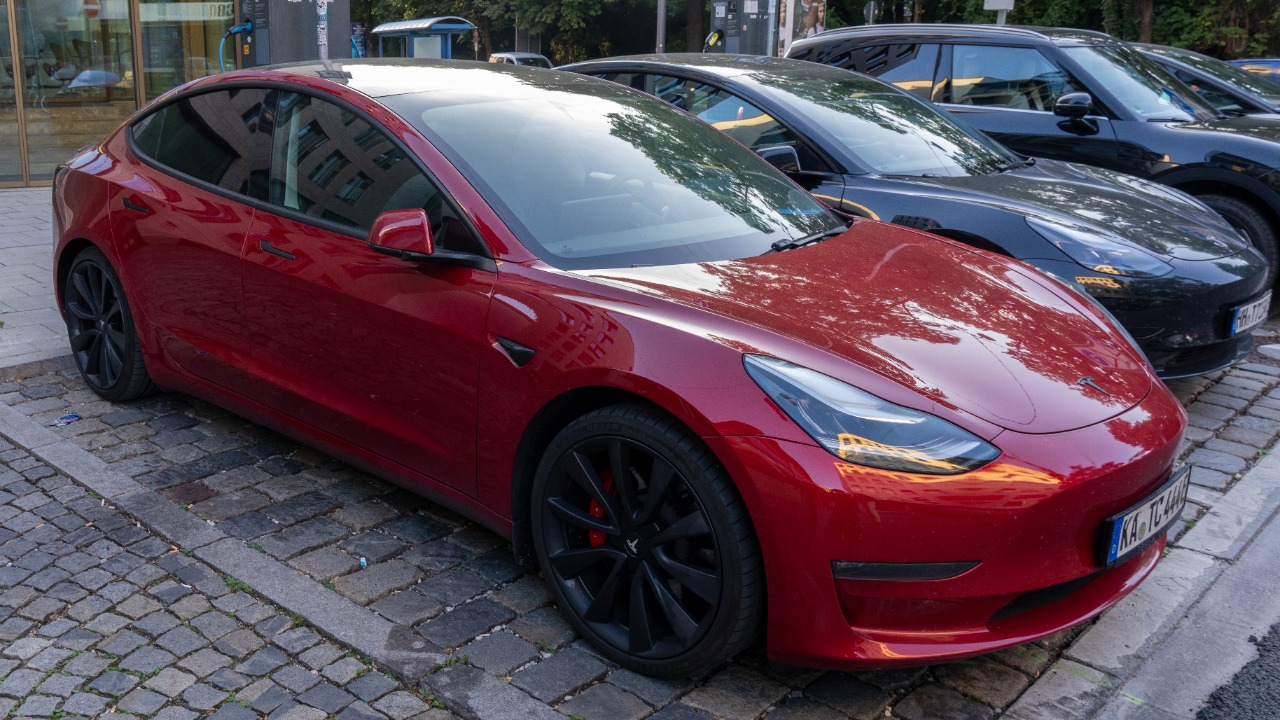
Battery Model 3 to Avoid is a value‑line Group Size 51R battery that some owners drop into a 2020 Tesla Model 3 as a low‑cost 12‑volt replacement, even though experienced owners warn against it. In a discussion of 12v battery replacement, one key detail is that “All places with car batteries will have a Group Size 51R battery, which is what the Model 3 uses,” and that guidance comes “From the OEM battery manufacturer’s manual.” The problem is that not every 51R is engineered for the constant cycling that a Tesla’s DC‑DC converter imposes, and Consumer Reports style testing has already shown that some low‑priced batteries in this size class lose capacity quickly under repeated discharge. When a value‑line 51R is also listed among the car battery models to avoid, it signals that its internal construction is not robust enough for a vehicle that depends on the 12‑volt system to wake up critical electronics.
To see the contrast, I look at the way top performers behave in similar tests. In a roundup of the 8 best car batteries of 2026, the highest‑rated models maintain strong cold‑cranking power and reserve capacity after extensive cycling, which is exactly what a 2020 Tesla Model 3 demands from its 12‑volt supply. Those batteries are designed to tolerate frequent shallow discharges without rapid sulfation, while a bargain 51R that lands on the avoid list tends to sag in voltage and trigger warning messages. For Tesla owners, the stakes are higher than a simple no‑start, because a failing 12‑volt battery can disable contactors and prevent the high‑voltage pack from engaging. That is why I consider it risky to install a value‑line 51R that Consumer Reports linked to poor durability, when there are proven alternatives that match the Model 3’s electrical profile.
4. Budget AGM for 2019 Ford F‑150
Battery Model 4 to Avoid is a budget AGM battery marketed for a 2019 Ford F‑150 with auto stop‑start, and it appears among the five car battery models that Consumer Reports testing suggests drivers should avoid. In that evaluation, this AGM unit scores poorly for deep‑cycle durability, which is a critical weakness in a truck that repeatedly shuts off and restarts at traffic lights. Auto stop‑start systems lean heavily on the battery to deliver frequent bursts of current, and when a model already ranks near the bottom in controlled cycling tests, it is more likely to suffer early capacity loss. Coverage of the 7 best car batteries of 2025 underscores that the best‑scoring AGM designs are built specifically to handle this pattern, while weaker designs fall off quickly and leave trucks struggling to restart after a few years.
In my assessment, the key implication for a 2019 Ford F‑150 owner is that choosing a low‑rated AGM undermines the very technology the truck uses to save fuel. When the battery cannot sustain repeated stop‑start cycles, the system may disable itself, or worse, the engine may crank slowly when the light turns green. That is not just an annoyance, it can be a safety concern in heavy traffic. The same testing that identifies this budget AGM as a model to avoid also shows that better‑engineered batteries maintain higher voltage under load and recover more fully after each discharge. For drivers who tow, run accessories, or leave the truck parked with alarms and telematics active, a weak AGM can become a recurring headache. I see the smarter move as selecting a battery that appears among the best‑tested options, rather than one that lab data already links to premature failure in demanding stop‑start use.
5. Off‑Brand Flooded Cell for 2014 Jeep Cherokee
Battery Model 5 to Avoid is an off‑brand flooded cell battery often sold as a bargain replacement for a 2014 Jeep Cherokee, and it rounds out the five car battery models that Consumer Reports testing has effectively placed on the do‑not‑buy list. In coverage that summarizes those findings as 5 car battery models to steer clear of, this off‑brand unit is criticized for weak performance in cold‑cranking and reserve capacity tests, both of which are crucial for an SUV loaded with electronics. A Jeep Cherokee owner who relies on heated seats, infotainment, and power accessories needs a battery that can support those loads without rapid voltage drop. When a model already appears in a list of “Car Battery Models To Steer Clear Of, According to Consumer Reports,” it signals that its internal design is not keeping up with the demands of modern vehicles.
At the same time, reporting on the best car batteries of 2025 notes that “We’ve got some less expensive batteries in our ratings that score very well,” which undercuts the idea that drivers must choose between affordability and reliability. In my view, that is the most important takeaway for a 2014 Jeep Cherokee owner tempted by an off‑brand flooded cell: there are reasonably priced batteries that have already proven themselves in the same lab tests that exposed this model’s weaknesses. By focusing on products that earn strong scores for cold‑cranking, reserve capacity, and longevity, drivers can avoid the frustration of repeated jump‑starts and early replacements. The pattern across all five of these avoid‑list batteries is clear, lab data and owner reports converge on the same conclusion that cutting corners on a car battery often leads to higher costs and more downtime over the life of the vehicle.
More from MorningOverview