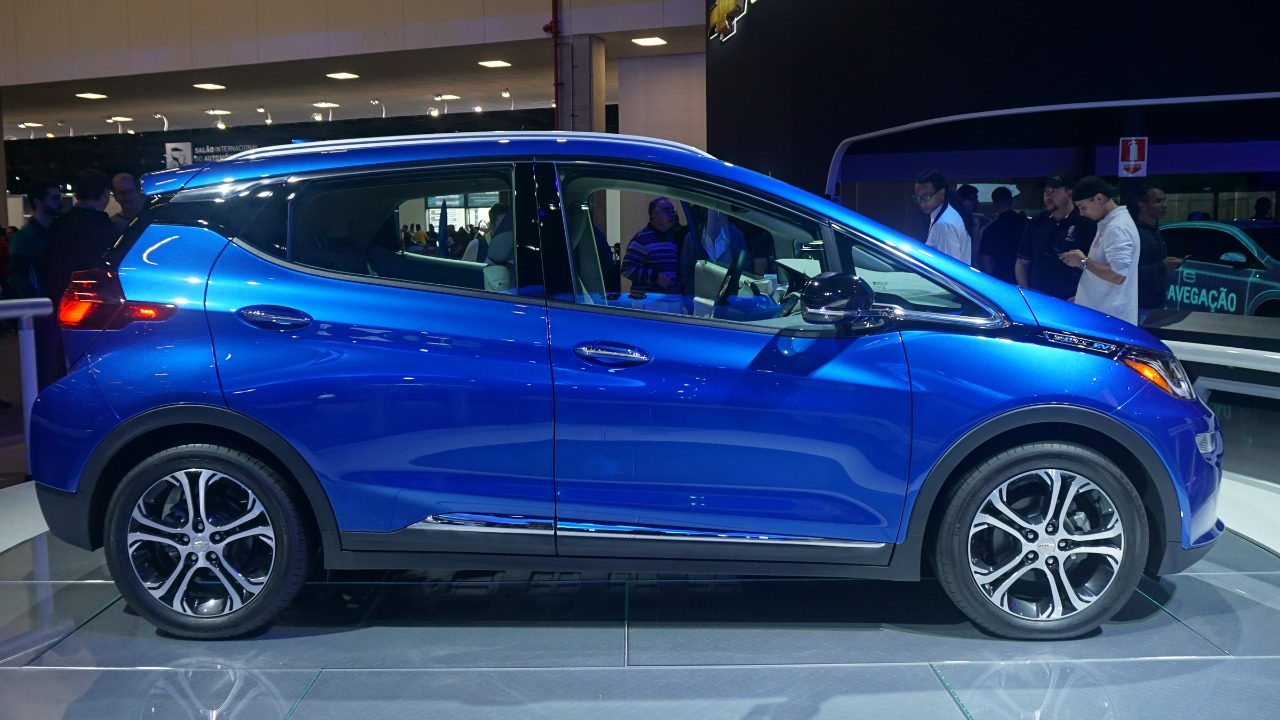

The 2027 Chevrolet Bolt is arriving with a clear mission: undercut the Nissan Leaf on price while stretching every kilowatt-hour a little farther. With a sub-$30,000 sticker and more than 250 miles of range, it is positioned as the value play in a maturing EV market where shoppers now compare spreadsheets as closely as styling. The question is whether that combination of lower cost and longer legs is enough to pull buyers away from a long-established rival.
Price pressure: Bolt goes under $30,000 on purpose
Affordability is the sharpest tool in Chevrolet’s kit, and the company is wielding it with intent. Internal “Quick Facts” put the 2027 Bolt’s Starting MSRP at $28,995 for the Later LT Trim Est, a figure that plants the car squarely in compact-hatchback territory rather than luxury-EV land. Separate reporting frames the 2027 Chevrolet Bolt as “Price Under $30,000,” reinforcing that this car is engineered to slide under a psychological ceiling that still defines mass-market acceptance. In some early event material, the car is described as starting at $28,600 USD, with one enthusiast group noting the $28,600 USD figure alongside its range and charging specs, which suggests Chevrolet is willing to shave margins to win share.
That pricing strategy is not happening in a vacuum. The Nissan Leaf has long been the default answer for buyers who want an electric car that costs about what a well-equipped compact sedan does, and recent coverage of the Leaf’s positioning against Tesla’s lower-cost Model 3 and Model Y variants shows how aggressively Nissan has tried to stay under the radar of premium EVs on price. A video breakdown of how the Nissan Leaf “sneaks under” Tesla’s pricing underscores that the Leaf’s value pitch is central to its identity. By coming in at $28,995 and keeping the “Price Under $30,000” message front and center, Chevrolet is not just matching that playbook, it is trying to beat it at its own game.
Range race: 255 miles promised, then quietly exceeded
Range is the other half of the Bolt’s challenge to the Leaf, and here Chevrolet is leaning on both official estimates and real-world overachievement. The company’s own materials describe a GM-estimated 255 miles of range, a figure repeated in dealer “Quick Facts” as an Estimated Range of 255 Miles and in charging-focused coverage that highlights “Range 255 Miles” as a core spec. The Ron Westphal Chevrolet overview lists that GM-Estimated Range at 255 Miles, while EV charging analysts echo the same 255 Miles figure when discussing how the car fits into the broader Range landscape. That consistency matters, because it gives shoppers a clear baseline when they compare spec sheets.
What makes the story more interesting is that early dealer arrivals suggest the car is outperforming its own promise. Reporting on the first units to hit showrooms notes that Chevrolet had publicly promised 255 miles, but that the new Chevy Bolt is arriving with 262 miles of range instead. That same coverage credits an LFP battery and a focus on efficiency for the improvement, describing the car as “Powered” by that chemistry and noting that it supports Tesla Superchargers and fast charging. In enthusiast circles, an early event recap similarly cites a 255-mile est range and fast charging from 10 to 80% at 150 kW or more, tying the 80% charge figure to the same $28,600 starting price. Against a Leaf lineup that, in its most affordable forms, typically offers less range than the Bolt, that extra handful of miles becomes a talking point in every showroom conversation.
Charging and tech: NACS, software, and the daily grind
Range numbers only matter if drivers can easily top up, and here the Bolt’s hardware choices are designed to remove friction. Charging specialists point out that the 2027 Chevrolet Bolt is built around the NACS standard, also known as SAE J3400, which opens the door to Tesla’s vast Supercharger network. Separate coverage of the car’s arrival at dealers reinforces that the 2027 Chevy Bolt supports Tesla Superchargers and fast charging, while the enthusiast event summary notes a 150 kW-plus DC rate that can take the battery from 10 to 80% in a single coffee stop. For commuters who might otherwise worry about public infrastructure, that combination of NACS hardware and decent peak speed is a practical advantage over older CHAdeMO-based Leafs that rely on a shrinking set of compatible stations.
On the software side, General Motors has tried to position the Bolt as a modern, connected device rather than a budget outlier. Corporate communications describe “Ten things to love about the 2027 Bolt,” and highlight how the car fits into Chevrolet’s 2026 EV volume plans, while a separate overview of the resurrected model notes that upgraded batteries, motors and software bring the new Power Bolt closer to GM’s latest platforms. Early drive reports also mention an infotainment system with Google built in, which aligns with Chevrolet’s broader push toward native apps rather than phone projection. That is a notable contrast with Leaf owners who, in online discussions, often praise the fact that “But the Leaf has CarPlay,” even as some complain that “My Chevy EV has been… okay” and toss in a dismissive “Lol” about the coverage. Those reactions show how tech ecosystems and brand perceptions can weigh as heavily as raw specs.
Leaf vs. Bolt: spec-sheet duel in the real world
When I line up the Bolt and Leaf on paper, the new Chevrolet looks engineered to win the comparison test that budget-minded EV shoppers are already running in their heads. A detailed Specification comparison of the 2027 Chevrolet Bolt and 2026 Nissan LEAF walks through pricing, range, charging speed, technology and design, noting that the Bolt starts at a higher figure in Canada but offers more range and faster charging, while the LEAF counters with hatchback convenience versus crossover styling. In the United States, the Bolt’s $28,995 Starting MSRP and GM-estimated 255 Miles of range, with some cars delivering 262 miles in practice, give it a clear edge over Leaf variants that often trade range for a lower price. Add in NACS access to Tesla Superchargers and 10 to 80% fast charging, and the Bolt’s daily usability looks stronger for drivers who regularly venture beyond city limits.
Yet the Leaf is not standing still, and its value proposition still resonates with a certain kind of buyer. Video analysis of how the Nissan Leaf undercuts Tesla on price shows that Nissan continues to treat affordability as a strategic weapon, even if that means accepting shorter range or older charging standards on some trims. In online forums, Leaf supporters point to features like CarPlay and a long track record of reliability, while critics of Chevrolet’s EVs dismissively argue that “nobody wants that trash,” a reminder that brand loyalty and skepticism can override even a compelling spec sheet. For shoppers cross-shopping both cars, the decision is likely to hinge on how much they value the Bolt’s extra miles and NACS access versus the Leaf’s familiar interface and perceived simplicity.
GM’s comeback narrative and what it means for buyers
Behind the product details sits a broader corporate story. General Motors has been explicit that the Chevrolet Bolt and 2027 version in particular are central to its effort to rebuild trust after earlier battery recalls and to prove it can deliver affordable EVs at scale. Company communications describe “Ten things to love about the 2027 Bolt” and quote executives saying “The Chevy Bolt adds to our already successful EV portfolio,” with The Chevy Bolt expected to account for a significant share of Chevrolet’s 2026 EV volume. A separate Q&A hub invites shoppers to “Take a look” at common questions about the new 2027 Chevy Bolt, including “When” it will be available and whether it supports home charging setups, signaling that GM knows it must meet buyers where they are on the learning curve.
From my vantage point, the Bolt’s return as a “Power Bolt” with upgraded batteries, motors and software is as much about optics as engineering. Coverage of the resurrected model emphasizes that the new Bolt is the cheapest EV you can buy in its segment, while still aligning its hardware with GM’s newer EVs so that future software updates and charging improvements can flow more easily. A corporate overview of the Bolt highlights that, with a GM-estimated 255 miles of range, it gives drivers the confidence to go where they want, and adds that “Plus” features like a modern interior and convenient charging port make that possible. For buyers weighing a Leaf against this new Bolt, the message is clear: Chevrolet is betting that more miles for less money, backed by NACS access and a renewed corporate commitment, will be enough to reset the conversation in its favor.
Supporting sources: 2027 Chevrolet Bolt.
More from Morning Overview