
For the first time in more than half a century, a year on the calendar is widely expected to coincide with human eyes turning toward the lunar surface from just a few hundred kilometers away. If current plans hold, 2026 will not only send astronauts around the Moon again but also unleash a wave of public and private missions that could redefine how humanity thinks about our nearest neighbor. The coming months are set to test whether the long-promised return to deep space can finally move from artist’s renderings to lived experience.
That shift is not happening in isolation. It is the product of a maturing Artemis program, a crowded field of commercial landers, and a growing sense among space agencies and companies that the Moon is no longer a symbolic destination but a strategic one. In that context, 2026 may push humans back toward the Moon in a way that feels less like a one-off stunt and more like the opening chapter of a sustained presence.
Artemis II as the hinge between Apollo and a lunar future
The central reason 2026 looms so large in lunar planning is that it is the year the Artemis program is scheduled to carry people outward from low Earth orbit for the first time. The Artemis II mission is designed as a crewed test flight that will send astronauts on a looping trajectory around the Moon, giving them a close view of the surface while validating the systems that must work flawlessly before anyone attempts to land. In effect, it is the bridge between the nostalgia of Apollo and the more ambitious goal of building a long term foothold in cislunar space, a role that has led some analysts to frame 2026 as the year humanity will finally go back to the Moon in earnest, even if no one steps onto the regolith yet, a point underscored in reporting by Jan News By Josh Dinner.
That framing matters because it shifts the narrative from isolated milestones to a sequence of missions that build on one another. Artemis II is not meant to plant flags or deploy rovers, it is meant to prove that the Space Launch System rocket and Orion spacecraft can safely carry people through deep space and back, something no vehicle has done since the Apollo era. By treating this flight as a proving ground rather than a finale, planners are signaling that the real story is the infrastructure and experience it creates for the landings and surface operations that are supposed to follow later in the decade.
NASA’s 2026 gamble: a crewed lunar flyby on a new rocket
That bridge mission is also a calculated risk. NASA is preparing to send astronauts around the Moon on a rocket that has only flown once and a spacecraft that has never carried a crew, a combination that would be bold in any era and is especially striking after decades of operations confined to low Earth orbit. Reporting on the agency’s plans notes that 2026 will be the year NASA astronauts fly around the Moon again if all goes to plan, with The Artemis II mission expected to test life support, navigation, and reentry systems under real conditions rather than simulations, a leap described in detail in coverage of how NASA astronauts fly around the Moon.
From a programmatic standpoint, this is the moment when years of hardware development and political debate either pay off or expose new vulnerabilities. The Space Launch System has been criticized for its cost and schedule, but its supporters argue that a successful Artemis II flight would validate the decision to pursue a heavy lift vehicle tailored to deep space missions. If the mission unfolds as planned, it will not only demonstrate that the rocket and capsule can handle the stresses of translunar flight, it will also give NASA and its partners the confidence to press ahead with more complex operations that depend on this architecture.
Why a ten day lunar loop matters more than a landing
On paper, Artemis II is a roughly ten day mission that will send four astronauts on a free return trajectory around the Moon before bringing them back to Earth. That profile might sound modest compared with a landing, but it is central to NASA’s strategy for a sustainable presence beyond low Earth orbit. Analysts have highlighted that Artemis II will send astronauts around the Moon as one of the top spaceflight moments to watch in 2026, precisely because it represents the first crewed return to the vicinity of the Moon in decades and a critical test of the systems that will later support landers and surface habitats, a role captured in coverage of how Artemis sends astronauts around the Moon.
The mission’s value lies in the data it will generate about how Orion performs in deep space, how its life support systems handle a multi day journey far from Earth, and how crews adapt to the communications delays and operational tempo of a lunar flight. Those insights will feed directly into the design of later missions that aim to dock with a lunar Gateway station or descend to the surface. In that sense, the ten day loop is less a symbolic victory lap and more a systems engineering trial that will either clear the way for landings or force a rethink of timelines and hardware.
The crew at the heart of Artemis II
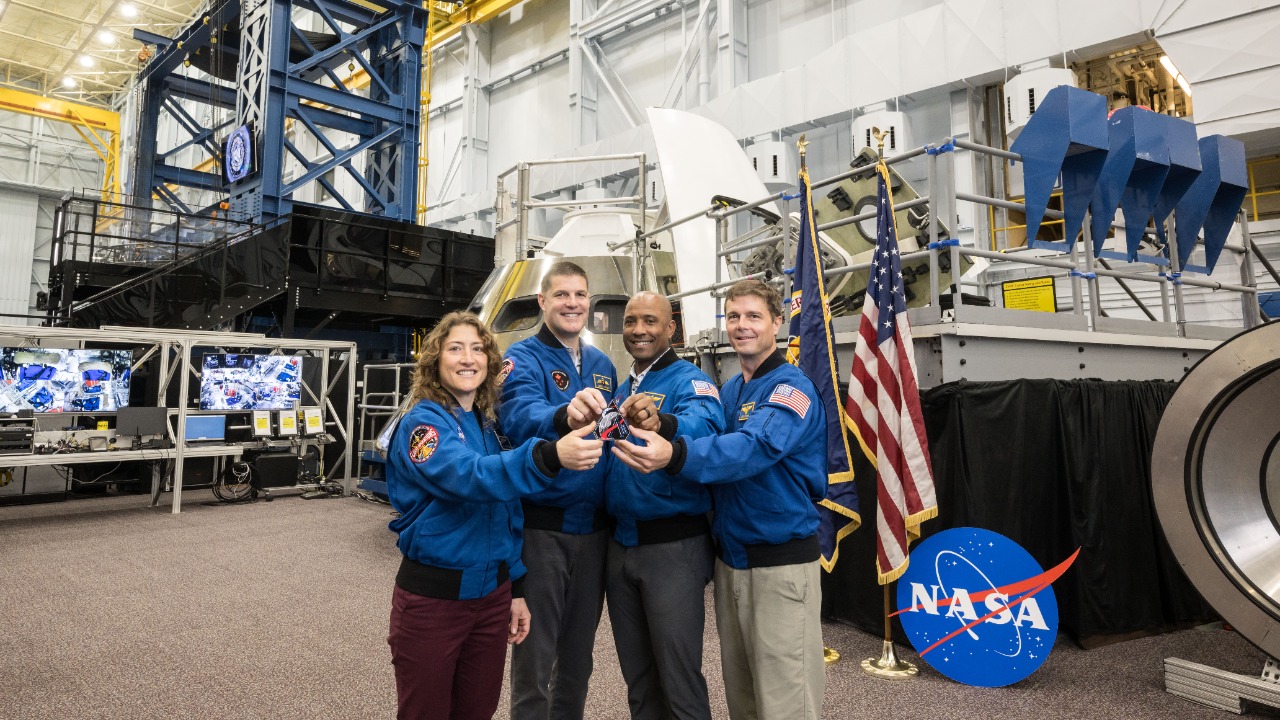
Hardware alone does not define a mission, and Artemis II is already notable for the people who will ride that first crewed flight of the new era. NASA has confirmed that Four astronauts will venture around the Moon on Artemis II, using the Space Launch System rocket and Orion spacecraft as the backbone of early human lunar exploration missions, a configuration described in official mission materials that emphasize how Four astronauts will venture around the Moon.
The crew’s composition reflects a deliberate effort to showcase international cooperation and diversity alongside technical expertise. The presence of a Canadian astronaut alongside American colleagues underscores the role of partnerships in the Artemis program, while the mix of test pilots and experienced space station veterans is meant to balance operational discipline with familiarity in managing complex spacecraft systems. Their journey will be closely watched not only for what it reveals about the hardware, but also for how it shapes public perception of who gets to represent humanity on the frontier.
Delays, new dates, and the pressure on NASA’s schedule
The path to this point has not been smooth. NASA has already delayed the Artemis II mission, pushing its target into 2026 and moving the planned Artemis 3 astronaut landing to the middle of 2027, a shift that reflects both technical challenges and the difficulty of synchronizing multiple complex programs. The agency’s own updates acknowledge that Artemis schedules have been adjusted, with coverage noting how NASA delays Artemis 2 to 2026 while also shifting the first landing.
Those delays increase the stakes for 2026. Each slip compresses the timeline for subsequent missions and raises questions about whether the broader Artemis architecture can stay aligned with political expectations and international commitments. At the same time, the decision to delay rather than press ahead on an earlier schedule suggests that NASA is prioritizing risk reduction over symbolic dates, a choice that may pay dividends if the eventual flights proceed with fewer surprises. For now, the revised calendar makes 2026 a make or break year for demonstrating that the program can deliver on its promises.
Artemis II as a test of long term lunar ambitions
Beyond the immediate schedule, Artemis II is being framed as a test of whether NASA’s long term lunar ambitions are technically and politically sustainable. Analysts have pointed out that NASA’s Artemis II mission aims to return astronauts to the Moon in 2026 as part of a broader push to establish a lasting presence rather than a brief visit, a goal that is central to the way the agency describes its strategy and is reflected in coverage of how NASA’s Artemis II mission aims to return astronauts.
From my perspective, the mission’s success or failure will influence not only the timing of future landings but also the appetite of lawmakers and international partners to keep funding the infrastructure needed for lunar bases, surface power systems, and resource extraction experiments. A smooth flight would strengthen the argument that the United States and its allies can lead a new phase of exploration centered on the Moon, while a serious setback could embolden critics who favor focusing on robotic missions or redirecting resources elsewhere in the solar system.
How Artemis II fits into the 2026 space story
Even within the crowded landscape of 2026 spaceflight, Artemis II stands out as a defining narrative. Commentators tracking the year’s biggest space stories have emphasized that Artemis II will not land on the Moon and will not even enter lunar orbit, instead making a looping swing around the Moon that echoes the free return trajectories of the Apollo era while using entirely new hardware, a profile highlighted in discussions of why Artemis II will not land on the Moon.
That nuance is important because it tempers expectations while still underscoring the mission’s significance. For space historians, the gap between the last Apollo flight and this new crewed lunar flyby is measured in decades, and the fact that the next step is a swing rather than a landing does not diminish the symbolic weight of returning people to deep space. Instead, it reinforces the idea that sustainable exploration requires a series of incremental, carefully staged missions rather than a single dramatic leap.
The new “Moon rush” of private landers
Artemis II is not the only lunar story unfolding in 2026. A growing fleet of privately built spacecraft is lining up to attempt landings on the Moon, turning the year into a kind of proving ground for commercial lunar services. Reports describe a Moon rush in which multiple companies plan to send landers to the surface, including missions that will test technologies for navigation, communications, and resource prospecting, a trend captured in coverage of how these private spacecraft will attempt lunar landings.
This surge of commercial activity complements, and in some ways complicates, NASA’s own plans. On one hand, private landers can deliver instruments and technology demonstrations that support Artemis objectives, such as scouting potential landing sites or testing in situ resource utilization concepts. On the other, the success or failure of these missions will shape public perceptions of lunar exploration more broadly, especially if high profile attempts encounter problems. The convergence of government and commercial efforts in the same year underscores how the Moon is becoming a shared arena rather than a purely national project.
Blue Origin’s pathfinder and the push toward the south pole
Within that commercial wave, one mission stands out for its direct connection to future human landings. In early 2026, NASA and Blue Origin plan to launch Blue Moon Pathfinder Mission 1, an uncrewed flight that is part of a broader effort to develop a lander capable of supporting crewed operations near the lunar south pole. Later in the year, plans call for a landing near that south pole region, a sequence described in summaries of how Lunar exploration in 2026 includes Blue Moon Pathfinder Mission.
The focus on the south pole is not accidental. That region is believed to harbor water ice in permanently shadowed craters, a resource that could be used for life support and rocket propellant if it can be accessed and processed. By sending a pathfinder mission ahead of any crewed landings, NASA and Blue Origin are trying to reduce uncertainty about terrain, lighting, and resource distribution. The outcome of those flights will feed directly into decisions about where to send astronauts and how to design the systems that will keep them alive on the surface.
International partners and the Canadian role
International collaboration is another thread running through the 2026 lunar story, and Canada’s role in Artemis II is a prominent example. The mission includes a Canadian Space Agency astronaut, Jeremy Hansen, who is slated to fly as a mission specialist and will be traveling to space for the first time, a milestone highlighted in reporting that notes how Canadian Space Agency astronaut Jeremy Hansen is part of the crew.
From my vantage point, Hansen’s inclusion is more than a symbolic gesture. It reflects a broader strategy in which NASA trades access to high profile mission seats for contributions to critical infrastructure, such as Canada’s planned robotic systems for the lunar Gateway. By embedding international astronauts in the earliest crewed flights, the program reinforces the idea that the Moon is a shared destination and that long term success will depend on a network of partners rather than a single national effort.
The backup teams preparing in the wings
Behind the primary crew, a cadre of backup astronauts is training to step in if needed and to support future missions. Among them is Douglas, who will back up commander Reid Wiseman, pilot Victor Glover and mission specialist Christina Koch, while the Canadian Space Agency has its own backup in astronaut Jenni Gibbons, a lineup described in mission updates that detail how Douglas will back up commander Reid Wiseman, Victor Glover and Christina Koch and how the Canadian Space contingent is organized.
The existence of such a robust backup team underscores how seriously NASA and its partners are treating crew readiness. Training multiple astronauts for the same roles not only provides insurance against medical or personal contingencies, it also seeds experience across a broader pool of people who can carry lessons into later Artemis flights. In practical terms, that means 2026 is shaping up as a year when a whole generation of astronauts, not just the four who fly, deepen their familiarity with deep space operations, further anchoring humanity’s gradual return toward the Moon.
More from Morning Overview