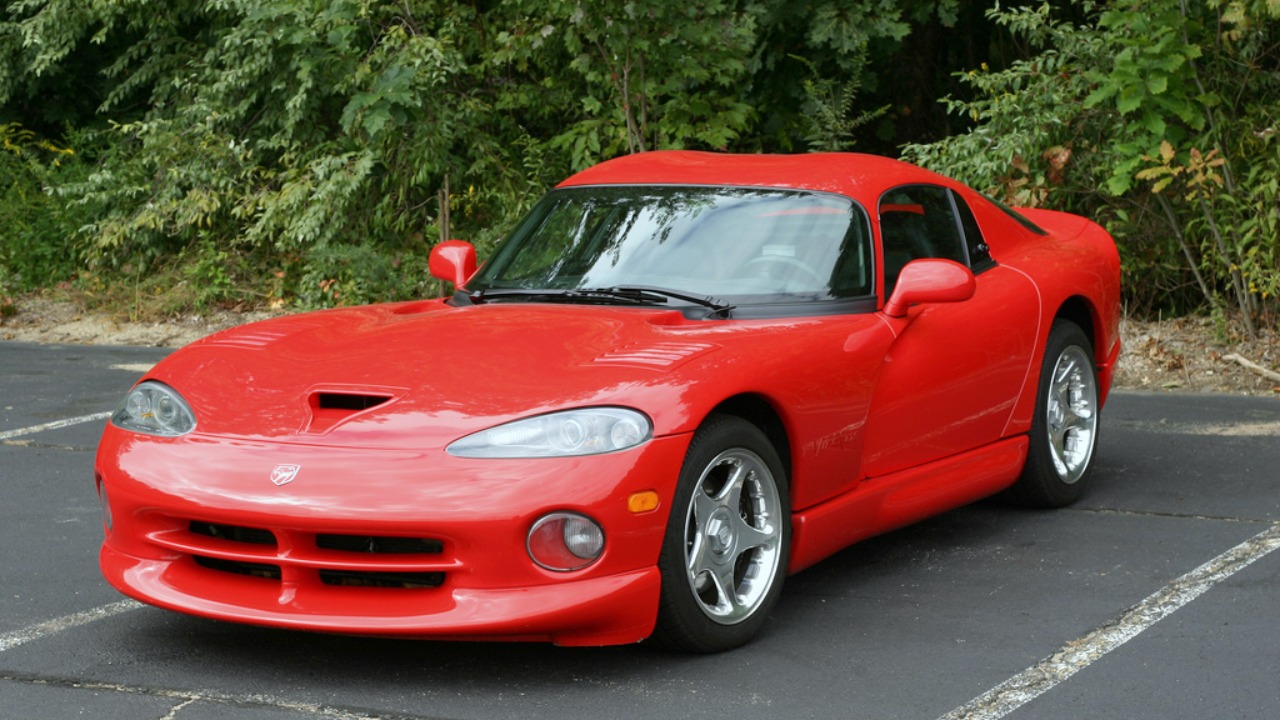

Stellantis spent the past few years talking up a bold electric future for Dodge, only to find itself staring at rows of unsold 2024 cars as buyers walk past them. Instead of a clean handoff from V8 muscle to sleek EVs, the company is juggling bloated inventories, collapsing sales, and a confused product strategy that has left dealers and loyalists frustrated. The result is a market where 2024 Dodges will not move, and Stellantis is stuck trying to clear leftovers while it rewrites the plan on the fly.
How Dodge went from hot commodity to hard sell
Dodge was never supposed to be the brand with cars gathering dust, yet its U.S. sales have collapsed by nearly 50% in the first half of 2025, dropping from over 92,000 units in H1 2024 to just 47,481. That plunge, highlighted in a detailed SWIPE breakdown, tracks directly to the end of the V8-powered Charger and Challenger, which had defined Dodge’s muscle car identity for a generation. When those Hemi icons disappeared, the brand lost the emotional anchor that kept buyers coming back, and the all-electric Dodge Charger Daytona that was supposed to replace them has not filled the gap.
The Charger Daytona managed only 4,299 sales in the first half of 2025, according to the same analysis, as enthusiasts balked at high pricing, performance that felt underwhelming for the badge, and a powertrain that did not connect to Dodge’s V8 legacy. That disconnect shows up on dealer lots, where unsold 2024 models linger even as shoppers shift their attention to 2025 and 2026 offerings. The company is now trying to pivot back toward combustion with new “Sixpack” models using twin-turbo inline-six engines and up to 550 horsepower, and the report notes Dodge is also working on bringing back a V8 option as part of a broader Stellantis strategy shift following CEO Carlos Tavares’ departure, but those fixes arrive only after the brand has already stumbled into a deep sales hole.
Inventory that refuses to move
The sales collapse would be bad enough on its own, but it is compounded by a mountain of unsold metal. Earlier this year, Stellantis cut some inventory, yet Dodge still had one of the highest stockpiles in the industry, with a 52% drop in inventory leaving a 122-day supply on hand. Ram was not far behind, with a 107 day supply, underscoring how slowly these vehicles are turning even after production adjustments. Those figures, detailed in an analysis of Dodge and Ram inventory, show that Stellantis is still sitting on piles of unsold cars while rivals have largely normalized their lots.
On the ground, the problem is even more visible. A visit to Courtesy Dodge Jeep Ch captured rows of 2023 and 2024 vehicles still waiting for buyers, with the host noting that Stellantis’s inventory problem is getting worse as 2023’s stock continues to sit. That walk-through of Courtesy Dodge Jeep Ch, shared in a video on Stellantis’s inventory problem, reinforces what the numbers already suggest: the company misjudged demand, built too many vehicles that do not match what shoppers want, and is now paying the price in carrying costs and heavy discounting pressure.
Why Stellantis misread the market
Behind the rows of unsold Dodges is a strategic bet that has not paid off. Stellantis leaned hard into what executives called “pricing power,” pushing transaction prices higher even as its U.S. brands lost share. A detailed industry study argues that this obsession with pricing power, and confusion about how it applies to mass-market brands, has hurt Stellantis’s performance in 2023 and 2024, particularly for Dodge and its siblings. The critique, laid out in an analysis of how pricing power distorted strategy, suggests Stellantis tried to behave like a luxury player while selling mainstream muscle cars and trucks, a mismatch that left dealers with expensive inventory and fewer takers.
At the same time, Stellantis tried to pivot Dodge toward electrification faster than its core buyers were ready to follow. An investor-focused breakdown of troubled EV names notes that Stellantis has a massive inventory of unsold cars from 2023 and has not provided clear numbers for 2024, raising questions about whether it can meet its own production targets. That assessment of Stellantis as an EV laggard underscores how the company ended up stuck between worlds: too slow and uneven on EVs to win new customers, yet too quick to kill the Hemi-powered cars that kept its old base loyal.
Enthusiasts feel abandoned
For Dodge loyalists, the problem is not just numbers, it is identity. On enthusiast forums, owners argue that Stellantis is going to drive Dodge right into the ground, saying the company could have made a gradual shift where it continued to sell cars with the Hemi alongside new powertrains instead of cutting them off abruptly. One widely shared comment starts with “Yes” and goes on to lament that the Hemi was dropped before a credible replacement was ready, capturing a sentiment that Stellantis misread how deeply fans connected to those engines. That frustration is laid out in a thread titled Stellantis is going to drive Dodge right into the ground, where owners describe feeling like the brand they loved has been hollowed out.
The backlash is not limited to message boards. A video critique bluntly titled “NO ONE WANTED THESE CARS FROM STELLANTIS” argues that as Stellantis pushed EVs that did not resonate, buyers gravitated back to gas engines and, ideally, hybrids that balance performance and efficiency. The host, identified as Dec, urges Stellantis to pull away from what he calls “all this EV” and return to the kind of combustion hardware that made Dodge famous, reflecting a broader mood among muscle car fans. That argument is laid out in the NO ONE WANTED THESE CARS video, which treats the slow-selling 2024 models as proof that Stellantis misjudged its own audience.
Corporate strategy: stuck with brands it will not sell
Complicating any turnaround is the fact that Stellantis is firmly committed to keeping Dodge in-house, even as some investors and fans float more radical ideas. In a widely discussed video, an analyst explains that Stellantis, the company that makes Chrysler Dodge Jeep Ram and Fiat Vehicles, has made it clear it will not sell Dodge or Chrysler back to the Chrysler family or any other buyer. That stance, outlined in a segment on why Stellantis will NOT SELL DODGE or CHRYSLER, means the current management team owns both the problem and the solution, with no easy exit via divestiture.
At the same time, some financial commentators argue that Jeep (Stellantis’ U.S.) and Dodge have struggled under Stellantis (Stellantis N.V.) management, pointing to high pricing, sluggish sales, and underused brand equity. One detailed proposal contends that spinning off Jeep and Dodge could unlock shareholder value and allow those brands to pursue strategies better aligned with their identities, rather than being squeezed into a one-size-fits-all corporate plan. That case for a breakup is laid out in an analysis of how Jeep and Dodge could be spun off, which frames the current inventory mess as a symptom of deeper structural misalignment inside Stellantis.
Sales slump and the broader Stellantis picture
The Dodge inventory pileup is part of a wider slowdown across Stellantis’s North American operations. A recent overview of the company’s performance notes that Sales Slump Continues Stellantis is still stuck in reverse, with a rough 2024 that included a 15% drop in U.S. sales and little sign of a quick rebound in 2025. That same report, titled Stellantis Hits the Brakes, describes how the company has had to cut income guidance and rethink its product cadence as it confronts weaker demand and rising competition from both legacy rivals and newer EV players.
Within that context, Dodge, Jeep and Chrysler stand out for all the wrong reasons. Industry data cited in a detailed breakdown of Stellantis’s corrective actions shows that the company’s Dodge, Jeep and Chrysler brands have some of the highest days’ supply of inventory in the industry, according to Cox Automotive. That assessment of Dodge, Jeep and Chrysler inventory underscores that the 2024 Dodge backlog is not an isolated glitch but part of a broader pattern of overproduction and misaligned pricing across Stellantis’s American brands.
Dealers racing the calendar
For dealers, the problem is not just that 2024 Dodges are hard to sell, it is that time is working against them. As buyers mentally shift their focus to 2025 models, leftover 2024 cars become even tougher to move, especially when they lack the latest tech or powertrains. A consumer-focused report notes that Dealerships are struggling to sell certain 2024 models and face timing pressure because they need space for incoming stock, a dynamic that hits Stellantis stores particularly hard given their already swollen lots. That reality is spelled out in a piece on how Dealerships are struggling to sell them, which describes the scramble to clear space before the next wave of vehicles arrives.
At the same time, broader market conditions are shifting in ways that both help and hurt. With dealers clearing space for 2026 models, industry experts say the best deals right now are on outgoing model-year vehicles already in stock, even as overall prices climb and discounts become harder to find. One analysis notes that as limited supply pushes prices higher in some segments, shoppers willing to consider leftover 2024 cars can find rare bargains, especially on brands with excess inventory. That tension is captured in a report on how car industry experts warn prices are climbing, which frames Stellantis’s discount-heavy push to move 2024 Dodges as an outlier in a market where many brands are still inventory constrained.
Discounts, incentives, and the cost of clearing leftovers
To pry 2024 Dodges off the lot, Stellantis and its dealers are leaning on the oldest tool in the book: incentives. Consumer advocates point out that Manufacturers will crank up incentives like 0% APR financing and cash offers in November and December, especially on slow-selling models, and that these deals often represent the deepest discounts shoppers will see until late 2026. That pattern is highlighted in a guide explaining how Manufacturers will crank up incentives, which effectively describes the playbook Stellantis is now using to flush out its 2024 backlog.
The problem is that heavy incentives erode the very pricing power Stellantis tried to cultivate. When a brand that spent years talking up premium positioning suddenly offers 0% APR and big cash on the hood, it trains buyers to wait for deals and undermines residual values. That is particularly risky for Dodge, which relies on an image of desirability and scarcity to sell performance cars. The more Stellantis has to discount 2024 models to get them moving, the harder it becomes to convince shoppers that the next wave of Sixpack and potential V8 offerings will be worth paying full price for.
Trying to grow elsewhere while Dodge stalls
Even as Dodge struggles, Stellantis is looking for growth in other channels and regions. One high-profile move is a partnership that will see Stellantis vehicles enrich SIXT’s rental fleet across Europe and North America by 2026, including a wide range of models that could help absorb some production and boost brand visibility. The rollout, which begins in the first quarter and continues throughout the year, is described in a business update on how Stellantis enters Tesla’s territory, and it hints at one way the company might redeploy some of its excess capacity while it waits for retail demand to recover.
Yet rental fleets are not a cure-all, especially for performance-oriented Dodges that were never designed as airport runabouts. A separate consumer report notes that a surprising share of last year’s vehicles remain unsold today and that Stellantis brands dominate the list of 2024 models dealers are struggling to move. That analysis, written by Brad Anderson, describes how Stellantis sits on huge 2024 inventories it struggles to sell, turning some showrooms into what he calls a “shop where the stockpile is.” The critique appears in a piece by Brad Anderson on Stellantis, and it reinforces the sense that Stellantis’s problems with Dodge are part of a systemic overbuild that even fleet deals cannot fully absorb.
What it will take to get Dodge moving again
Stellantis is not blind to the mess it is in, and the early outlines of a course correction are visible. The shift back toward gas engines and hybrids, including the Sixpack inline-six models and reported work on a new V8, is a direct response to the market’s rejection of a too-rapid EV pivot. Enthusiast commentary, investor critiques, and dealer feedback all point in the same direction: Dodge needs to reconnect with the Hemi-era emotion while layering in modern efficiency, not abandon its roots in pursuit of a future its customers are not ready to buy. The company’s refusal to sell Dodge, as spelled out in the video explaining why Stellantis will not part with Chrysler or Dodge, suggests it intends to fix the brand rather than walk away.
Still, the path forward runs through those stubborn 2024 leftovers. Until Stellantis clears the backlog of unsold Dodges, every new product launch will be weighed down by old inventory and the discounts needed to move it. Analysts who argue that Jeep and Dodge might be better off spun out from Stellantis see the current glut as evidence that the corporate center has lost touch with its American performance brands. Whether or not a breakup ever happens, the lesson of 2024 is already clear: if Stellantis wants Dodge to move again, it has to build cars that match what buyers actually want, price them realistically, and stop treating loyal muscle car fans as a captive audience that will follow the brand anywhere.
More from MorningOverview