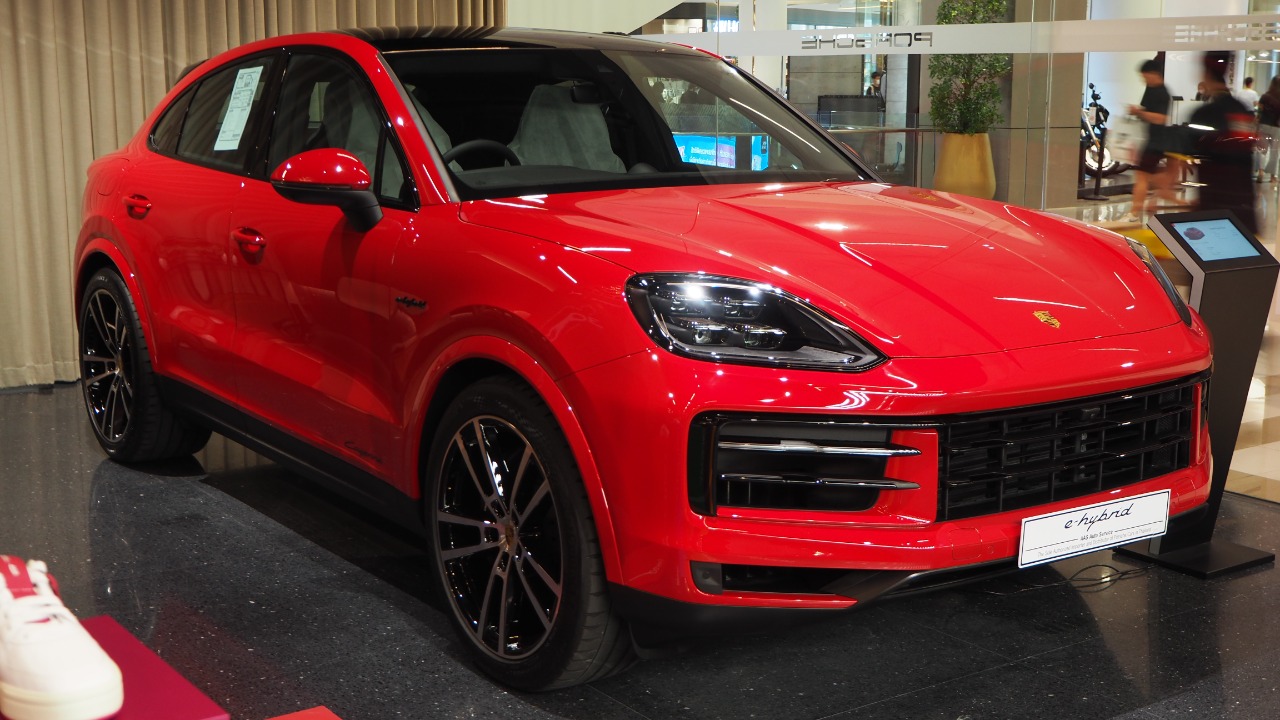

More than 173,000 high-end Porsche cars and SUVs in the United States are being recalled after regulators found that their rearview cameras can fail, cutting off a safety feature that drivers increasingly rely on in tight traffic and crowded parking lots. The move adds another luxury nameplate to a growing list of automakers forced to fix backup camera problems that federal rules now treat as basic safety equipment rather than optional tech.
The recall underscores how even premium brands can stumble on core safety systems as vehicles become rolling computers, and it lands in a year when Ford and Toyota have already flagged rear camera flaws in well over a million vehicles each. I see this as less a one-off embarrassment for Porsche than a warning sign that the industry’s software-heavy approach to safety is still catching up with the expectations built into federal standards.
What triggered the Porsche recall
The latest action centers on a defect that can cause the rearview image to disappear or fail to appear when a driver shifts into reverse, depriving them of a clear view behind the vehicle at the exact moment they need it most. Regulators concluded that the problem raises the risk of a crash because it can leave drivers backing up with only mirrors and neck craning, even though the vehicle is equipped with a camera system that is supposed to eliminate blind spots. That finding is what pushed the issue from an annoyance into a formal safety recall.
According to recall documents, the affected models span several of Porsche’s most recognizable nameplates, including Cayenne, Cayenne E-Hybrid, 911, Taycan, Panamera and Panamera E-Hybrid, with model years stretching from 2019 through 2025 depending on the line. One notice describes the campaign as covering 173,538 vehicles, while another characterizes it as over 173,000 or even 174,000 Cars and SUVs to Fix Backup Cameras, a discrepancy that reflects slightly different ways of rounding the same underlying fleet. What is consistent across the filings is the core safety concern: a camera image that can cut out and leave drivers guessing what is behind them.
How many vehicles and which models are affected
On paper, the scale of the campaign is striking for a luxury brand that sells in relatively low volumes compared with mass-market automakers. One report describes the action as Porsche Recalling 173K US Vehicles Over Rearview Camera Image Issue, while another notes that 173,538 cars are covered, and a third references 173,000-Plus vehicles. However you slice the math, that is a significant share of the brand’s recent U.S. output, and it means a large number of owners will be hearing from dealers about a mandatory visit to address a safety defect.
The recallaffects certain 2019-2025 Cayenne and Cayenne E-Hybrid models, 2020-2025 911 sports cars, Taycan electric vehicles, and 2024-2025 Panamera and 2025 Panamera E-Hybrid sedans. Another summary similarly lists Cayenne, Hybrid, Taycan and Panamera among the affected lines, underscoring that this is not confined to a single platform or powertrain. In other words, the defect appears across gasoline, hybrid and electric models, which suggests a shared software or component architecture behind the camera system rather than a narrow mechanical glitch.
Why regulators say the cameras violate safety rules
Rearview cameras are no longer a nice-to-have gadget in the eyes of U.S. regulators, and that is central to why this problem triggered such a large-scale response. The National Highway Traffic Safety Administration treats backup visibility as a core safety requirement, and it has written detailed expectations into the Federal Motor Vehicle Safety Standards that govern how and when a rear image must appear. When a camera fails to display a consistent view while the vehicle is in reverse, it is not just a customer satisfaction issue, it is a violation of those standards.
In this case, the regulator flagged that the vehicles fail to comply with the Federal Motor Vehicle Safety Standards requirement for rear visibility, a finding that effectively forced Porsche’s hand. According to one notice, the issue may increase the risk of a crash by reducing the driver’s view, language that mirrors the agency’s broader concern that drivers can strike pedestrians, cyclists or obstacles if they cannot see directly behind the vehicle. When a defect is framed in those terms, automakers have little room to argue that it is minor or optional.
What Porsche and dealers are expected to do
Once a defect is tied to a safety standard, the path forward is relatively clear: the manufacturer must notify owners, coordinate with dealers and provide a remedy at no cost. In the Porsche case, the company is expected to update software or replace components in the camera system so that the rear image reliably appears whenever the transmission is shifted into reverse. For owners, that will mean scheduling a service appointment and carving out time for a fix that, while free, still disrupts daily routines.
One detailed summary of the campaign notes that the current recall affects certain 2019-2025 Cayenne, Cayenne E-Hybrid, 2020-2025 911, Taycan, 2024-2025 Panamera and 2025 Panamera E-Hybrid models, and it frames the action as Porsche Recalling 173K US Vehicles Over Rearview Camera Image Issue that could raise the risk of a crash. I read that as a signal that the company is aligning its messaging with regulators by emphasizing the safety stakes rather than downplaying the problem as a minor glitch. Another overview, titled Porsche Recalls, Cars and, Fix Backup Cameras and paired with guidance on What a Car Recall Notice Means and What to Do, reinforces that owners should treat the notice as a prompt to act, not something to file away and forget.
How this fits into a broader wave of camera-related recalls
Porsche’s move does not exist in a vacuum. Over the past year, some of the world’s largest automakers have launched their own campaigns to address backup camera failures, suggesting a systemic challenge as the industry leans on complex software to deliver basic safety functions. When multiple brands, from mass-market to luxury, struggle with the same category of defect, it points to shared design philosophies and supplier ecosystems that may not yet be robust enough for the regulatory expectations placed on them.
Ford Motor, for example, is recalling nearly 1.5 m vehicles in the U.S. over rearview camera failures, a campaign that follows an earlier inquiry from regulators into complaints about camera performance. Another report notes that the new recall comes after the National Highway Traffic Safety Administration asked Ford about camera failures, prompting the automaker to investigate and ultimately expand its response. Toyota is in a similar position, recalling more than 1 million vehicles in the U.S. due to a rear camera flaw that one account attributes to a software error in the parking assist ECU, with Toyota Motor North America coordinating with the National Highway Traffic Safety Administration on the fix.
Why backup cameras have become a safety flashpoint
Rearview cameras were once marketed as convenience features, but they have evolved into a frontline safety tool, especially in urban environments where pedestrians and cyclists move unpredictably behind vehicles. Federal rules now require new passenger vehicles to provide a clear rear image, and that has raised consumer expectations that the system will work every time, not just most of the time. When that expectation is broken, the sense of betrayal is sharper because drivers have been trained to rely on the screen rather than twisting around to check blind spots.
Regulators and safety advocates point out that backup cameras are particularly important for protecting children and older adults, who may be harder to see through mirrors alone. One overview of recent campaigns notes that nearly 1.5M cars were recalled after faulty rear view cameras were linked to 18 incidents, and it highlights that Another easy way to check is by visiting the NHTSA website at Another online tool where drivers can search for recalls that apply to their vehicles. That kind of guidance reflects a broader shift: backup camera reliability is now treated as a public safety issue, not just a tech support problem.
How owners can confirm if their Porsche is affected
For Porsche drivers, the first step is to determine whether their specific vehicle is covered by the recall, since not every model year or trim is necessarily included. Owners can wait for a mailed notice, but I would not rely solely on the postal system when a safety defect is involved. Instead, the fastest route is to plug the vehicle identification number into official databases that track open recalls in real time.
The National Highway Traffic Safety Administration maintains a centralized lookup tool at its recalls portal, where drivers can enter a VIN and see any active campaigns tied to their vehicle. Toyota’s own recall over more than 1 million vehicles due to a rear camera flaw directs owners to a similar VIN search, and one detailed account of that campaign notes that Toyota is steering customers toward that federal resource. Porsche owners can use the same approach, cross-checking their VIN against the recall description that lists Cayenne, Cayenne E-Hybrid, 911, Taycan, Panamera and Panamera E-Hybrid models.
What the defect looks like in daily driving
From an owner’s perspective, the problem may present itself as an intermittent or complete loss of the rear image when shifting into reverse. In some cases, the screen may stay black, display a frozen frame or take so long to load that the driver has already started backing up before the picture appears. Because the defect can be sporadic, some drivers might initially chalk it up to a glitch or assume it is tied to cold weather or battery issues, which is one reason regulators pay close attention to patterns in complaints rather than waiting for a single catastrophic failure.
According to one detailed notice, the issue may increase the risk of a crash by reducing the driver’s view, language that appears in a summary of how According the recall documents, the camera problem manifests. Another overview of the campaign, framed as Porsche Issues Major Recall for Over 173000 Vehicles Due to a rearview camera image issue, reinforces that the defect is not limited to a cosmetic glitch on the screen but directly affects the driver’s ability to see behind the vehicle. When a safety system behaves unpredictably, it can be more dangerous than if it failed outright, because drivers may not know when they can trust it.
Luxury branding versus safety reality
Porsche’s predicament highlights a tension that runs through the modern auto market: the promise of cutting-edge technology wrapped in a luxury badge versus the messy reality of software bugs and hardware failures. Buyers who spend six figures on a Cayenne, Cayenne E-Hybrid, 911, Taycan, Panamera or Panamera E-Hybrid reasonably expect that basic safety systems will work flawlessly, and a recall on something as visible as the backup camera can feel like a breach of that implicit contract. At the same time, the brand’s decision to recall more than 173,000 vehicles shows that even prestige manufacturers are subject to the same regulatory pressures as everyone else.
One account of the campaign describes how the recall covers select 2019-2025 Cayenne and Cayenne Hybrid models, 2020-2025 911 and Taycan vehicles and 2024-2025 Panamera and 2025 Panamera E-Hybrid models, and it notes that the action was coordinated with the National Highway Traffic Safety Administration (NHTSA). That report, which characterizes Porsche as a luxury automaker recalling more than 173,000 vehicles in the U.S. over a rearview camera issue, underscores that brand positioning does not exempt a company from safety scrutiny. Another summary, framed as Porsche Recalling 173K US Vehicles Over Rearview Camera Image Issue and paired with a feature on the World’s Top Extreme Weather Events, reinforces that even in a news cycle crowded with dramatic stories, a large-scale safety recall by a high-profile marque still commands attention.
What this means for drivers beyond Porsche
For drivers, the lesson extends well beyond a single brand or defect. As vehicles become more software-defined, safety-critical functions like rear visibility, lane keeping and automatic braking increasingly depend on code that can fail in subtle ways. I see the cluster of recalls involving Porsche, Ford and Toyota as a reminder that owners should treat recall notices as part of routine vehicle maintenance, not as rare events that can be ignored without consequence.
One practical takeaway is to build a habit of checking your vehicle’s recall status periodically, especially if you drive a model that has been on the road for several years. The official Porsche Recalling campaign over rearview camera image issues is only one of many active safety actions listed in federal databases at any given time. Another detailed overview of Toyota’s recall, which notes that Toyota recalling more than 1 million vehicles in the U.S. due to a rear camera flaw and credits reporter Brian Dakss as a longtime New York radio anchor and reporter, shows how quickly a software error can scale across a fleet. In that context, Porsche’s 173,000-Plus vehicles are part of a broader pattern that every driver, regardless of brand loyalty, should pay attention to.
More from MorningOverview