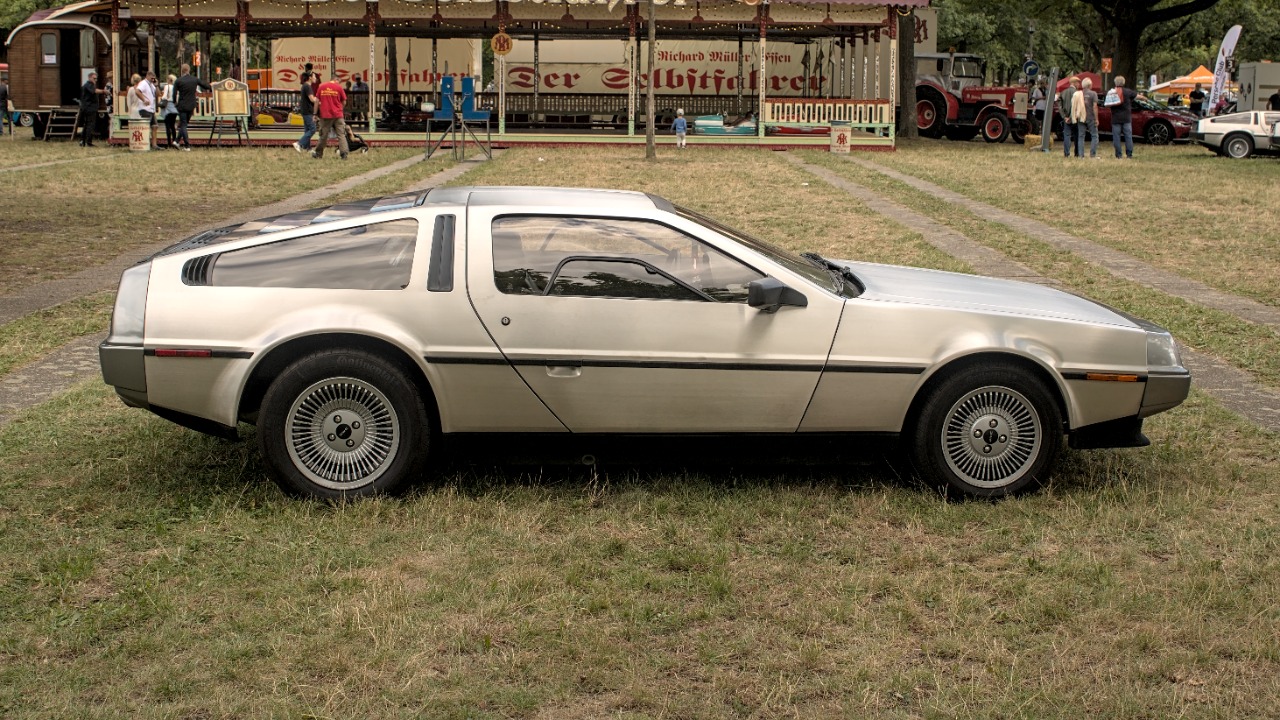

Once-coveted cars can age about as well as yesterday’s luxury gadgets, turning from status symbols into driveway clutter. I look at 12 vehicles that enthusiasts once tipped as future blue-chip collectibles, only to watch them sink toward scrap value or brutal depreciation, mirroring how many beloved collectibles in other categories have collapsed in price.
1. The DeLorean DMC-12
The DeLorean DMC-12 was marketed as a stainless-steel revolution, yet detailed retrospectives on flawed classics such as the DMC show how quickly hype can curdle. Under its gullwing doors sits a modest V6 and a chassis that never matched the futuristic styling. Build quality issues, limited performance and a short production run left many cars parked rather than pampered, and that neglect now drags down values.
Collectors once assumed rarity alone would send prices soaring, but the market has treated the DMC-12 more like a curiosity than a blue-chip asset. When buyers can choose more usable classics for similar money, a car that is tricky to service and only moderately quick struggles to command a premium. The DeLorean’s slide illustrates how nostalgia, without strong fundamentals, often fails to protect owners from financial disappointment.
2. The Alfa Romeo Spider (1980s models)
The Alfa Romeo Spider has genuine pedigree, yet the 1980s cars sit in a strange value trough. A pristine 1966 Alfa Romeo 1600 “Duetto” Spider sold for about $106,000 at St. Moritz, proving early versions can command serious money. Later Spiders, burdened with heavier bumpers, emissions gear and less delicate styling, rarely see anything close to that figure despite sharing the same basic nameplate.
Analysts who track undervalued classics note that these 1980s Spiders were built in relatively high numbers and often used as daily drivers, so many survivors are tired rather than cherished. That abundance, combined with rust concerns and finicky electrics, keeps prices soft. For owners who expected every Alfa Romeo Spider to follow the Duetto’s trajectory, the current market reality feels like a harsh correction.
3. The Bertone X1/9
The Bertone X1/9 looked like a scaled-down supercar, with a mid-engine layout and sharp wedge profile that once made it a darling of European showrooms. Yet surveys of cheap “rare” classics, including several Italian oddities in classic-car roundups, show the X1/9 languishing at the bottom of the price charts. Its small-displacement engine and modest performance never matched the exotic looks, which limits appeal beyond a niche fan base.
Rust, fragile trim and scarce body parts further erode its desirability, because restoring one properly can exceed the car’s finished value. As a result, many X1/9s became disposable fun cars rather than carefully preserved collectibles. The lesson for enthusiasts is clear: even a mid-engine layout and Bertone badge cannot guarantee long-term appreciation if the ownership experience is more hassle than joy.
4. The Bricklin SV-1
The Bricklin SV-1 promised safety and exclusivity, with dramatic gullwing doors and bold colors, but it has settled into the bargain basement of the collector world. Analyses of once-hyped failures such as the Ford Pinto, Chevrolet Vega and DMC in lists of troubled cars help explain why the Bricklin followed a similar path. Quality-control problems, heavy weight and underwhelming performance undermined its futuristic image almost immediately.
Today, the SV-1’s fiberglass body and complex door mechanisms make restoration expensive, while its obscure Canadian backstory limits mainstream recognition. Buyers who want gullwing drama can stretch for a Mercedes-Benz 300SL or even a DeLorean, leaving the Bricklin as a curiosity that rarely commands serious money. Its fate shows how a bold concept, without robust engineering and support, can leave owners with an orphaned asset.
5. The Jensen-Healey
The Jensen-Healey, often written as Jensen-Healey or split as Jensen and Healey, tried to blend British style with American power, yet it never achieved the enduring cachet of an MGB or Triumph. A detailed comparison of The Triumph and Jensen-Healey notes that both were the last of Britain’s mass-market sports cars, but the Jensen-Healey’s parts supply and specialist knowledge have become particularly thin.
Its Lotus-sourced engine can be fragile if neglected, and trim pieces are notoriously hard to source, which discourages full restorations. As a result, many cars sit half-finished in garages, depressing values for the whole model line. For owners who once believed the Jensen-Healey’s low production would guarantee collectibility, the reality of limited demand and high running costs has been financially sobering.
6. The Triumph TR7
The Triumph TR7, sometimes simply called the TR7 in enthusiast circles, was heavily promoted as “the shape of things to come.” Yet modern retrospectives argue that if any sports car is “underrated and ridiculously underpriced,” it is the TR7, which is faint praise for owners hoping for big returns. The wedge styling divided opinion from the start, and early build-quality issues damaged its reputation.
Forum discussions, including one that begins “Like many autos that are collectible, but not properly priced,” highlight how sellers often accept low bids, reinforcing the car’s bargain status. While a small group of enthusiasts appreciates its comfort and practicality, the broader market still sees the TR7 as an entry-level classic. That perception keeps prices low and makes it a cautionary tale about betting on styling trends.
7. The Reliant Robin
The Reliant Robin, a three-wheeled British curiosity, once enjoyed cult status as a quirky alternative to conventional cars. Its fiberglass body and motorcycle-style tax classification made it cheap to run, and for a time that novelty translated into collector interest. However, as broader culture has reassessed once-coveted oddities, the Robin has followed the pattern of many once-coveted luxury items that are now practically worthless.
Safety concerns, limited performance and the impractical three-wheel layout make it more of a conversation piece than a usable classic. Younger buyers, who did not grow up seeing Robins on British roads, often view them as memes rather than serious vehicles. That shift in perception has flattened prices, leaving many owners with a novelty that is hard to sell for meaningful money.
8. The Subaru BRAT
The Subaru BRAT, with its rear-facing jump seats in the bed, was engineered to sidestep U.S. pickup tariffs and became a cult favorite. Its unusual configuration and four-wheel drive once led some enthusiasts to treat it as a future collectible, but recent surveys of cheap oddballs, including cars that were, show the BRAT trading for modest sums. Rust-prone bodies and hard-to-find trim pieces make restoration a labor of love rather than a rational investment.
As compact crossovers and modern pickups have taken over the utility niche, the BRAT’s tiny bed and cramped cabin feel more like compromises than charm. Collectors who want a usable classic truck often gravitate to Toyota or domestic models with better parts support. The BRAT’s slide in value underscores how regulatory workarounds and gimmicky features rarely translate into lasting financial upside.
9. The Nissan Versa
The Nissan Versa has long been marketed as one of the cheapest new cars in America, but that low entry price comes at the cost of brutal depreciation. Analyses of vehicles expected to lose most of their value within five years consistently flag budget subcompacts like the Versa in lists of cars that will after a short ownership window. Fleet sales and rental-car use flood the used market, pushing down resale prices.
For first owners, the financial hit can be severe, because a lightly used Versa often sells for only a fraction of its original sticker. While the car can still provide basic, economical transportation, it offers little prospect of holding value. That dynamic makes it a cautionary example of how chasing the lowest new-car payment can backfire when it is time to trade in.
10. The Kia Rio
The Kia Rio occupies a similar space, appealing to cost-conscious buyers with low monthly payments and generous warranties. Yet depreciation studies that group it with other disposable compacts show that five-year-old Rios often command very little on the used market, echoing how many expensive luxury tech products from 20 years ago now trade for pennies. High production volumes and heavy fleet use saturate supply.
As Kia has moved upmarket with more sophisticated models, older Rios feel dated in safety tech, refinement and infotainment. That perception gap accelerates their fall in value, because shoppers can often stretch to a newer, better-equipped used car for only slightly more money. Owners who expected brand improvement to lift all boats have discovered that the Rio remains stuck near the bottom of the depreciation curve.
11. The Mitsubishi Mirage
The Mitsubishi Mirage is one of the smallest and least expensive new cars sold in the United States, but its resale performance is punishing. Market watchers who track vehicles likely to be nearly worthless after five years frequently single out the Mirage, noting that its bare-bones interior and modest powertrain limit appeal in the secondhand market. Fuel efficiency alone has not been enough to offset the perception that it is a cut-rate choice.
As consumer expectations for even entry-level cars have risen, the Mirage’s sparse safety and comfort features look increasingly out of step. That shift mirrors how former status symbols cataloged in lists of fading status symbols have lost their shine. For owners, the implication is stark: the money saved upfront can evaporate quickly when resale time arrives.
12. The Chevrolet Spark
The Chevrolet Spark, another ultra-compact city car, has followed a similar depreciation trajectory. Its tiny footprint and low price once made it attractive to urban drivers, but as crossovers have taken over, demand for micro-hatchbacks has collapsed. Analysts who compile long lists of practically worthless former must-haves note that vehicles like the Spark now struggle to find second owners willing to pay much at all.
Limited highway refinement, basic interiors and rapidly outdated infotainment systems make older Sparks feel older than their years. When shoppers can buy a larger, safer used compact for similar money, the Spark’s bargaining power evaporates. For anyone who bought one expecting city-friendly uniqueness to translate into future desirability, the current resale numbers are a sobering reminder that not every niche car becomes a collectible.
More from Morning Overview