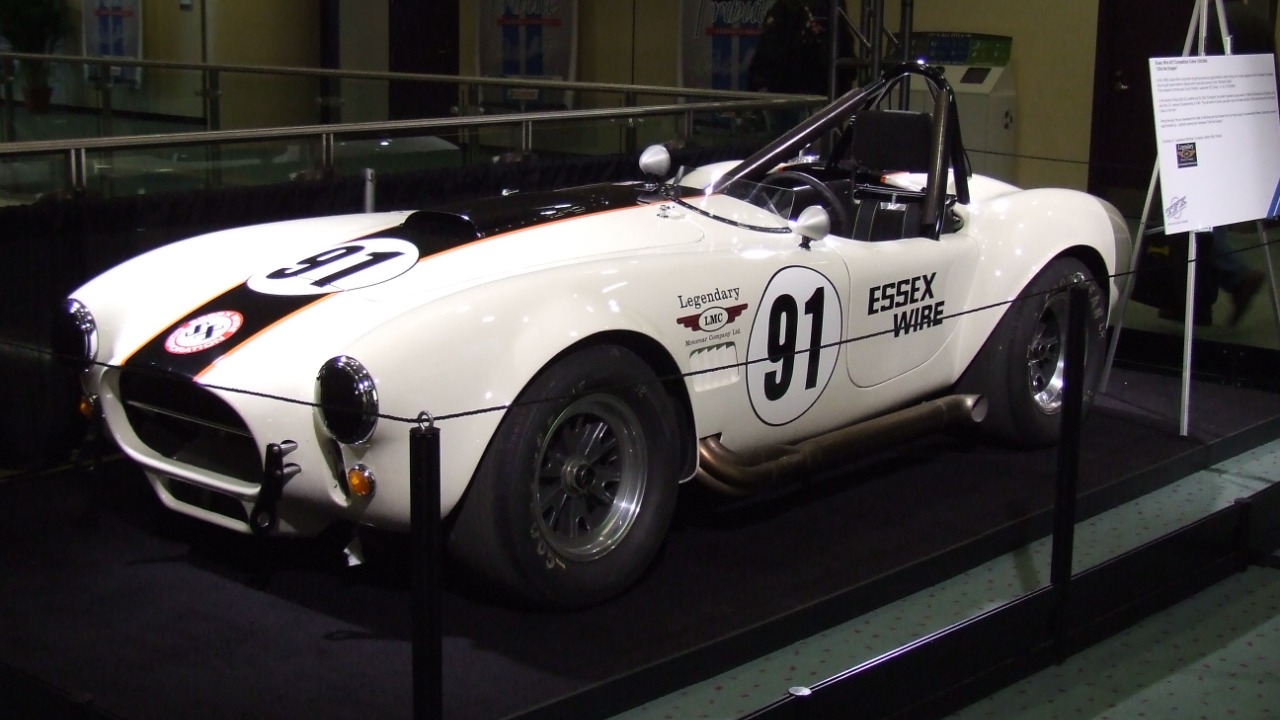

Superformance has turned the dream of owning a 1960s-style race car into something you can actually order, register, and drive, and its catalog of wild kit and continuation cars is broader than many enthusiasts realize. From modern Coyote-powered Cobras to GT40s patterned on Le Mans legends, each model on this list is available today in rolling form, ready for a drivetrain and final detailing. I will walk through ten standout Superformance machines that prove just how extreme, and yet attainable, these kit cars have become.
1. Superformance MKIII Roadster
The Superformance MKIII Roadster is the company’s signature take on the Shelby Cobra, and in Coyote 5.0-powered form it becomes one of the most outrageous street-legal kit cars you can buy. Superformance sells the MKIII as a complete rolling chassis, so the body, suspension, interior, and paint arrive assembled, leaving the buyer to add an engine and transmission. In a detailed feature on a Coyote 5.0-powered Cobra, the car is shown using Ford’s modern 5.0 liter V8, the same basic architecture found in late-model Mustang GTs, to deliver contemporary reliability and rev-happy power in a classic shape. That combination of a current production engine with a 1960s-style chassis means owners can enjoy fuel injection, modern electronics, and easy parts availability while still driving something that looks like it rolled out of a vintage paddock.
From a structural standpoint, the MKIII Roadster uses a robust ladder frame and independent suspension that are engineered around big-block and small-block Ford V8s, so the Coyote swap fits within a platform already designed for serious torque. The bodywork closely follows the proportions of the original Shelby Cobra, with flared fenders, side pipes, and a minimalist cockpit that keeps the driver close to the action. Because Superformance is recognized for its continuation and replica work, the MKIII can be configured to echo specific historic details, yet the Coyote build shows how flexible the platform is for modern performance goals. For enthusiasts, the stakes are clear: instead of choosing between a fragile original or a generic kit, they can buy a professionally built roller that accepts a state-of-the-art Ford drivetrain, creating a car that is wild to drive yet practical enough for regular use.
2. Superformance GT40 Mk I
The Superformance GT40 Mk I brings one of motorsport’s most famous silhouettes into the present, giving buyers a mid-engine kit car that mirrors the original GT40’s layout and proportions. Superformance is described as a distributor of complete rolling continuations from the sixties, including icons like the Shelby Cobra, Daytona Coupe, GT40, and Corvette Grand Sport, on its own official site, and the GT40 Mk I sits at the heart of that promise. The chassis is engineered to replicate the original car’s low roofline and compact wheelbase, with a central monocoque-style structure and subframes that support the suspension and drivetrain. Buyers typically receive the GT40 Mk I as a painted, trimmed roller with the interior, glass, and wiring in place, ready for a period-correct Ford V8 and transaxle. This approach preserves the car’s historic character while letting owners choose between a more authentic small-block build or a slightly modernized powertrain for better drivability.
On the road and track, the GT40 Mk I kit offers a driving experience that is very different from front-engine Cobras, which is part of its appeal. The mid-engine layout concentrates mass near the center of the car, improving turn-in and high-speed stability, and the low seating position places the driver almost at axle height, just as in the original endurance racers. For enthusiasts who grew up watching footage of GT40s at Le Mans, being able to order a continuation-style chassis that follows the original blueprint is a rare opportunity. It also reflects a broader trend in the kit car world, where serious builders increasingly seek historically grounded platforms rather than loosely styled replicas. By offering the GT40 Mk I as a complete rolling continuation, Superformance lowers the barrier to entry for that level of authenticity, shifting the builder’s focus from fabrication to careful drivetrain selection and setup.
3. Superformance GT40 Mk II
The Superformance GT40 Mk II takes the GT40 formula and aligns it with the more muscular, wide-body cars that dominated endurance racing in the later 1960s. While the Mk I emphasizes the original narrow-body look, the Mk II version is known for its broader fenders, more aggressive aero details, and association with higher output V8 engines. In a detailed GT40 Mk II review, the car is described as a phenomenal value, underscoring how much race-bred engineering buyers receive in a modern continuation chassis. Superformance builds the Mk II as a rolling car that can accept serious Ford V8 power, and the wider bodywork allows for larger tires and cooling improvements that suit track use. For many enthusiasts, this model represents the ultimate expression of the GT40 shape, with its visual connection to the cars that actually won at Le Mans.
Structurally, the GT40 Mk II kit follows the same mid-engine layout as the Mk I but is optimized for the higher stresses of big-block or high-output small-block engines. The suspension geometry, braking hardware, and cooling systems are all specified to handle sustained high-speed running, which is crucial for owners who plan to use their cars in historic racing or serious track-day environments. At the same time, the continuation approach means the interior, switchgear, and driving position retain their period-correct feel, so the car does not lose its historic character in the pursuit of performance. For the broader kit car market, the GT40 Mk II illustrates how far companies like Superformance have pushed the concept of a “kit,” moving from basic component sets to highly engineered rollers that rival factory-built supercars in capability. Buyers are not just assembling a project in their garage, they are finishing a car that has been designed from the outset to echo a specific, celebrated competition machine.
4. Superformance King Cobra
The Superformance King Cobra stretches the familiar Cobra formula into something even more dramatic, pairing the classic open-top body with an elongated wheelbase and a more imposing stance. While the standard MKIII Roadster already has serious presence, the King Cobra variant is conceived as a longer, more grand-touring oriented interpretation that still uses the same core engineering philosophy. Superformance, highlighted in a feature on ten of its most incredible kit cars, is known for exploring multiple branches of each historic model line, and the King Cobra fits that pattern by offering a different proportion and visual attitude. The extended chassis can improve straight-line stability and cabin space, which matters for taller drivers or those planning longer trips, while still leaving room for the large-displacement Ford V8s that define the Cobra experience.
From a buyer’s perspective, the King Cobra’s stretched wheelbase changes both the aesthetics and the dynamics of the car. The longer body gives the side profile a sleeker, almost roadster-meets-speedster look, and it can soften some of the nervousness that short-wheelbase, high-power cars sometimes exhibit at highway speeds. At the same time, the car remains a rolling continuation in the Superformance mold, arriving as a painted and trimmed chassis that is ready for a drivetrain installation rather than a bare-bones kit. That approach reduces the fabrication burden on the owner, allowing them to focus on selecting an engine, transmission, and final gearing that match the car’s grander scale. In the broader context of kit cars, the King Cobra shows how a company can respect a historic shape while still evolving it to meet modern expectations for comfort and usability, giving enthusiasts a wilder, more distinctive alternative to the standard Cobra replicas that dominate many shows and track days.
5. Superformance MKII Cobra
The Superformance MKII Cobra targets enthusiasts who want a lighter, earlier-style Cobra replica, with details that echo the small-block cars that predated the big-block 427s. Where the MKIII Roadster channels the later, more aggressive bodywork, the MKII focuses on slimmer fenders, a more delicate nose, and period-correct trim that suits a more vintage driving character. Superformance, which positions itself as a specialist in continuation cars from the 1960s, applies the same rolling chassis philosophy here, delivering the MKII as a complete, painted, and upholstered car that awaits only its engine and gearbox. This structure lets buyers choose a small-block Ford V8 that matches the original spirit of the early Cobras, often with a focus on revs and balance rather than sheer displacement. The result is a kit car that feels more like a classic sports car than a brute-force muscle machine, even though it can still deliver serious performance.
On the road, the MKII Cobra’s lighter specification and narrower tires can make it more playful and communicative at sane speeds, which is a key consideration for owners who plan to use their cars on winding back roads rather than drag strips. The chassis is still engineered to modern standards of stiffness and safety, but the overall package encourages drivers to explore handling rather than just straight-line acceleration. For the kit car market, the MKII underscores how nuanced the Cobra replica segment has become, with buyers able to select not just a generic shape but a specific era and configuration. It also reflects a broader trend among enthusiasts who value authenticity and driving feel over headline power figures. By offering the MKII alongside the MKIII and other variants, Superformance gives customers a clear choice between different interpretations of the same basic icon, each tailored to a distinct vision of what a wild yet usable Cobra should be.
6. Superformance Daytona Coupe
The Superformance Daytona Coupe stands apart from the open-top Cobras by wrapping similar mechanicals in a sleek fastback body that was originally conceived to improve high-speed aerodynamics. Superformance lists the Daytona Coupe alongside the Shelby Cobra, GT40, and Corvette Grand Sport as part of its core lineup of rolling continuations from the sixties, underscoring its importance within the brand’s catalog. The coupe body, inspired by the original racing cars that chased Ferrari on long European circuits, offers a more enclosed, grand touring feel while still accommodating the same family of Ford V8 engines. Buyers receive the Daytona as a fully painted and trimmed roller, with the distinctive Kamm tail, side vents, and long hood already in place, ready for a drivetrain installation that can range from a period-style small-block to a more modern fuel-injected unit.
In practical terms, the Daytona Coupe appeals to enthusiasts who want the drama of a 1960s race car but prefer the security and comfort of a roof and hatchback. The enclosed cabin can make longer journeys more pleasant, and the rear storage area adds a measure of practicality that open Cobras lack, which broadens the car’s appeal beyond pure track use. At the same time, the aerodynamic bodywork and racing heritage give the Daytona a more focused, purposeful look that stands out even among other Superformance models. For the wider kit car scene, the Daytona Coupe illustrates how a continuation can serve both as a faithful tribute and as a usable modern classic, bridging the gap between weekend toy and long-distance tourer. It also shows how Superformance leverages a common engineering base across multiple body styles, allowing buyers to choose the silhouette and driving environment that best match their ambitions without sacrificing the underlying quality of the chassis.
7. Superformance 427SC Roadster
The Superformance 427SC Roadster represents the most aggressive open-top Cobra configuration in the company’s range, channeling the semi-competition specification that blended race hardware with road legality. While the MKIII Roadster can be built in various trims, the 427SC focuses on the big-block look and feel, with wide fenders, side pipes, roll bar, and minimal weather protection. Superformance, recognized for its continuation approach to the Shelby Cobra, delivers the 427SC as a rolling chassis that is structurally prepared for high-torque Ford V8s, including engines that match or exceed the output of the original 427s. The suspension, brakes, and frame are all specified to handle that level of performance, so buyers who install serious powerplants are not overtaxing a lightly built kit. This makes the 427SC one of the wildest street-legal interpretations of the Cobra formula that a customer can order today.
From a usability standpoint, the 427SC Roadster is unapologetically focused on performance rather than comfort, which is precisely what many buyers in this niche are seeking. The open cockpit, side-exit exhaust, and minimal sound insulation create an intense sensory experience that feels closer to a vintage race car than a modern sports car. Yet because Superformance sells it as a complete roller, owners benefit from consistent build quality, proper alignment, and a professionally finished body, rather than having to fabricate or adjust major components themselves. In the broader context of kit and continuation cars, the 427SC highlights how some enthusiasts are willing to trade convenience for authenticity, prioritizing a raw, analog driving experience. It also reinforces the idea that “kit car” no longer means a loosely assembled project, but can describe a highly engineered platform that simply awaits its final mechanical pieces.
8. Superformance GT
The Superformance GT is positioned as a grand tourer that draws on classic styling cues while offering a more road-oriented alternative to the pure competition focus of the GT40 models. While detailed specifications vary by build, the GT concept typically centers on a front-engine layout with a long hood, short rear deck, and cabin proportions that recall 1960s and early 1970s European and American GT cars. Superformance, which has built its reputation on accurate continuations of icons like the GT40 and Daytona Coupe, applies the same rolling chassis philosophy here, delivering the GT as a painted and trimmed car ready for a Ford V8 installation. Buyers can integrate modern fuel-injected engines or more traditional carbureted setups, tailoring the character of the car to either relaxed touring or more aggressive performance driving.
In terms of market positioning, the Superformance GT fills a niche for enthusiasts who want the drama of a classic-looking coupe but do not necessarily need the extreme packaging of a mid-engine race replica. The front-engine layout can simplify maintenance and cooling, and it often allows for a more spacious cabin and luggage area, which matters for owners planning multi-day trips or regular road use. At the same time, the car’s styling and chassis tuning can be configured to deliver a very engaging driving experience, with suspension and brake options that reflect Superformance’s motorsport-influenced background. For the broader kit car landscape, the GT demonstrates how companies can blend heritage-inspired design with practical usability, offering a car that looks wild enough to turn heads yet is comfortable enough to drive frequently. It also shows how the Superformance catalog extends beyond direct replicas, using its engineering expertise to create new interpretations of the classic GT theme.
9. Superformance SL-C
The Superformance SL-C, or Superlite Coupe, is aimed squarely at enthusiasts who want a lightweight, track-focused kit car with a modern, almost prototype-style appearance. Unlike the continuation models that replicate specific 1960s icons, the SL-C embraces a contemporary design language, with a low, wide body, integrated aero elements, and a cockpit that sits deep within the chassis. Superformance’s experience as a distributor of high-performance rolling chassis informs the SL-C’s modular structure, which is designed to accept a range of powerful engines while keeping weight to a minimum. The car’s spaceframe or monocoque-style construction, combined with double wishbone suspension and large brakes, positions it as a serious track tool that can also be configured for road use in some jurisdictions, depending on local regulations and registration pathways.
For buyers, the SL-C represents a different kind of wild compared with the vintage-inspired Cobras and GT40s. The focus here is on lap times, downforce, and power-to-weight ratio, rather than historical accuracy, which appeals to drivers who frequent track days or time-attack events. The modular nature of the chassis and drivetrain options allows builders to choose engines ranging from high-revving naturally aspirated units to turbocharged or supercharged powerplants, tailoring the car’s performance envelope to their skill level and budget. In the broader kit car ecosystem, the SL-C underscores how companies associated with classic replicas can also push into cutting-edge performance territory, leveraging their engineering capabilities to create platforms that rival modern supercars. It also highlights a trend among serious hobbyists who prefer to invest in a purpose-built track machine rather than heavily modifying a mass-produced road car, using the kit format to achieve performance that would be difficult or expensive to replicate elsewhere.
10. Superformance Can-Am Racer
The Superformance Can-Am Racer channels the spirit of the open-top sports prototypes that competed in the Canadian-American Challenge Cup, translating that extreme aesthetic into a kit car that dedicated enthusiasts can actually buy. While specific configurations vary, the core idea is an open-bodied, mid-engine or rear-engine chassis with minimal bodywork, large tires, and a focus on raw performance. Superformance, known for distributing rolling continuations of sixties legends, applies similar construction principles here, delivering a chassis that is engineered for high power outputs and serious track use. The open cockpit and exposed mechanicals recall the original Can-Am machines, which were famous for their lack of restrictions on displacement and aerodynamics, and the kit format allows owners to select engines that match that tradition of excess, often favoring large-displacement V8s.
From a practical standpoint, the Can-Am Racer is aimed primarily at track and competition environments rather than daily driving, but its availability as a purchasable kit makes this level of motorsport-inspired hardware more accessible than commissioning a one-off race car. Builders can configure the car for historic-style events, club racing, or private track days, choosing safety equipment, suspension settings, and braking packages that suit their intended use. In the wider context of Superformance’s lineup, the Can-Am Racer represents the most unfiltered expression of the company’s racing heritage, sitting alongside the GT40s and Daytona Coupe as a reminder of how wild 1960s and early 1970s prototype racing really was. For the kit car community, its existence signals that there is still strong demand for machines that prioritize speed and spectacle over comfort, and that specialist manufacturers are willing to support that demand with engineered, repeatable platforms rather than leaving enthusiasts to fabricate everything from scratch.
More from MorningOverview